
Why Bone Grafts Are Often Essential for Implant Success
A bone graft dental implant procedure becomes necessary when your jawbone lacks the volume or density needed to support a dental implant. Here’s what you need to know:
Key Facts About Bone Grafts for Dental Implants:
- Purpose: Rebuilds jawbone to create a stable foundation for implants
- When needed: After tooth loss, gum disease, or trauma causes bone loss
- Success rate: Over 95% success when properly performed
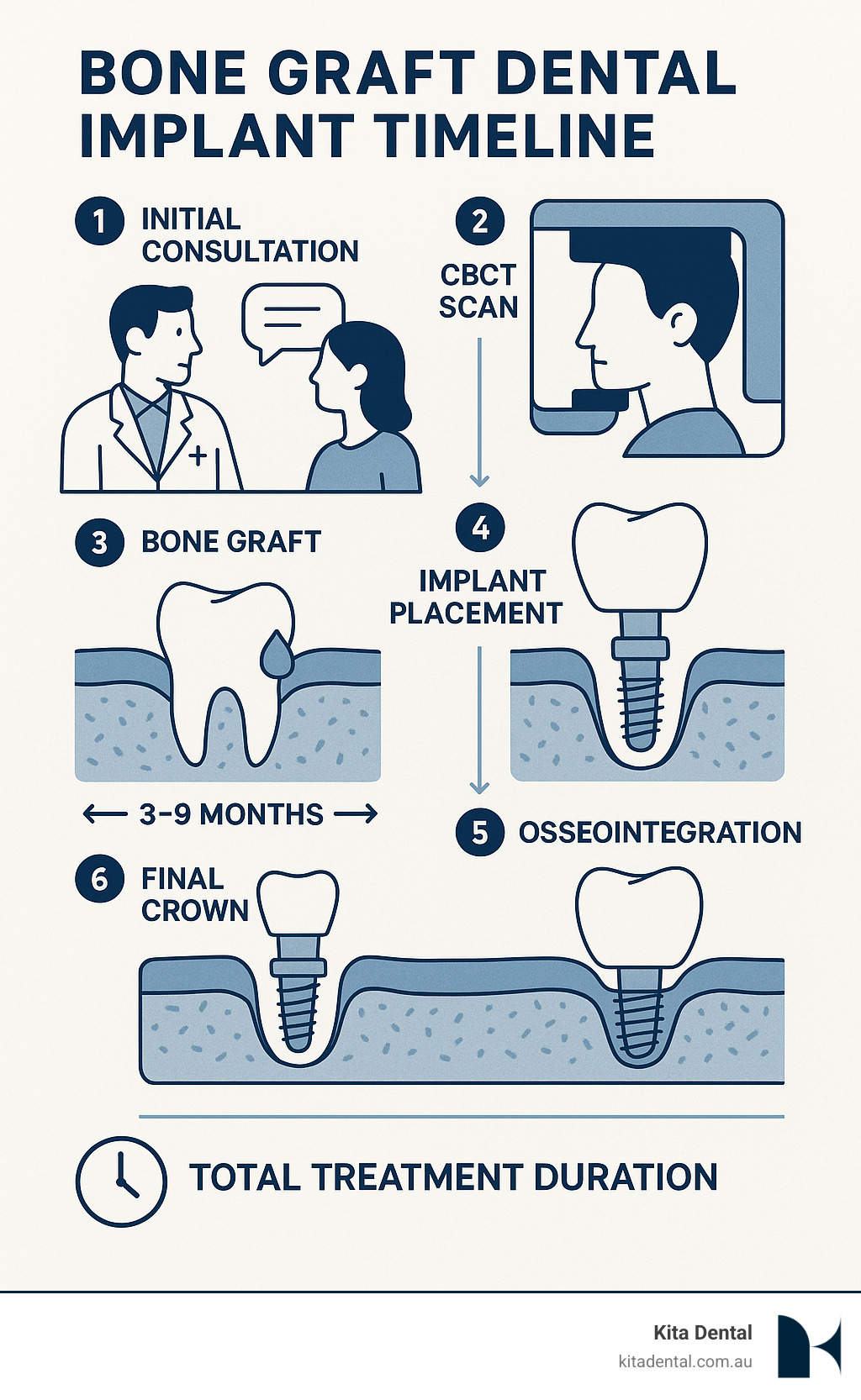
- Healing time: 3-9 months before implant placement
- Types: Your own bone, donor bone, animal-derived, or synthetic materials
More than half of dental implant sites require bone grafting before implant placement. This might sound intimidating, but modern bone grafting techniques are highly predictable and well-tolerated by patients.
Think of bone grafting like laying a solid foundation before building a house. Your jawbone naturally shrinks after tooth loss – sometimes losing up to 6-7mm of width. Without adequate bone, an implant simply won’t integrate properly or last long-term.
The good news? Dental bone grafts have impressively high success rates, and most patients report little to no pain during recovery. The procedure transforms what might seem like an impossible implant case into a routine success story.
As Dr. Kent Boon, Principal Dentist at Kita Dental, I’ve guided hundreds of patients through the bone graft dental implant process. My experience with both simple socket preservation grafts and complex ridge augmentations has shown me that patient education is key to successful outcomes.
What Is a Dental Bone Graft? Foundations First
Think of a dental bone graft as nature’s way of getting a helping hand. When your jawbone needs rebuilding – whether from tooth loss, gum disease, or injury – we essentially give your body the materials it needs to reconstruct itself.
A bone graft works like a scaffold at a construction site. We place special bone material where your jaw needs support, and your body does the remarkable work of growing new bone around and through this framework. Over time, this scaffold gets replaced by your own healthy, living bone tissue.
The star of the show here is your alveolar ridge – the curved part of your jawbone that holds your teeth. When you lose a tooth, this ridge starts shrinking almost immediately. Unfortunately, this natural process works against us when we want to place a dental implant later.
This is where osseointegration becomes crucial. This process describes how your jawbone actually fuses with a titanium implant, creating a rock-solid foundation that can handle the incredible forces of chewing. For this process to work properly, we need healthy bone surrounding the entire implant.
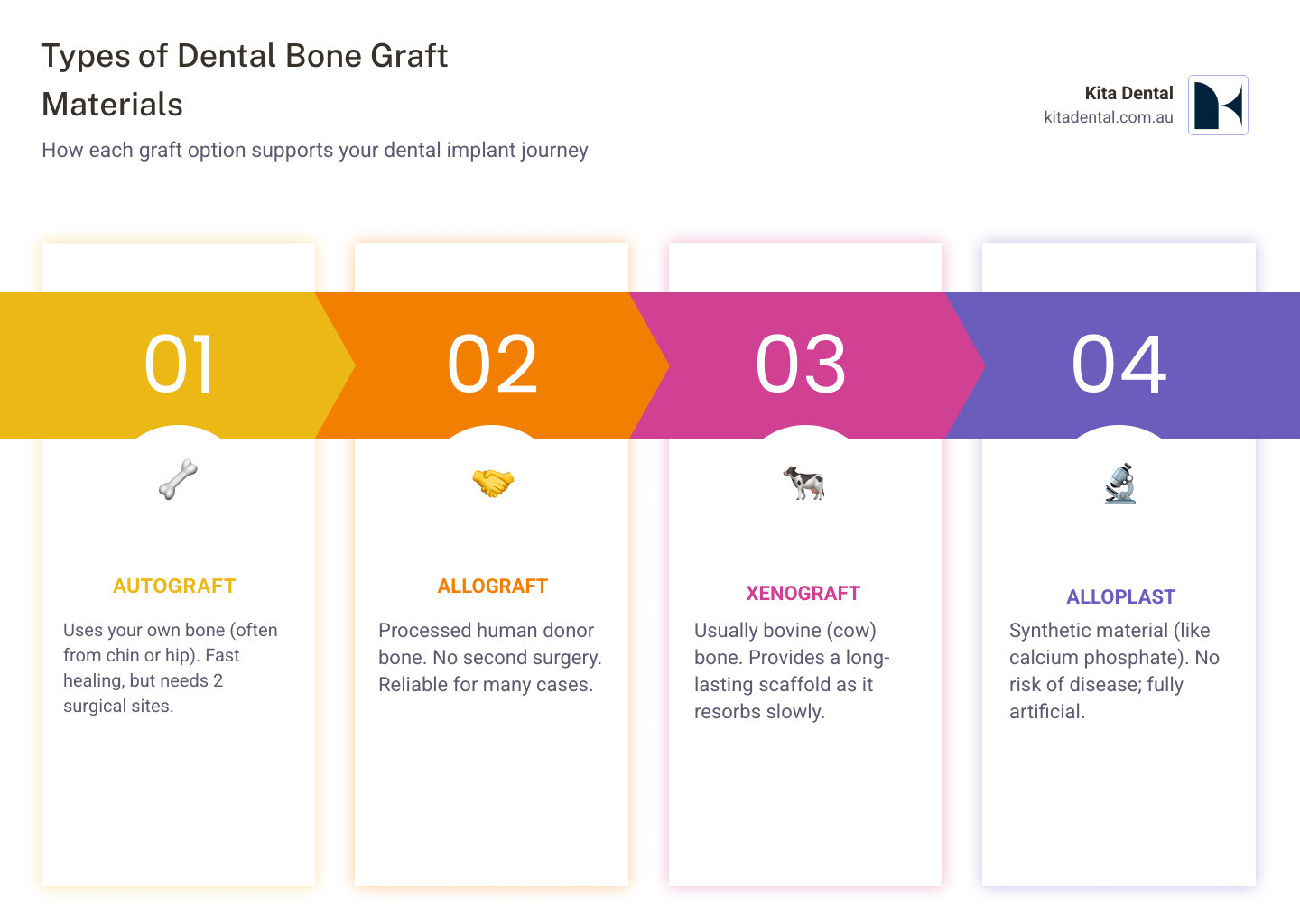
When it comes to bone graft dental implant procedures, we have several excellent material options. Autograft uses your own bone, typically harvested from another area of your jaw. Allograft comes from carefully processed human donor bone. Xenograft uses animal-derived bone (usually from cows) with all organic material removed. Finally, synthetic materials are engineered to mimic natural bone properties.
bone graft dental implant essentials
The bone graft dental implant relationship is about creating the perfect environment for long-term success. Your implant root needs to be completely surrounded by healthy bone to handle the forces of everyday chewing and biting.
Without adequate jaw volume, we’re essentially asking an implant to do an impossible job. The functional stability we achieve through proper bone grafting ensures your investment will serve you well for decades to come.
Why & When Do You Need a Bone Graft Before an Implant?
The need for a bone graft dental implant procedure typically arises from situations where your jawbone has lost volume or density. Understanding these scenarios helps explain why this additional step often becomes essential for long-term implant success.
Tooth loss triggers an immediate and ongoing process of bone resorption. Your jawbone literally begins shrinking the moment a tooth is removed because it no longer receives stimulation from chewing forces. Scientific research on bone loss after extraction reveals that two-thirds of your alveolar ridge volume disappears within just three months after extraction.
Periodontal disease represents another major culprit behind bone loss. Advanced gum disease doesn’t just affect your gums – it actively destroys the bone that supports your teeth. Even after successful treatment, the bone damage often remains permanent.
Trauma from accidents or sports injuries can damage or destroy sections of jawbone. These cases often require significant reconstruction before implant placement.
In the upper jaw, sinus proximity creates unique challenges. Your maxillary sinuses sit directly above your back teeth, and after tooth loss, they can expand downward while the ridge shrinks upward.
Some patients face challenges with naturally thin ridges or experience additional thinning from long-term denture wear. Genetics also plays a role – some people are born with thinner jawbones that require augmentation.
Candidate Checklist: Are You Eligible?
Not everyone makes an ideal candidate for bone grafting, which is why we conduct comprehensive evaluations before recommending treatment.
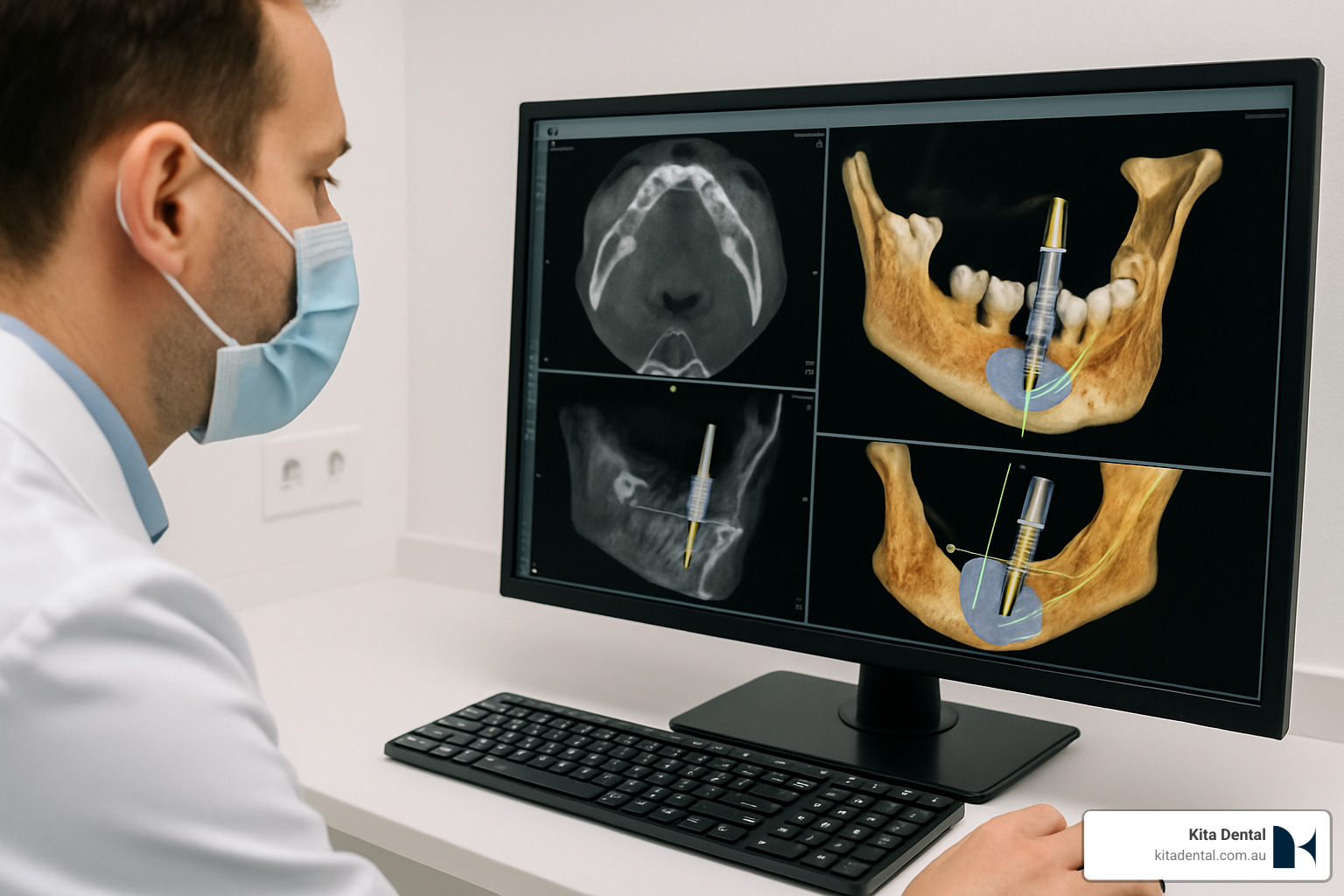
CBCT scan evaluation forms the foundation of our assessment. This three-dimensional imaging technology captures detailed images of your jaw, allowing us to measure exact bone dimensions and assess bone quality.
Systemic health plays a crucial role in bone graft success. We carefully review your medical history, current medications, and overall health status.
Smoking represents one of the biggest risk factors for graft failure. Nicotine restricts blood flow to healing tissues, dramatically reducing success rates. We strongly recommend smoking cessation before any bone grafting procedure.
Diabetes management requires special attention because uncontrolled blood sugar levels can impair healing and increase infection risk.
Every case receives a personalized treatment plan because your anatomy, health status, and treatment goals are unique.
Types of Bone Graft Materials & Common Procedures
Choosing the right bone graft material is like selecting the perfect foundation for your home – it needs to match your specific situation and provide reliable, long-term support.
Autograft materials remain the gold standard because they use your own bone tissue. We typically harvest this from areas within your mouth, such as your chin or wisdom tooth sites. The beauty of autografts lies in their living bone cells and natural growth factors, which promote the fastest healing.
Allograft materials offer an excellent alternative without the need for a donor site on your body. These processed human donor bones undergo thorough sterilization while preserving the mineral structure that your body recognizes and accepts.
Xenograft materials, primarily derived from bovine bone, provide another reliable option. Through careful processing, all organic components are removed, leaving behind a mineral scaffold that closely resembles human bone structure.
Synthetic materials eliminate any concerns about disease transmission. These materials are completely artificial yet biocompatible, using advanced ceramics and calcium compounds.
We can improve any graft material with Platelet-Rich Plasma (PRP), which concentrates your own platelets and growth factors to potentially accelerate healing.
The bone graft dental implant procedures we perform depend on your specific needs. Socket preservation happens immediately after tooth extraction, filling the empty socket with graft material to prevent collapse. Ridge augmentation rebuilds the alveolar ridge when your jawbone is too narrow or lacks sufficient height. Sinus lift procedures address the upper jaw challenge where the maxillary sinus is too close to the ridge.
bone graft dental implant procedure menu
Socket grafting represents our most conservative approach. After gentle tooth extraction, we place graft material and healing typically takes 3-4 months before implant placement.
Sinus lift procedures require specialized techniques due to the delicate sinus membrane. We create access through the lateral sinus wall, carefully lift the membrane, and place graft material. Healing extends 4-6 months before implant placement.
Ridge width improvement addresses narrow ridges through site preparation and graft placement, allowing 4-6 months for complete healing.
For comprehensive information about our approach to restorative dentistry, you can explore how these procedures work together to achieve your smile goals.
Step-By-Step: Before, During & After Surgery
Knowing exactly what to expect during your bone graft dental implant procedure can transform anxiety into confidence.
Getting Ready: Your Pre-Operative Journey
Your surgical journey begins weeks before the procedure. We’ll take comprehensive CBCT scans that create a detailed three-dimensional map of your jaw. If you take medications like blood thinners, we’ll coordinate with your physician about temporarily adjusting them.
Staying Comfortable: Your Anesthesia Options
Most bone grafting procedures are surprisingly comfortable with just local anesthesia. But if you’re feeling anxious, we have several options including nitrous oxide, oral sedation, or IV sedation for deeper relaxation.
The Surgery Itself: What Actually Happens
Once you’re completely numb and comfortable, we make a small, precise incision to access the bone area. The recipient site gets thoroughly cleaned and prepared. We carefully position and shape the bone material, often placing a protective membrane over the graft. Finally, we close the soft tissues with sutures. The entire procedure typically takes 30-90 minutes.
Your Medication Protocol
We’ll send you home with antibiotics to prevent infection and pain medications for comfort. Many patients are pleasantly surprised that discomfort is typically mild to moderate.
For more detailed information about procedural stages, you can review scientific research on procedural stages for additional insights.
Healing Timeline & Aftercare
Your bone graft dental implant success depends largely on how well you follow aftercare instructions.
The Critical First Two Days
Ice packs become your best friend – apply them for 20 minutes on, then 20 minutes off. Your diet shifts to soft, nourishing foods like smoothies, soups, and yogurt. Gentle salt-water rinses start after the first day. Sleep with your head liftd on extra pillows.
Week One: Settling In
Continue your soft diet while gradually feeling more normal. Avoid the surgical area when brushing your teeth. We’ll typically see you around day 7-10 to remove sutures and check your healing progress.
Weeks Two Through Four: Getting Back to Normal
Your mouth starts feeling more like itself. You can gradually add more solid foods as comfort allows, but still avoid anything hard, crunchy, or sticky.
The Waiting Game: Months One Through Three
This is where the real magic happens. Your body is actively growing new bone into and around the graft material.
Final Maturation: Months Three Through Nine
Complete bone maturation takes time – typically 4-6 months for most grafts. We’ll take new images to confirm the bone has developed properly before placing your implant.
Our general dental care team stays with you throughout this journey, providing regular check-ups and answering any questions that arise during healing.
Recovery, Risks & Long-Term Success
Recovery from a bone graft dental implant procedure is generally straightforward, but understanding what’s normal versus what requires attention makes all the difference.
The Healing Journey: What to Expect
Your bone graft will take anywhere from 3-9 months to fully mature. Front lower jaw sites typically heal faster – often ready for implant placement in just 3-4 months. Upper back jaw areas may need the full 6-9 months.
The first few days are usually the most noticeable part of recovery. Expect some swelling that peaks around day 2 or 3, then gradually disappears. Most patients describe the discomfort as mild to moderate and find that over-the-counter pain relievers work well.
Success Rates That Inspire Confidence
Modern bone grafting techniques have transformed challenging cases into routine successes. Socket preservation grafts succeed in 90-95% of cases, while ridge augmentation procedures achieve 85-95% success rates. Sinus lifts now succeed in 90-98% of cases.
When dental implants are placed into properly healed bone grafts, they achieve 95-98% success rates even after 10+ years.
Recognizing Potential Problems Early
Infection is the most common concern but is usually easily treated when caught early. Warning signs include pain that gets worse after day 3 or 4, pus or unusual discharge, fever above 38°C, or persistent foul taste.
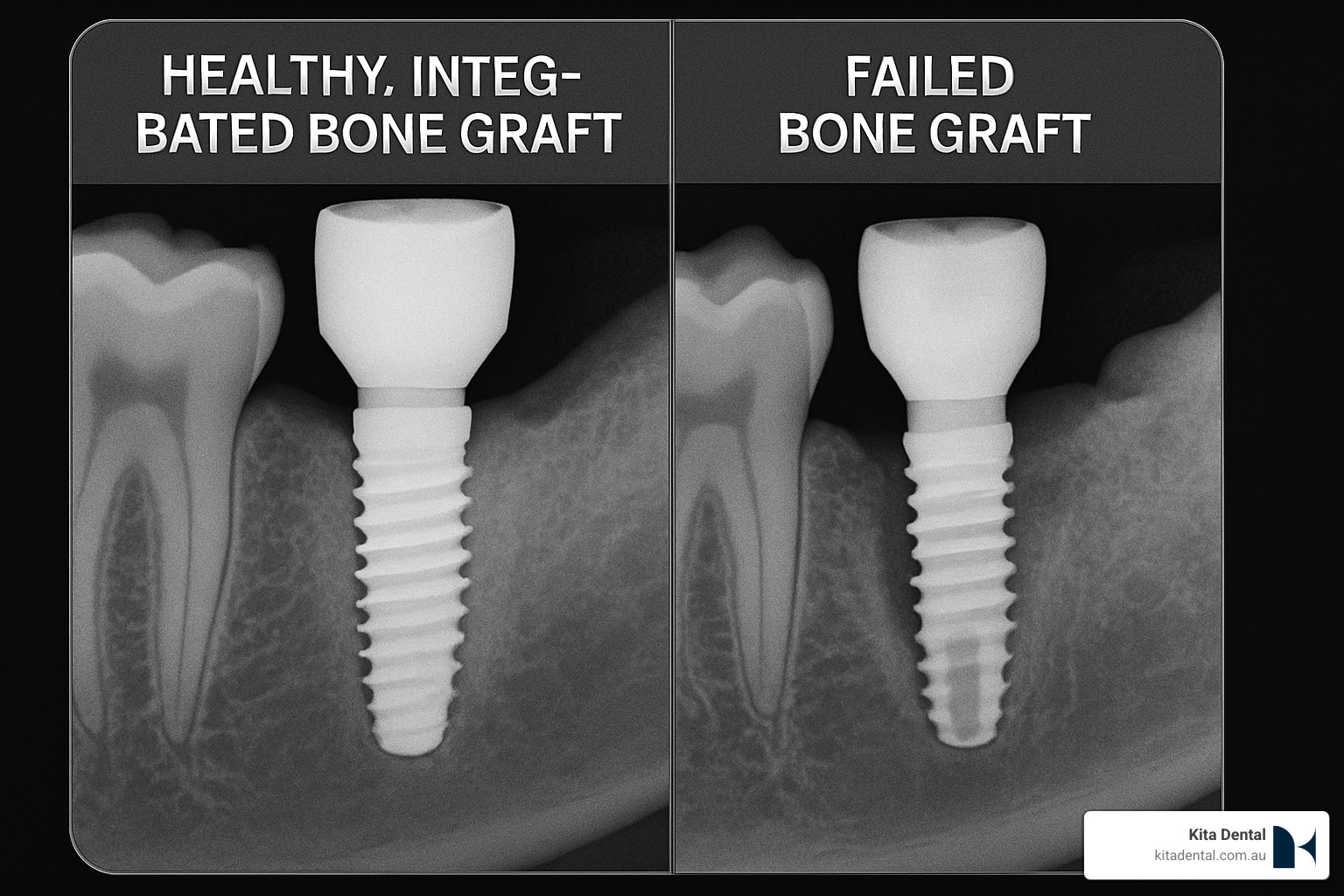
Graft failure is rare but can occur, especially in smokers. Signs include graft particles that remain loose weeks after surgery or lack of bone formation on follow-up X-rays.
The Smoking Factor: Why It Matters So Much
Smoking dramatically impacts your graft’s chances of success by reducing blood flow to healing tissues, impairing immune function, and significantly increasing infection risk. We strongly recommend complete smoking cessation at least 2 weeks before surgery and throughout the entire healing period.
Boosting Success & Protecting Your Investment
Your bone graft dental implant procedure represents a significant investment in your oral health.
Nutrition: Feeding Your Healing
Your body needs specific nutrients to build strong, healthy bone. Protein serves as building blocks for tissue repair. Vitamin C is critical for wound healing. Vitamin D and calcium work together for bone mineralization. Zinc supports immune function and tissue repair.
Lifestyle Choices That Make a Difference
Complete smoking cessation remains the single most important factor for graft success. Limiting alcohol consumption, getting adequate sleep, and managing stress all support optimal healing.
Oral Hygiene Excellence
Maintaining excellent oral hygiene protects your investment. This means gentle brushing with a soft-bristled toothbrush, using antimicrobial mouth rinses as prescribed, and keeping up with professional cleanings.
For comprehensive oral health maintenance that supports your treatment success, explore our affordable deep teeth cleaning services.
Frequently Asked Questions About Dental Bone Grafting
How painful is the procedure?
Most patients tell us their bone graft dental implant procedure was far more comfortable than they expected. During surgery, you won’t feel any pain thanks to local anesthesia.
Afterwards, most people experience mild to moderate discomfort that peaks around day two or three, then steadily improves. Think of it like a wisdom tooth extraction – noticeable but not overwhelming. Over-the-counter pain relievers handle the discomfort for most patients.
Your comfort level depends on several factors. Smaller grafts naturally cause less discomfort than extensive procedures. Following our aftercare instructions makes a huge difference, and non-smokers typically heal faster with less pain.
How long before I can get the implant placed?
The timeline for bone graft dental implant placement varies based on what type of graft you’ve had and how well you heal.
Socket preservation grafts typically need three to four months to mature properly. Small ridge augmentation procedures usually require four to five months. Large block grafts need six to nine months to fully integrate. Sinus lift procedures generally require four to six months of healing time.
Location matters too. Front lower jaw sites often heal faster than upper back areas because of differences in bone density and blood supply. We never rush this process – placing an implant in bone that hasn’t fully matured significantly increases the risk of failure.
What are warning signs of graft failure?
While graft failure is uncommon, knowing what to watch for helps us catch problems early when they’re easiest to treat.
Pain that doesn’t follow the expected pattern is worth investigating. Normal discomfort should gradually improve after the first few days. If your pain increases after the first week or becomes severe and throbbing, contact us.
Signs of infection require immediate attention. Watch for pus or unusual discharge, fever above 38°C, or persistent foul taste that doesn’t improve with gentle rinsing.
Healing problems like visible graft material through your gums after initial healing, or unusual swelling that increases rather than decreases over time also warrant examination.
Most complications are easily treatable when caught early. We maintain open communication throughout your healing period.
Conclusion
Taking the step toward a bone graft dental implant procedure might feel overwhelming at first, but you’re making one of the smartest investments in your long-term oral health. Bone grafting has become so refined and predictable that what once seemed like a major hurdle is now just another step on your journey to a complete, confident smile.
More than half of all implant patients need some form of bone grafting, which means you’re definitely not alone in this process. The techniques we use today achieve success rates between 90-98%, and most of our patients tell us the experience was much easier than they expected.
What This Journey Means for You:
Your bone graft dental implant treatment represents more than just a dental procedure – it’s about getting back to enjoying meals without worry, smiling without hesitation, and speaking with confidence. The few months of healing time might seem long now, but it’s a small price to pay for decades of reliable function.
Ready to Move Forward?
Your next step is straightforward – come in for a consultation. We’ll take detailed 3D images of your jaw, discuss your specific situation, and create a treatment plan that makes sense for your lifestyle and goals.
How We Do Things at Kita Dental:
Here in Mascot, we’ve built our practice around making complex treatments feel manageable and comfortable. When it comes to bone graft dental implant procedures, we focus on thorough planning, gentle techniques, and being there for you every step of the way.
Our 3D imaging technology shows us exactly what we’re working with before we start, which means no surprises and more predictable results. We’ll walk you through everything beforehand, offer sedation options if you’re anxious, and make sure you know exactly what to expect during recovery.
The investment you’re making today in proper bone grafting sets the foundation for implant success that can last 20, 30, or even 40 years. When you consider that timeline, the temporary inconvenience of grafting becomes a smart trade-off.
Your Smile Deserves This Investment:
Don’t let bone loss keep you from the smile and function you want. Modern bone grafting can rebuild even challenging situations, opening doors to implant treatment that might have seemed impossible just a few years ago.
We’re open seven days a week because we know dental concerns don’t follow a Monday-to-Friday schedule. Whether you’re ready to start treatment or just want to understand your options better, we’re here to help.
Ready to explore what’s possible? Learn more about our comprehensive approach to teeth dental implants and find how we can help you achieve the healthy, confident smile you deserve.
Your journey to restored oral health starts with a conversation. We’ll guide you through every decision, answer every question, and make sure you feel confident and comfortable throughout the entire process.