
Why Knowing Dental Emergency First Aid Can Save Your Tooth
Dental emergency first aid is about taking the right steps immediately when something goes wrong with your teeth or mouth. Whether it’s a knocked-out tooth from a sports injury, a sudden severe toothache, or a broken crown, knowing what to do in the first few minutes can mean the difference between saving and losing a tooth – and it also protects the bone and gum tissue you may need for future dental implants or even a full arch implant solution if a tooth can’t be saved.
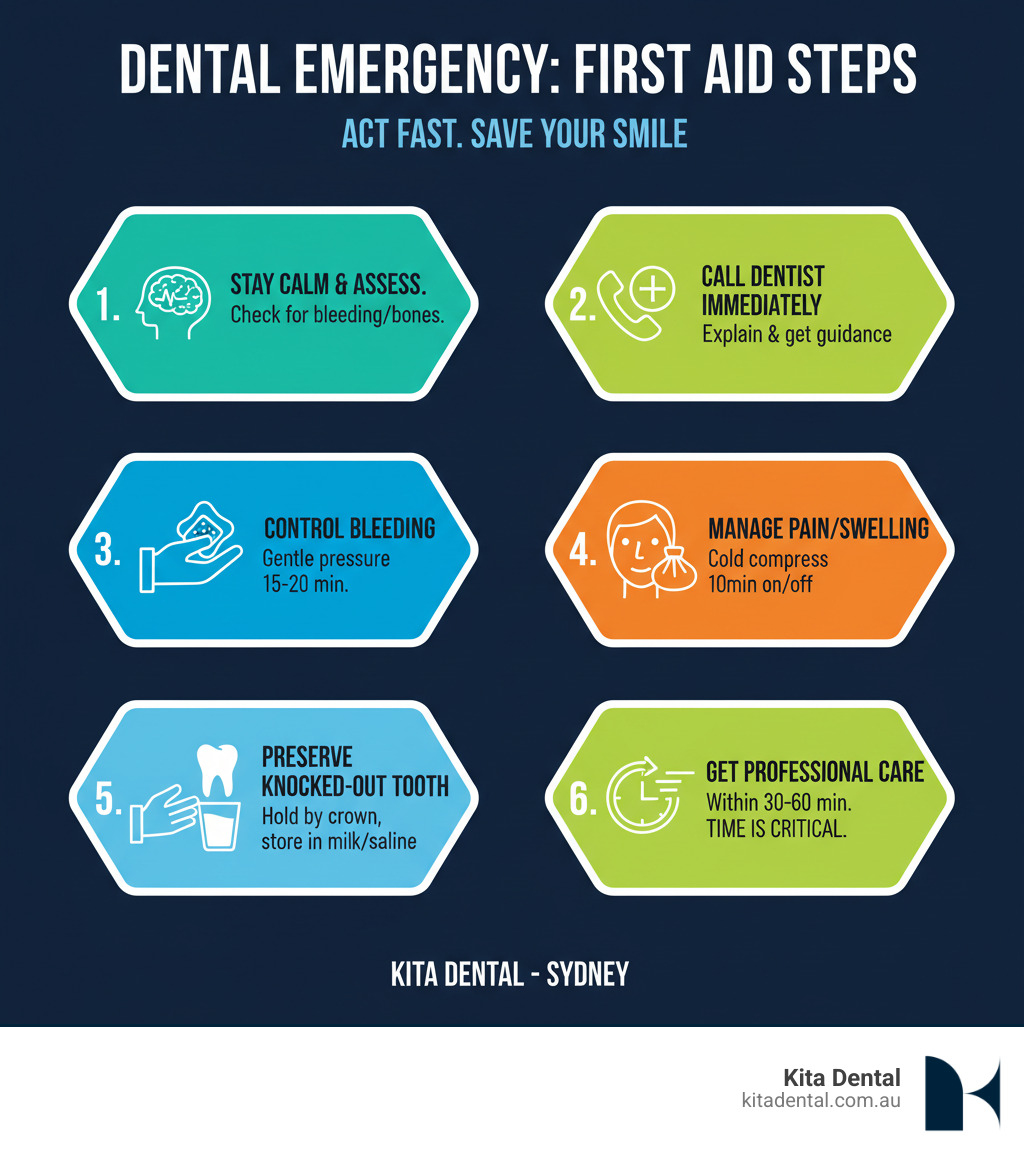
Here are the 3 most critical steps for any dental emergency:
- Stay calm – Panic makes it harder to think clearly and act quickly.
- Call your dentist immediately – They can provide specific guidance for your situation.
- Control bleeding or pain – Apply gentle pressure with clean gauze for bleeding; use a cold compress for swelling and pain.
Dental emergencies are common. Falls, accidents, and sports injuries in busy areas like Mascot and Sydney put both children and adults at risk. The good news is that quick action works. A knocked-out permanent tooth has a very high chance of being saved if it’s replanted within 15-60 minutes with proper handling. If the tooth cannot be saved, prompt and careful first aid helps preserve the site for a future implant or, where multiple teeth are affected, a full arch implant approach.
I’m Dr. Kent Boon, Principal Dentist at Kita Dental in Sydney. I’ve treated hundreds of dental emergencies, from chipped teeth to complex injuries requiring full arch implant reconstruction. My experience has taught me that patient knowledge and quick action are just as important as professional treatment. When teeth cannot be saved, we specialise in advanced implant solutions including zygomatic implants for patients with severe bone loss in the upper jaw, ensuring everyone in Mascot and surrounding Sydney areas has access to permanent tooth replacement options.
Handling Traumatic Dental Injuries: Knocked-Out and Broken Teeth
A dental injury from a fall or sports accident demands immediate and correct dental emergency first aid. Whether you’re dealing with an avulsed tooth (that’s the technical term for a knocked-out tooth), a chipped tooth, a cracked tooth, or broken tooth fragments, time is of the essence. At Kita Dental, we follow evidence-based Guidelines for the management of traumatic dental injuries to ensure the best outcomes – including preserving the bone and soft tissues that may be needed for future dental implants or a full arch implant solution when a tooth cannot be saved.
Immediate Steps for a Knocked-Out Permanent Tooth
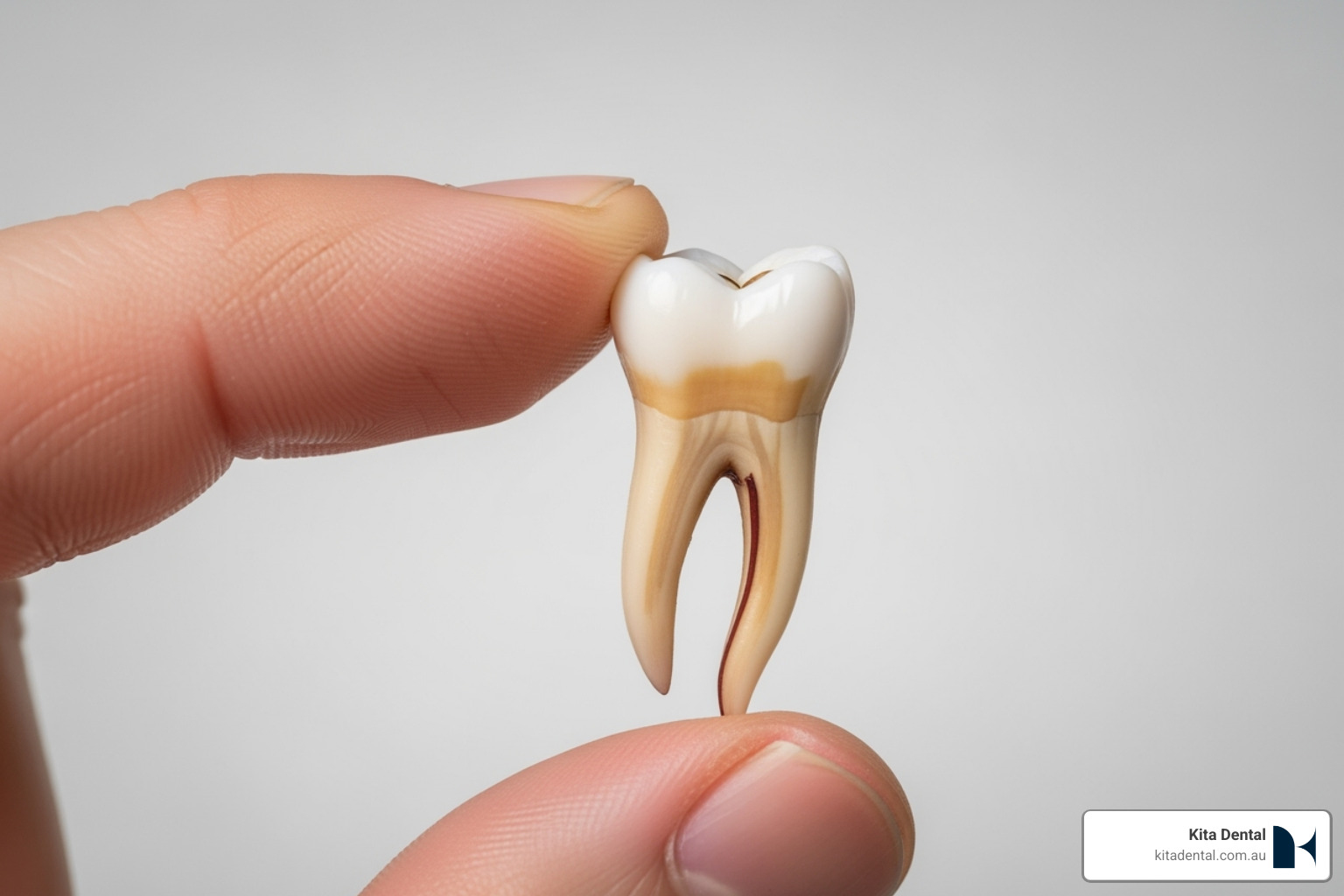
A knocked-out permanent tooth is one of the most urgent dental emergencies. You have the best chance of saving the tooth if you act within 30 to 60 minutes.
- Stay calm and find the tooth.
- Handle it by the crown only (the white, visible part). Never touch the root.
- Gently rinse the tooth with cool water for no more than 10 seconds if it’s dirty. Do not scrub or wipe it.
- Try to re-insert the tooth into its socket. Have the person bite down gently on clean gauze to hold it in place.
- If you can’t re-insert it, keep it moist. Place it in a small container of milk, saline solution, or saliva. Do not use tap water.
- Contact us at Kita Dental immediately. As your local Emergency Dentist Mascot, we prioritize these emergencies to see you within the critical 30-60 minute window.
If replantation isn’t possible or the tooth is not viable, the right first aid still protects the area for future dental implant placement. In cases of multiple lost teeth, we’ll discuss immediate or staged options, including a full arch implant approach if appropriate. For patients in Mascot with significant bone loss, we offer both traditional bone graft and graft-less implant approaches, including zygomatic implants for the upper jaw.
How to Manage a Chipped or Broken Tooth
Chipped and broken teeth also need prompt attention to avoid infection or further damage.
- Rinse your mouth with warm water.
- Save any broken pieces you can find in a container with milk or water.
- Apply a cold compress to the outside of your cheek to manage pain and swelling.
- Cover sharp edges with dental wax or sugar-free chewing gum to protect your tongue and cheek.
- Avoid chewing on the affected side.
Then, call us at Kita Dental. A minor chip can expose the tooth’s inner layers, leading to pain or infection. We’ll assess the damage and discuss your options for Dental Care Sydney. Treatment may be simple bonding, or you might need a crown. If the fracture extends below the gum or the tooth is not restorable, we will plan for extraction with the option of an immediate or delayed dental implant. For multiple non-restorable teeth, we can map out a full arch implant plan that restores function and aesthetics predictably. Our Mascot clinic specialises in comprehensive smile makeovers, helping you choose between implants, crowns, or veneers based on your specific needs.
Managing Painful Dental Emergencies: Toothaches and Abscesses
A throbbing toothache or a swollen face is a serious alarm bell from your body. These are common dental emergencies, often signaling an infection like a dental abscess. Left untreated, infections can lead to tooth loss and the need for dental implants; timely care limits spread and preserves bone for future treatment. In our Mascot clinic, we see how untreated infections can compromise bone density, potentially requiring bone grafting before implant placement – early intervention helps avoid these complications.
Your Guide to Dental Emergency First Aid for a Severe Toothache
While you wait to see us at our Mascot clinic, these dental emergency first aid steps can help manage the discomfort:
- Rinse with warm salt water. Mix half a teaspoon of salt in a glass of warm water and swish gently. This cleans the area and reduces inflammation.
- Floss gently around the painful tooth to remove any trapped food debris.
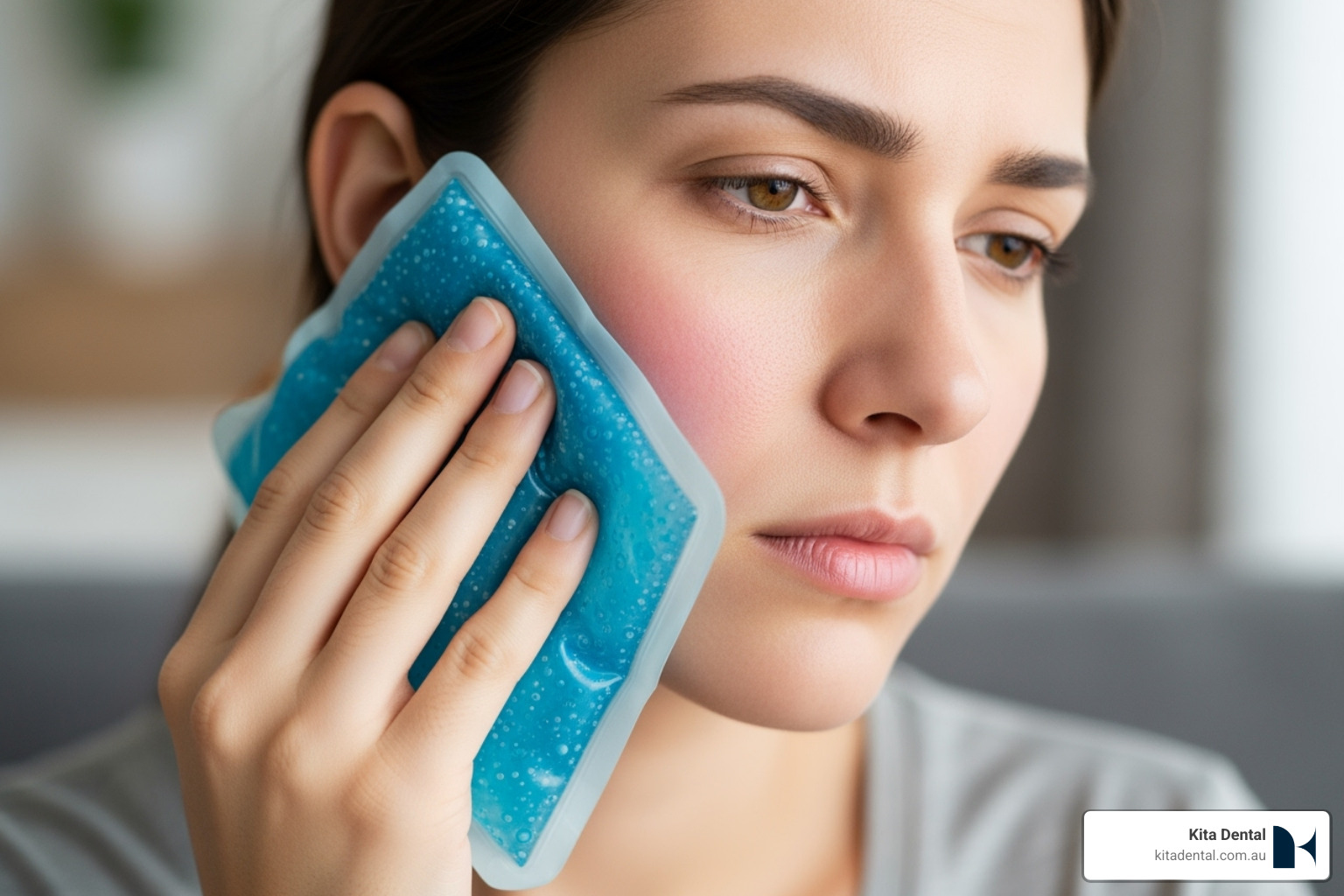
- Apply a cold compress to the outside of your cheek for 20 minutes on, 20 minutes off, to reduce swelling and pain. Do not use heat.
- Use over-the-counter pain relievers like ibuprofen, following package directions.
- Crucially, never place aspirin directly on your tooth or gums. It is acidic and will burn the tissue, causing more harm.
These are temporary fixes. A severe toothache needs professional attention. Contact a 24 Hour Dentist Sydney like our team at Kita Dental immediately. If the tooth cannot be saved, we will plan a pathway to replace it with a dental implant, and where multiple teeth are affected, discuss a full arch implant solution. For patients concerned about funding these treatments, we can guide you through options including superannuation release for dental treatment in Australia.
Signs of a Dental Abscess and What to Do
A dental abscess is a pocket of infection that requires immediate treatment. Dental infections are a leading cause of hospital admissions from emergency departments for dental issues.
Key signs include:
- Persistent, throbbing pain that may radiate to your ear, jaw, or neck.
- Swelling in your face, cheek, or neck.
- A pimple-like bump on your gums.
- A sudden foul taste in your mouth.
- Fever and feeling generally unwell.
Confusingly, the pain might suddenly stop. This often means the nerve has died, but the infection is still present and spreading. This is a critical warning sign.
If you suspect you have an abscess, contact us at Kita Dental immediately. An untreated infection can lead to life-threatening complications. For more medical details, you can consult resources like More on Dental Abscesses. While waiting to see us, rinse with warm salt water, but do not try to pop the abscess yourself. Professional treatment is required to drain the infection and address its cause. If you already have an implant and notice swelling or pus around it, this could indicate peri-implantitis – early care helps protect implant longevity and prevents progression. Our Sydney team specialises in peri-implantitis prevention and treatment to ensure your implants last a lifetime.
Your Complete Dental Emergency First Aid Guide
Other issues like a bitten tongue, a lost filling, or a lost crown also require prompt care. A well-stocked dental first aid kit helps you manage these situations calmly until you can visit our Mascot clinic.
How to Treat Soft Tissue Injuries in the Mouth
For cuts to your gums, cheeks, lips, or tongue:
- Gently rinse your mouth with a mild salt-water solution to clean the wound.
- Apply firm, direct pressure to the bleeding area with sterile gauze for 15-20 minutes.
- Use a cold compress on the outside of your face to reduce swelling and pain.
If bleeding doesn’t stop or the wound is large, contact our Gentle Dental Care Sydney team immediately. Soft tissue injuries can sometimes indicate underlying damage that affects future dental work. For patients considering orthodontic treatment or who have experienced orthodontic-related recession, we also offer gingival grafting to restore healthy gum tissue before or after treatment.
What to Do for a Lost Filling or Crown
While not as urgent as a knocked-out tooth, a lost restoration needs prompt attention to prevent decay or damage.
- If a crown comes off, save it. Rinse the crown and your mouth. You can try to temporarily re-seat it using over-the-counter dental cement from a pharmacy. A dab of toothpaste can work in a pinch.
- For a lost filling, you can temporarily plug the hole with dental cement or a piece of sugar-free chewing gum.
- If an implant crown comes loose, keep all parts safe and do not attempt to glue or re-cement it yourself. Avoid chewing on the area and contact us so we can properly assess the abutment, screw, or cement interface.
- Avoid chewing on the affected side and contact Kita Dental as soon as possible. A temporary fix is not a permanent solution. We can properly re-cement your crown or replace your filling. For more guidance, visit our page on Various Dental and Oral Problems and How to Overcome Them.
Assembling Your Dental First Aid Kit
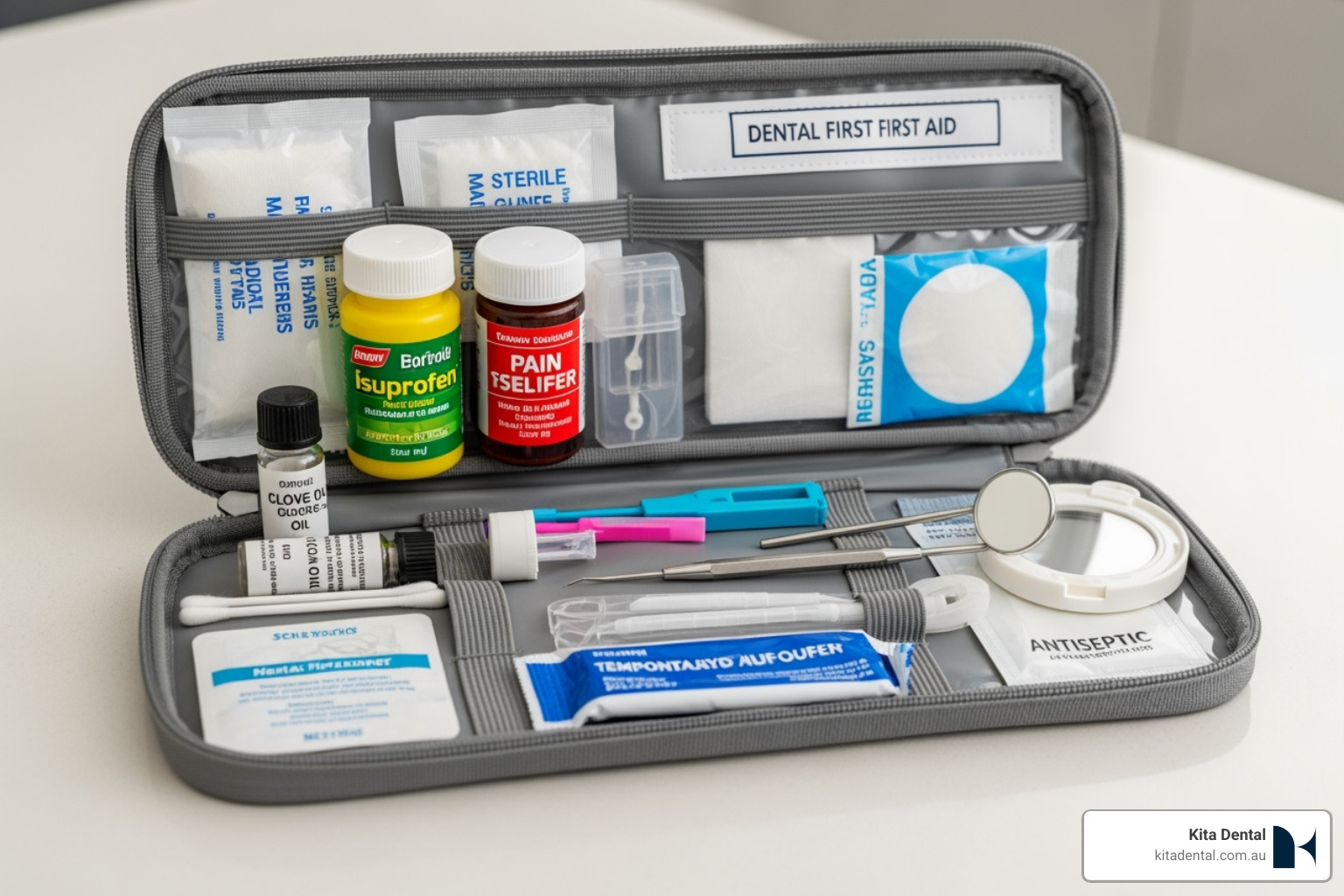
Being prepared reduces panic and improves outcomes. Keep these items in a dedicated kit:
- Sterile gauze
- A small container with a lid (for a knocked-out tooth)
- Saline solution
- Over-the-counter pain relievers (e.g., ibuprofen)
- Dental wax or sugar-free chewing gum
- Dental floss
- Instant cold pack
- Medical exam gloves
- Your dentist’s contact information (program our number in your phone!)
Having these items ready can help you stabilise an issue so we can focus on definitive care – from saving the tooth to planning a timely dental implant or full arch implant restoration when necessary. For Mascot residents, being prepared is especially important given Sydney’s active lifestyle and sports participation rates.
When to Seek Help: Dentist vs. Hospital Emergency Room
One of the most common questions during emergencies is, “Should I come to the dental clinic, or should I go to the hospital?” Knowing the answer can save you valuable time and ensure you get the right care quickly.
For most dental issues, a dentist is best. Hospital ERs can offer pain relief and antibiotics but lack the specialists and equipment for definitive dental treatment. However, some situations require a trip to the ER.
Go to the Hospital Emergency Room for:
- Suspected jaw fracture or major facial trauma.
- Uncontrollable bleeding from the mouth.
- Severe swelling that affects breathing or swallowing.
- Signs of a widespread infection (sepsis), like high fever and confusion, along with a dental problem.
Contact Kita Dental or a dentist in Mascot for:
- Knocked-out or broken tooth: We have the tools and expertise to save your tooth.
- Severe toothache: As a 24 Hour Dentist Sydney, we are available seven days a week.
- Dental abscess: We can drain the infection and treat the cause.
- Lost filling or crown.
- An object stuck between teeth.
If teeth are not salvageable after trauma or infection, we will plan definitive replacement using dental implants, and for multiple missing teeth we can discuss full arch implant options custom to your needs in Sydney. In complex maxillary cases with significant bone loss, we will explain both bone graft and graft-less approaches, including zygomatic implants that anchor in the cheekbone rather than the jaw. Our Mascot clinic specialises in these advanced techniques to ensure every patient has access to permanent tooth replacement.
If in doubt, call us first. Our team at Kita Dental can assess your situation over the phone and guide you to the right place.
Preventing Dental Emergencies
While knowing dental emergency first aid is crucial, prevention is better.
- Wear a custom mouthguard during sports. It’s the most effective protection against dental trauma – for natural teeth and implant crowns.
- Avoid chewing hard objects like ice, popcorn kernels, or using your teeth as tools.
- Keep up with regular dental check-ups. Visiting your General Dentist Sydney allows us to fix small problems before they become emergencies.
- Maintain good oral hygiene. Brushing and flossing daily prevent the decay and gum disease that lead to emergencies. This is also vital for implant longevity and peri-implantitis prevention, whether you have a single tooth implant or a full arch implant solution.
Frequently Asked Questions about Dental Emergency First Aid
What is the most important thing to do for a knocked-out tooth?
Time is the most critical factor. The best chance of saving a tooth is if it’s replanted within 30-60 minutes. Keep it moist in milk or saline, handle it by the crown only, and get to our Mascot clinic immediately. If the tooth cannot be saved, early assessment lets us protect the site for a future dental implant. When several teeth are lost, we can consider a full arch implant plan. For patients with bone loss, we offer both traditional bone grafting and graft-less approaches including zygomatic implants for the upper jaw.
Can I use super glue to fix a broken crown?
No. Never use household adhesives in your mouth. They are toxic and can damage the tooth and crown, making a professional repair more difficult or impossible. Use temporary dental cement from a pharmacy until you can see us. If a crown on an implant comes loose, do not attempt to re-cement it – keep all parts safe and see us promptly so we can assess the implant, abutment, and crown correctly. Proper maintenance is crucial for implant longevity and preventing peri-implantitis.
Is a toothache always a dental emergency?
A mild, fleeting sensitivity can often wait. However, a severe, persistent, or throbbing toothache signals a serious problem like an infection and requires urgent attention. If severe pain suddenly stops, it’s a major warning sign that the nerve may have died, but the infection is still spreading. Contact a 24 hour dentist in Sydney like our team at Kita Dental right away. If the tooth is not restorable, we will discuss replacement with a dental implant or, where multiple teeth are involved, a full arch implant solution to restore your smile and function. For those concerned about funding, we can explain options including superannuation release for dental treatment available to eligible Australian residents.
Your Next Steps After a Dental Emergency
Your quick action using proper dental emergency first aid is the first step to saving your smile. However, these steps are temporary measures, not a cure. An underlying issue almost always needs expert attention to prevent further complications or tooth loss.
At Kita Dental in Mascot, we understand emergencies don’t keep business hours. We are available seven days a week to provide the urgent care you need. Whether you have a traumatized tooth, a severe infection, or a broken tooth that may need a crown or even a full arch implant solution, our team is ready to help. If a tooth can’t be saved, we’ll guide you through a clear pathway to dental implants – from preserving bone to planning the final restoration.
Our Mascot clinic specialises in comprehensive smile makeovers, helping Sydney residents choose between implants, crowns, or veneers based on their specific needs. For complex cases involving significant bone loss, we offer advanced solutions including zygomatic implants and both bone graft and graft-less approaches. We also provide guidance on funding options, including superannuation release for eligible dental treatments.
Your oral health is too important to leave to chance. If you’ve experienced any dental trauma or sudden pain, don’t wait. Contact us immediately for guidance and treatment by visiting our Emergency Dentist Mascot page. The sooner you seek professional care, the better your outcome will be. Our focus on implant longevity and peri-implantitis prevention ensures that whether you need emergency care today or planned treatment tomorrow, your smile is in expert hands.