Skip to content
Understanding Your Options for Affordable Deep Teeth Cleaning
Affordable deep teeth cleaning near me is a popular search because many people want to protect their gum health without breaking the bank. The good news? There are several ways to find quality deep cleaning care that fits your budget, so you can get the treatment you need for a healthier smile.
Quick Answer: Where to Find Affordable Deep Cleaning Options
- Dental schools: Supervised student practitioners often provide care at reduced rates
- Community health centers: Offer sliding scale fees based on your income
- Insurance coverage: Many plans cover a significant portion of deep cleaning
- Payment plans: Options like CareCredit, in-house financing, and HSA/FSA can help spread out costs
- Mobile dental hygienists: Lower overhead may mean more budget-friendly services
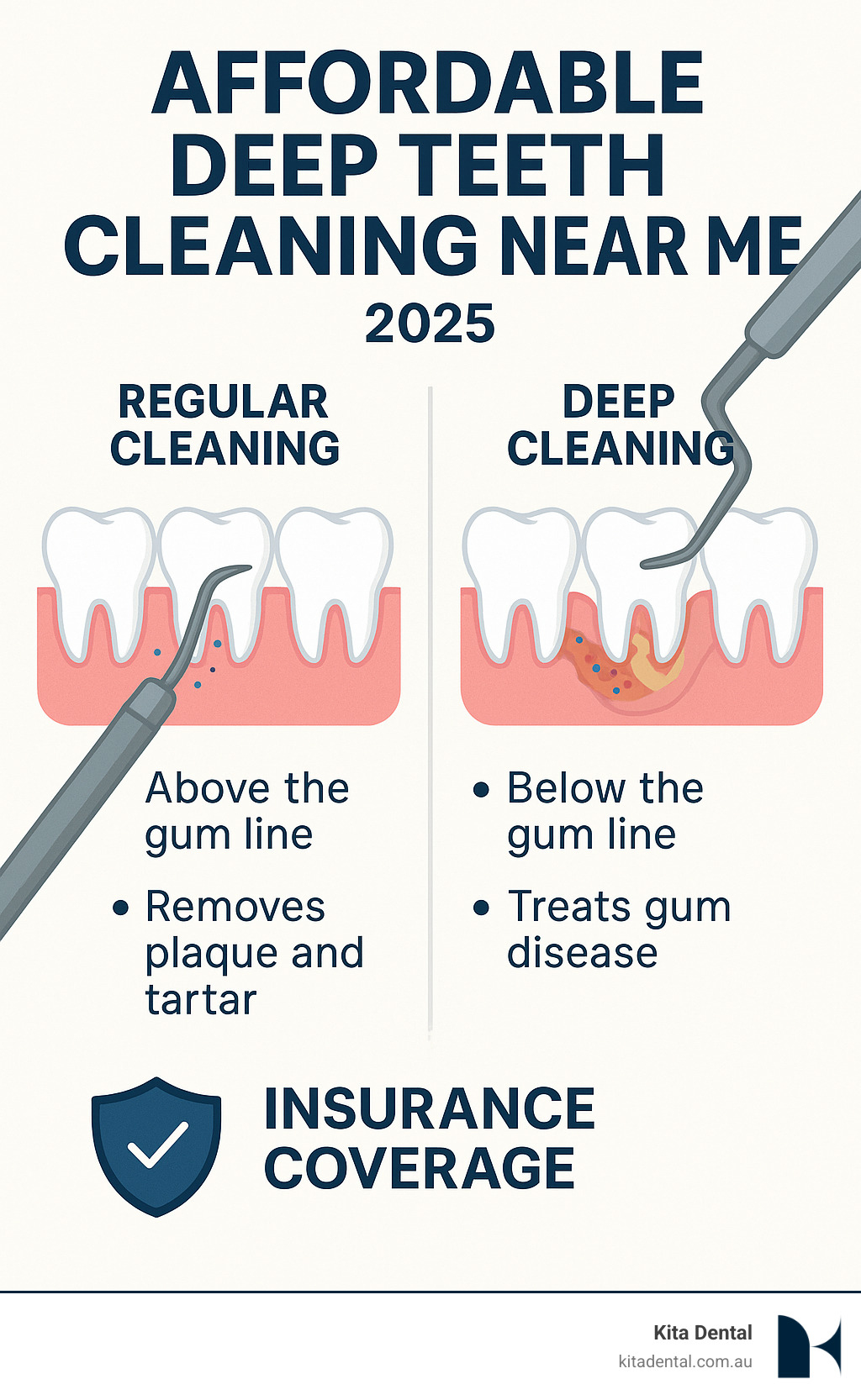
Deep teeth cleaning, also called scaling and root planing, differs significantly from regular cleanings. While routine cleanings remove plaque above the gum line, deep cleaning targets bacteria and tartar below the gums and on tooth roots. This procedure treats gum disease that affects millions of adults and can lead to tooth loss if left untreated.
While deep teeth cleaning can seem daunting, there are many ways to access quality care that fits your budget. With a bit of research and planning, you can find reputable providers who offer safe, effective treatment—without sacrificing your oral health.
As Dr. Kent Boon, I’ve helped countless patients find affordable deep teeth cleaning near me options throughout my years practicing restorative and preventive dentistry in Sydney. My experience has shown that cost should never be a barrier to essential periodontal treatment when so many accessible solutions exist.
Deep Teeth Cleaning 101: What It Is, How It Differs & Who Needs It
Deep teeth cleaning is a thorough procedure that tackles bacterial buildup below your gum line where regular toothbrushes can’t reach. Professionally called scaling and root planing, this treatment addresses stubborn plaque and tartar in periodontal pockets.
While regular cleanings focus on visible plaque above your gums, deep cleaning works below the surface. Scaling removes plaque and tartar from tooth surfaces and roots below the gum line using precision instruments. Root planing smooths root surfaces so gum tissue can properly reattach and heal.
Local anesthesia keeps you comfortable during treatment. Your mouth is divided into four quadrants, with most patients needing about 2.5 quadrants treated. Each section takes one to two hours, depending on buildup severity.
Untreated periodontal disease connects to serious health conditions like diabetes, heart disease, and stroke. Scientific research on oral-health links shows clear connections between gum disease and whole-body health. When you invest in affordable deep teeth cleaning near me, you’re investing in overall wellness.
Once bacteria establish themselves in deep pockets, regular brushing and flossing can’t reach them. Professional intervention becomes essential to prevent bone loss and tooth mobility.
Why Do Some Patients Require a Deep Cleaning?
The journey from healthy gums to needing deep cleaning starts with gingivitis – early-stage gum inflammation where gums become red, swollen, and bleed during brushing or flossing.
When gingivitis isn’t addressed, it progresses to periodontitis. Bacteria slip below the gum line, creating deeper pockets between teeth and gums – perfect hideouts for harmful bacteria.
Chronic bad breath that doesn’t improve with brushing or mouthwash often signals bacterial buildup in periodontal pockets. Bleeding gums during eating or brushing indicate inflammation and infection below the surface. Tooth mobility occurs when bacterial toxins destroy bone structure supporting your teeth.
Smoking, diabetes, pregnancy, certain medications, and genetics increase your chances of needing deep cleaning. Stress and poor nutrition can weaken your immune system’s ability to fight gum disease. More info about scaling vs regular cleaning explains these differences.
Signs You Need an Affordable Deep Teeth Cleaning Near Me
Receding gums that pull away from teeth expose root surfaces and make teeth appear longer. Swollen tissue that’s red or purple instead of healthy pink indicates active inflammation.
During examination, we measure deep pockets using a special probe. Healthy gums have pocket depths of one to three millimeters, while depths of four millimeters or greater signal need for professional intervention.
X-ray bone loss around tooth roots provides evidence that periodontal disease has progressed beyond early stages. Other warning signs include persistent metallic taste, pus between teeth and gums, bite changes, and new gaps between teeth.
Catching these signs early means you can access effective, affordable treatment before the condition becomes more severe and costly to manage.
The True Cost & Budget-Friendly Options
Understanding deep cleaning costs helps you plan ahead and find the best budget options. The reality is that deep cleaning requires investment, but there are definitely ways to make it affordable.

The national average of $315 per quadrant means most people needing 2.5 quadrants face $750-$875 for full treatment. If you need all four quadrants, expect $600-$1,400 depending on location and specific needs.
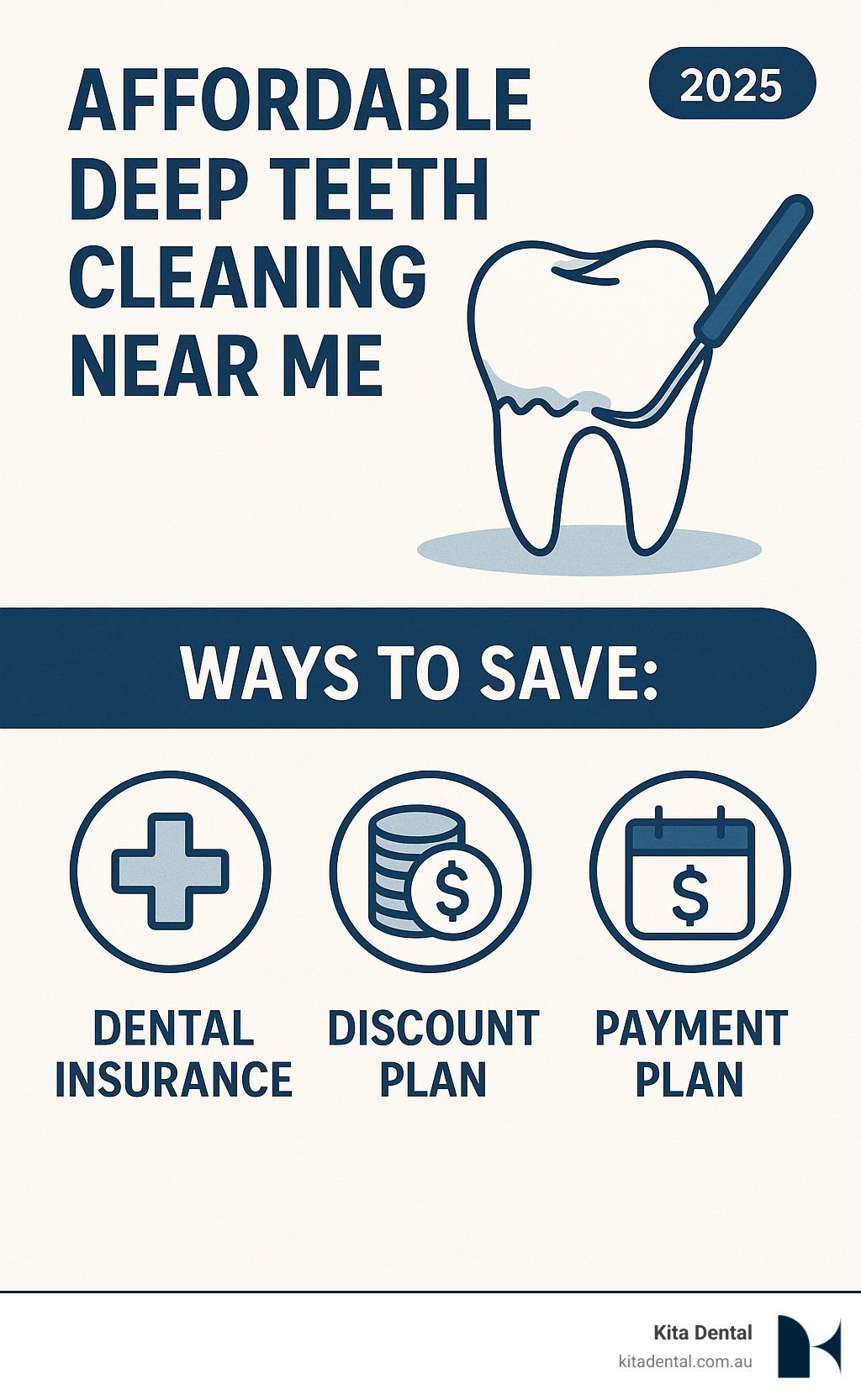
Insurance coverage can make a significant difference. Many dental plans consider deep cleaning an important preventive service, often covering a substantial portion of the treatment. This support helps make deep cleaning much more accessible for patients who need it.
Dental insurance often has an annual maximum benefit. If your treatment plan is extensive, ask your provider about scheduling across benefit years to make the most of your coverage.
Community health centers provide dental care with fees adjusted to your income, making deep cleaning more accessible for those without insurance. These centers focus on essential treatments and preventive care, helping patients receive the services they need regardless of financial situation.
Dental schools provide deep cleaning services performed by student practitioners under the close supervision of experienced professionals. Appointments may take a bit longer, and there can sometimes be a waiting list, but you’ll receive thorough care in a teaching environment.
Mobile dental hygienists bring equipment to your location. Without traditional practice overhead costs, they often offer competitive rates plus convenience.
Check if you qualify for special programs. Veterans, seniors, and people with certain health conditions often access reduced-rate or free dental services through charitable organizations.
More info about fees varies significantly between providers, so shopping around is essential for finding truly affordable deep teeth cleaning near me.
Payment Plans That Make Affordable Deep Teeth Cleaning Near Me Possible
Even with insurance and discounts, coming up with several hundred dollars upfront can be challenging. Most dental practices offer multiple ways to spread out costs.
CareCredit is a healthcare-specific credit card offering promotional financing. Many plans offer 0% interest for 6-24 months, letting you get treatment now and pay gradually without extra charges.
Many practices offer in-house membership programs like dental subscription services. You pay an annual fee and get significant treatment discounts throughout the year.
Health fund partnerships can be incredibly helpful. Major funds offer extras packages including dental coverage, with many covering up to 80% of scaling and root planing costs. HICAPS provides instant rebates at treatment time.
Flexible payment arrangements are increasingly common for larger treatments. Many practices allow splitting treatment costs across several months without charging interest.
HSA and FSA funds use pre-tax dollars, effectively providing a discount equal to your tax rate. In a 25% tax bracket, that $800 treatment costs only $600 in real money.
Third-party financing companies offer “buy now, pay later” options for dental procedures, though it’s important to read the fine print about fees and interest rates.
Affordable deep teeth cleaning near me doesn’t mean compromising quality or delaying necessary treatment. More info about general-care includes details about payment options and maximizing insurance benefits.
Affordable Deep Teeth Cleaning Near Me: How to Find Reputable Care
Looking for affordable deep teeth cleaning near me can feel overwhelming when balancing quality care with budget constraints. With the right approach, you can find excellent periodontal treatment that won’t break the bank.
Finding great care at reasonable prices starts with thorough research. The cheapest option isn’t necessarily the best value, and the most expensive doesn’t guarantee superior results. What matters is finding that sweet spot where quality meets affordability.
Online reviews are your first stop, but read them smartly. Look for patterns rather than individual complaints or praise. Pay attention to comments about pricing transparency, treatment comfort, and whether patients felt results justified costs.
Professional credentials matter enormously. Check that your chosen provider holds current licenses and maintains good standing with professional bodies. In Australia, the Australian Health Practitioner Regulation Agency (AHPRA) website lets you verify any dentist or dental hygienist’s registration status.
Price transparency separates reputable providers from those to avoid. Quality practices provide detailed, written estimates breaking down costs by quadrant and explaining additional fees upfront. Evasiveness about pricing or pressure to commit before explaining costs are red flags.
Dental schools offer exceptional value while maintaining rigorous safety standards. Student practitioners work under direct faculty supervision, often providing more thorough care due to educational emphasis on proper technique. The trade-off is longer appointment times.
Community health centers serve as hidden gems for affordable dental care, operating on sliding fee scales based on income and providing comprehensive services at reduced rates.
Mobile dental hygienists represent an innovative approach gaining popularity. By bringing professional equipment to your location, they eliminate overhead costs, often passing savings directly to patients.
When you have dental insurance, staying in-network maximizes benefits and minimizes surprise costs. More info about emergency-care explains working with insurance providers for urgent dental treatment.
Vetting Clinics for Safety and Value
Sterilization protocols should be non-negotiable regardless of price. Observe clinic cleanliness and ask about infection control procedures. Reputable practices are proud of safety measures and happy to explain them.
Registered hygienists must perform your deep cleaning. Verify hygienists hold current licenses and maintain continuing education requirements. If considering student clinics, ensure licensed faculty directly supervise all procedures.
Sedation options indicate a practice’s commitment to patient comfort. Quality providers offer various comfort measures, from local anesthesia to nitrous oxide. Their availability suggests a practice prioritizing patient experience alongside clinical outcomes.
Patient testimonials provide valuable insights into real experiences. Established practices often maintain portfolios of successful treatments and can connect you with satisfied patients who’ve undergone similar procedures.
Follow-up care separates comprehensive providers from those offering quick fixes. Quality practices include follow-up visits in treatment plans and offer ongoing maintenance programs to protect your investment.
Affordable deep teeth cleaning near me doesn’t mean compromising quality. With careful research and the right questions, you can find excellent periodontal care that fits your budget.
What to Expect During & After Your Deep Cleaning
Understanding what happens during and after affordable deep teeth cleaning near me helps ease anxiety and sets realistic expectations for your healing journey.
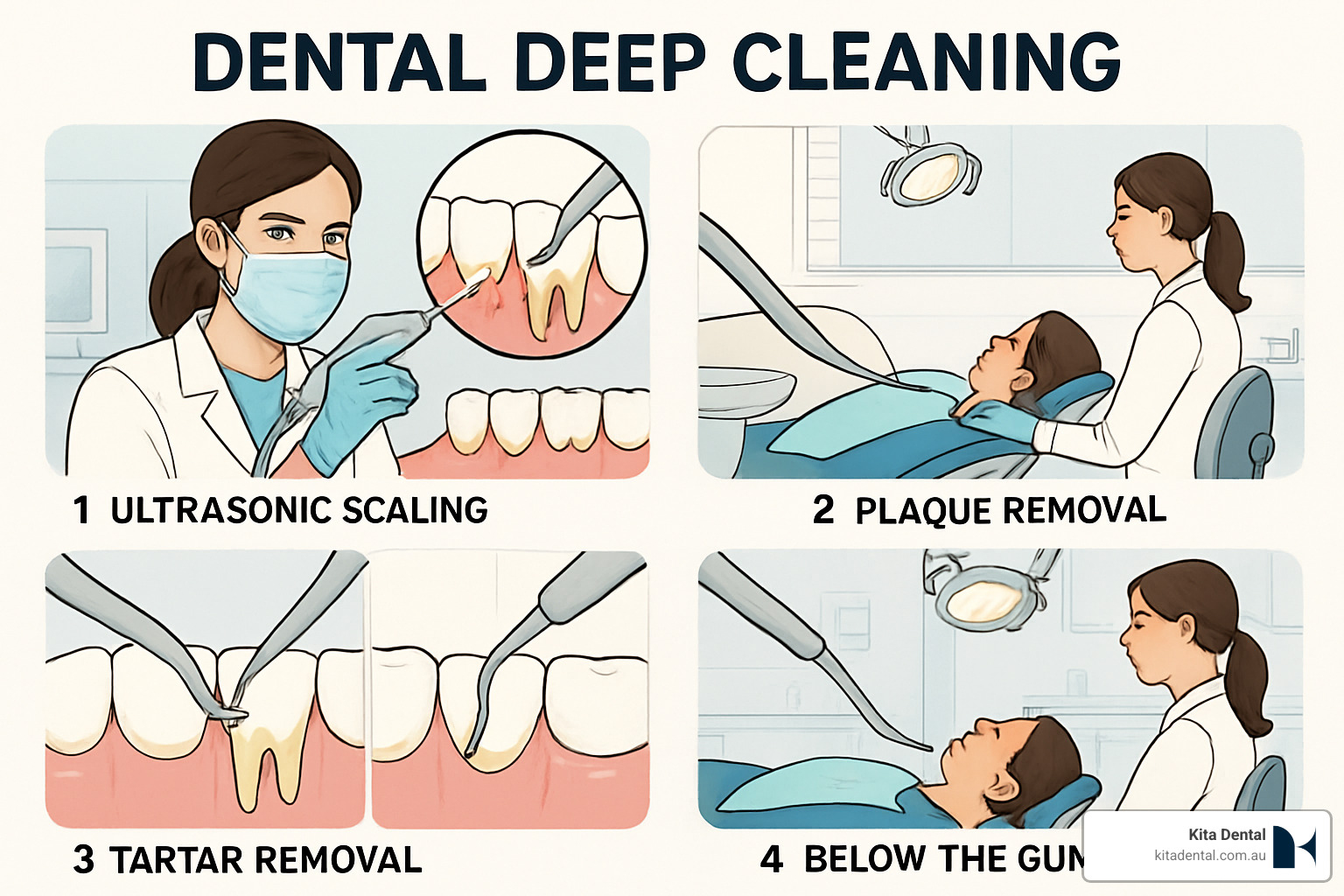
Your appointment starts with thorough examination and X-ray review to map bacterial buildup below your gum line. We’ll review medical history and medications, then apply numbing gel followed by local anesthesia for comfort.
The scaling process uses specialized ultrasonic scalers that vibrate at high frequencies to gently break up stubborn plaque and tartar deposits. These tools feel like gentle tickling rather than uncomfortable scraping. For areas needing extra attention, we use manual curettes – small, curved instruments allowing precise cleaning of root surfaces within periodontal pockets.
Root planing follows scaling, involving smoothing root surfaces to remove bacterial toxins that have penetrated tooth structure. This creates clean, smooth surfaces encouraging gums to reattach and heal properly.
Many patients benefit from antibiotic gel placed directly into treated periodontal pockets. This localized treatment fights remaining bacteria without affecting your entire system, dissolving gradually over several days.
Your follow-up visit typically occurs 4-6 weeks after treatment to assess healing progress and ensure gums are responding well.
Expect mild sensitivity for a few days – completely normal as gums adjust to being bacteria-free. Most patients notice significant improvement within two weeks, with complete healing taking 4-6 weeks.
Scientific research on deep-cleaning steps demonstrates how this approach creates ideal environment for gum tissue regeneration and long-term oral health.
Maintaining Results: Post-Cleaning Care Tips
Your deep cleaning investment pays dividends for years with proper aftercare. Maintaining results doesn’t require complicated routines – just consistent, gentle care.
Soft brushing protects newly cleaned gums while they heal. Use soft-bristled toothbrushes with small circular motions rather than aggressive scrubbing. Electric toothbrushes work beautifully, being naturally gentler on sensitive tissue.
Daily flossing becomes your best friend after deep cleaning. Periodontal pockets are now clean, and flossing prevents bacterial buildup from returning. If traditional floss feels uncomfortable initially, try water flossers or soft tape floss.
Antimicrobial rinse provides extra protection against bacteria that caused gum problems. Look for therapeutic mouthwashes containing chlorhexidine or cetylpyridinium chloride – ingredients specifically targeting harmful bacteria in periodontal pockets.
If you smoke, now is perfect time to quit smoking. Tobacco severely impairs healing and dramatically increases gum disease recurrence risk. Cigarette toxins reduce blood flow to gums, making proper healing nearly impossible.
Your maintenance schedule changes from standard six-month cleanings to more frequent 3-4 month maintenance visits. These shorter intervals help catch bacterial reaccumulation early and keep gums in optimal condition.
Eating well supports healing. Foods rich in vitamin C, vitamin D, and antioxidants give your immune system tools needed to maintain healthy gums. Avoid very hot, cold, or crunchy foods for the first few days while sensitivity subsides.
More info on benefits explains how consistent aftercare maintains dramatic improvements deep cleaning provides.
Frequently Asked Questions about Affordable Deep Teeth Cleaning Near Me
When searching for affordable deep teeth cleaning near me, you probably have questions about this investment. Let me address the most common concerns patients have.
How often should a deep teeth cleaning be repeated?
Deep cleaning is typically a one-time therapeutic procedure that gets your gums back to health, followed by more frequent maintenance cleanings to keep them that way.
Most patients need maintenance cleanings every 3-4 months after deep cleaning, rather than the usual twice-yearly schedule. Once we’ve gotten your gums healthy, we want to keep them that way with more frequent check-ins.
Frequency depends on home care and other factors. Patients who brush and floss religiously and attend maintenance appointments rarely need another deep cleaning. But diabetes, smoking, or family history of gum disease might require extra attention.
Poor oral hygiene is the biggest factor leading to repeat deep cleanings. Patients who return to old habits of skipping floss or missing appointments may need additional procedures. Conversely, patients maintaining good home care routines often haven’t needed another deep cleaning in over a decade.
Does dental insurance fully cover deep cleaning costs?
Most dental insurance plans cover 50-80% of deep cleaning costs, meaning you’ll have some out-of-pocket expenses to plan for.
Insurance companies recognize deep cleaning as necessary treatment, so they provide decent coverage. Basic procedures like scaling and root planing usually fall into the 70-80% coverage range.
However, annual maximums can be limiting. Most plans cap benefits at $750-$1,500 per year, and full-mouth deep cleaning can use up a big chunk of that allowance. Some patients split treatment across two benefit years to maximize coverage.
Waiting periods can also affect coverage. If you just signed up for dental insurance, you might need to wait 6-12 months before major procedures are covered.
Health Savings Accounts and Flexible Spending Accounts let you use pre-tax dollars for dental work, effectively giving you a discount equal to your tax rate.
Even with dental insurance, patients often have some out-of-pocket costs for comprehensive deep cleaning treatment.
What key questions should I ask my dentist before committing?
Start with treatment details: “How many quadrants need treatment, and can we do this in stages?” This affects both time commitment and budget.
Money talk is crucial – ask for detailed breakdown of all costs, including fees for anesthesia, medications, or follow-up visits. Find out exactly what insurance will cover and what payment options are available.
Recovery expectations are important. Ask what to expect during healing, how to care for teeth afterward, and when to schedule follow-up appointments.
Quality and safety questions help you feel confident. Ask about credentials, experience with periodontal treatment, and sterilization protocols.
Finally, ask about long-term maintenance: “How often will I need special cleanings after this?” Understanding ongoing commitment helps you budget for future care.
Don’t hesitate to ask for everything in writing – treatment plans, cost estimates, and post-care instructions. Reputable providers welcome these questions because they want you to feel confident about your decision.
Conclusion
Finding affordable deep teeth cleaning near me is absolutely achievable when you know where to look and how to steer your options. You don’t have to choose between quality care and staying within budget.
The landscape of affordable periodontal care includes several accessible options. Dental schools often provide supervised treatment from experienced students and faculty. Community health centers may offer sliding-scale fees based on your income. Mobile hygienists can deliver professional care directly to your home. Many insurance plans also help cover a significant portion of deep cleaning costs, making quality care more attainable.
Payment flexibility opens even more doors. Whether it’s CareCredit’s promotional financing, in-house payment plans, or using HSA funds, there’s likely a payment solution that works for your situation.
Deep cleaning isn’t just about your gums. Research connecting gum disease to heart problems, diabetes complications, and other serious health issues makes this treatment a whole-body investment. Spending money on scaling and root planing today often prevents much costlier health problems down the road.
The biggest mistake patients make is waiting. Periodontal disease doesn’t improve on its own, and delaying treatment only makes it more extensive and expensive later. Those early warning signs – bleeding gums, chronic bad breath, or visible recession – are your mouth’s way of asking for help.
At Kita Dental, we’ve built our practice around making quality dental care accessible to everyone in our Mascot community. We believe transparent pricing, flexible payment options, and working closely with health funds should be standard practice. Our team takes pride in helping patients find solutions that work for their budgets without compromising care.
Your smile is worth the investment. The confidence that comes from healthy gums, fresh breath, and knowing you’ve taken control of your oral health pays dividends every day. Whether you choose our clinic or find another provider that fits your needs, the important thing is taking that first step.
Ready to explore your options? We’re here seven days a week to discuss your specific situation and help you find the most affordable path to healthier gums.
More info about general dental care and how we can help you achieve optimal oral health within your budget.