Skip to content
Why Choosing the Right Implant Approach Matters for Your Smile
Bone grafting vs graft-less approach for implant decisions can significantly impact your treatment timeline, comfort, and overall experience when replacing missing teeth. Understanding these two distinct pathways helps you make informed choices about your oral health.
Key Differences at a Glance:
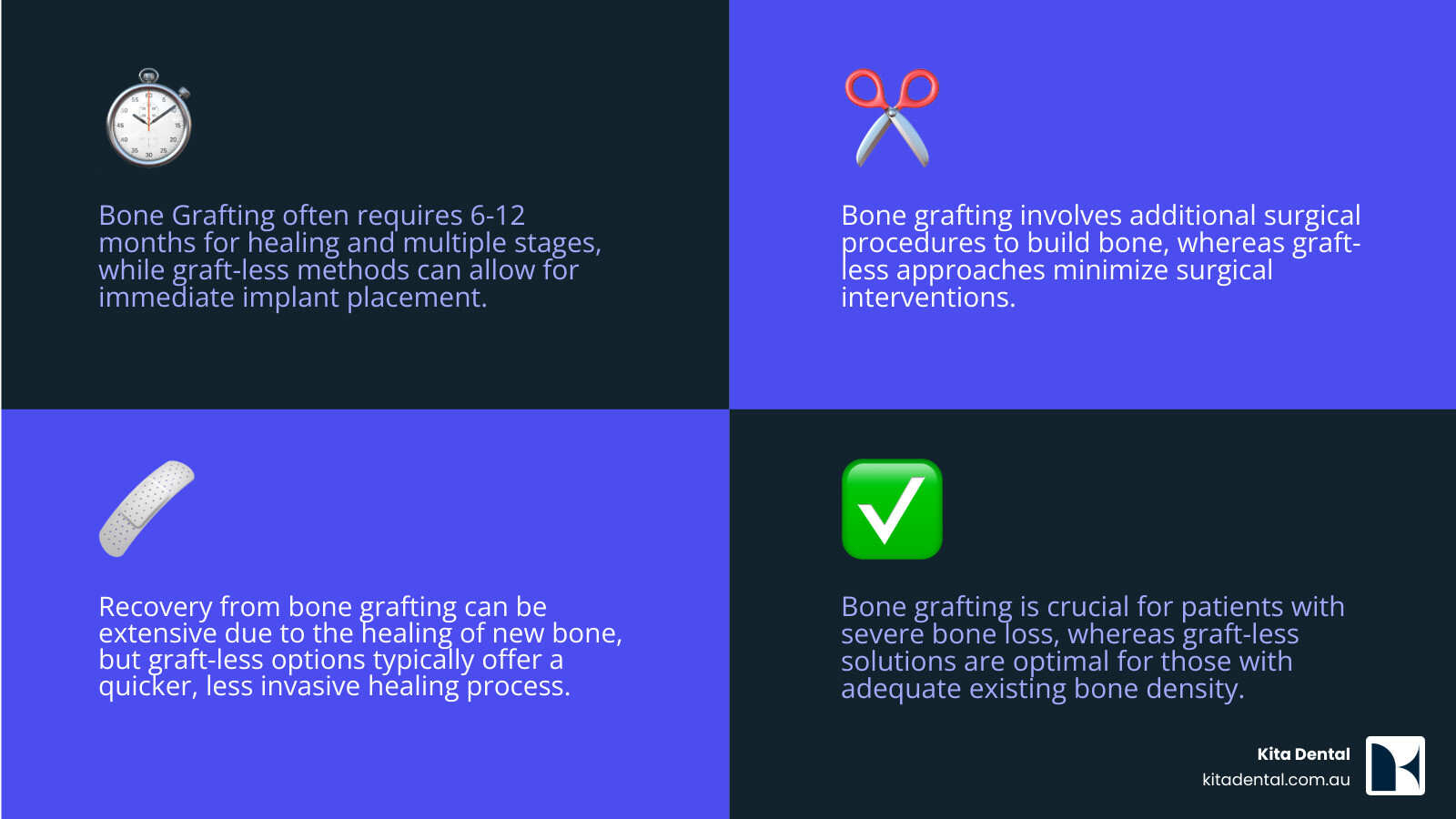
- Bone Grafting Approach: Rebuilds jawbone first, then places implants (typically 6-15 months total treatment time)
- Graft-less Approach: Places implants directly into existing bone using specialized techniques (often completed in 1-2 days)
- Treatment Complexity: Grafting involves multiple surgeries; graft-less uses single-stage procedures
- Recovery Time: Grafting requires longer healing periods; graft-less offers faster return to normal activities
- Patient Suitability: Grafting works for severe bone loss; graft-less ideal for moderate bone loss cases
Modern dental implant treatment has evolved beyond the traditional “graft first, implant later” approach. Research shows that graft-less techniques, particularly for full arch restorations, achieve high implant survival rates of 97.92% – nearly matching grafted procedures at 98.73%.
The choice between these approaches depends on your specific bone quality, health factors, and treatment goals. Many patients in Mascot seeking full arch implant solutions find that graft-less techniques like All-on-4® offer an appealing alternative to lengthy bone grafting procedures.
Dentists with specialized training, such as a Master of Science in Implantology, help countless patients steer the bone grafting vs graft-less approach for implant decision. Specialized training in full arch implant procedures, combined with extensive post-graduate education, ensures patients in Mascot can access the most advanced implant care available.
Why Jawbone Health is Crucial for Dental Implants
Think of your jawbone as the foundation of a house – without a solid base, even the best construction won’t last. This analogy perfectly captures why jawbone health is absolutely critical when considering dental implants, especially for full arch restorations.
Your dental implants need to fuse directly with your jawbone through a remarkable process called osseointegration. During this biological bonding, your bone literally grows around the implant, creating an incredibly strong foundation that can last decades. This fusion is what allows implants to function just like your natural teeth, handling everything from biting into an apple to enjoying a hearty steak dinner.
When we’re planning a full arch restoration, the stakes become even higher. These comprehensive smile makeovers rely on strategically placed implants to support an entire bridge of replacement teeth. Each implant must have sufficient bone volume and density to anchor properly and share the considerable forces generated during chewing.
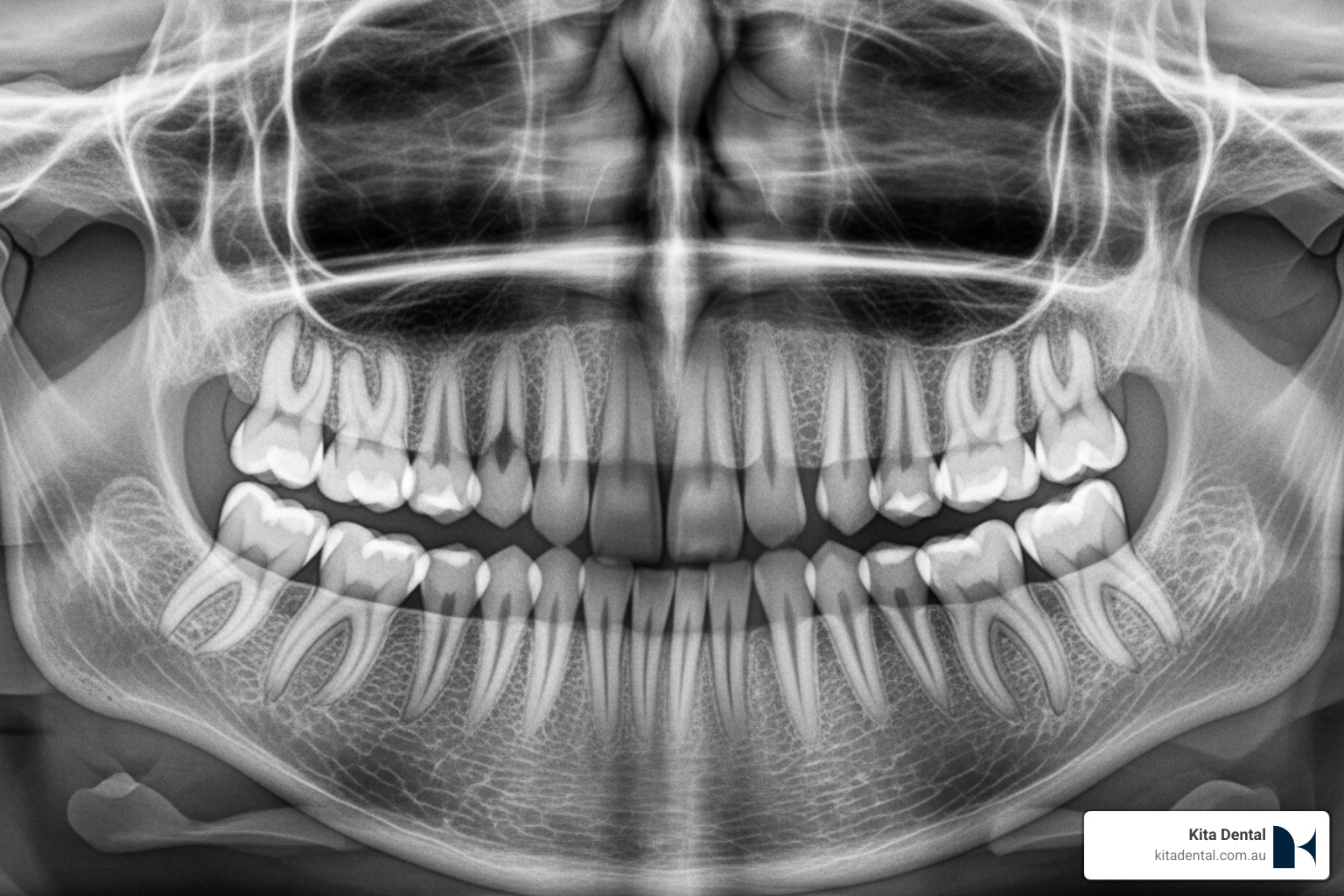
Without adequate bone support, implants can become loose, fail to integrate properly, or even fall out entirely. This is where the bone grafting vs graft-less approach for implant decision becomes crucial for patients in Mascot seeking smile restoration.
Common Causes of Jawbone Loss
Unfortunately, losing bone in your jaw is surprisingly common. Understanding why this happens helps explain why some patients need bone grafting while others can proceed directly with implant placement.
Tooth extraction is one of the biggest culprits. Once a tooth is removed, the bone that supported it no longer receives the stimulation it needs to stay healthy. Your body essentially thinks, “We don’t need this bone anymore,” and begins resorbing it. Within just 12 months, you can lose significant bone height and width – sometimes making implant placement much more challenging.
Gum disease, particularly advanced periodontitis, acts like a silent destroyer of jawbone. The chronic infection doesn’t just affect your gums; it actively breaks down the bone supporting your teeth. Many patients don’t realize how much bone they’ve lost until they seek implant treatment.
Dental trauma from accidents or sports injuries can damage both teeth and the surrounding bone. Even if the immediate injury heals, long-term bone loss often follows, especially if teeth are lost or damaged.
Misaligned teeth create uneven pressure on your jawbone over years or decades. Some areas receive too much stress while others get too little, leading to irregular bone loss patterns that complicate implant planning.
Perhaps surprisingly, dentures – while replacing missing teeth – actually accelerate bone loss. Unlike natural teeth or implants, dentures sit on top of your gums without stimulating the underlying bone. This lack of stimulation causes progressive shrinkage, which is why dentures often become loose and uncomfortable over time.
The natural aging process also plays a role, as our bone density naturally decreases with age, making some individuals more susceptible to jawbone deterioration.
The Role of Bone in Supporting a Full Arch of Implants
When we design a full arch implant solution, we’re essentially creating a new foundation for your entire upper or lower set of teeth. This requires careful consideration of bone quality, quantity, and distribution throughout your jaw.
Adequate bone volume provides the primary anchorage for each implant, ensuring they can withstand the significant forces generated during normal chewing. A single bite can generate forces of up to 200 pounds per square inch – your jawbone needs to be strong enough to handle and distribute these forces effectively.
Preventing implant failure becomes paramount when multiple implants work together to support a full arch. If one implant in a traditional approach fails, it can compromise the entire restoration. This is why modern techniques often use angled implants and strategic placement to maximize the use of available healthy bone.
The bone also plays a crucial role in supporting your facial structure. When you lose teeth and the supporting bone shrinks, your face can develop a sunken, aged appearance. Maintaining adequate bone volume helps preserve your natural facial contours and prevents that “collapsed” look often associated with long-term tooth loss.
For patients considering full arch restoration, understanding your current bone health helps determine whether you’re a candidate for immediate implant placement or if you might benefit from bone grafting first. Advanced 3D imaging is used to assess your bone quality and develop the most appropriate treatment plan for your unique situation.
The good news is that even if you have experienced bone loss, modern implant techniques offer solutions. Whether through bone grafting to rebuild your foundation or innovative graft-less approaches that work with your existing bone, there’s likely a path to your new smile right here in Mascot.
The Traditional Path: Rebuilding with a Bone Graft
When your jawbone lacks the strength or volume needed for dental implants, the tried-and-true solution is bone grafting. This surgical approach rebuilds your jawbone’s foundation, creating the solid base your implants need to succeed long-term.
Think of bone grafting as laying a strong foundation before building a house. The procedure adds bone material to areas where your natural bone has deteriorated, stimulating your body’s remarkable ability to regenerate new, healthy bone tissue.
Alveolar ridge augmentation rebuilds the height and width of your jawbone ridge – the curved part that once supported your natural teeth. This becomes necessary when significant bone loss has occurred, particularly after tooth extractions or gum disease.
For patients needing upper jaw restoration, a sinus lift addresses a common challenge. When you lose back upper teeth, your maxillary sinuses often expand downward, leaving insufficient bone height for implants. During this procedure, we gently lift the sinus membrane and place bone graft material underneath, creating the vertical space needed for successful implant placement.
Socket preservation takes a proactive approach. Immediately after tooth extraction, we place bone graft material into the empty socket. This prevents the natural collapse that typically occurs when bone is no longer stimulated by a tooth root, preserving your ridge for future implant placement.
Guided bone regeneration uses specialized barrier membranes alongside bone graft materials. These membranes act like protective shields, keeping soft tissue away from the graft site while guiding new bone growth exactly where we need it.
Types of Bone Grafting Materials
Choosing the right bone graft material is crucial for your treatment success. Each type offers unique advantages depending on your specific situation.
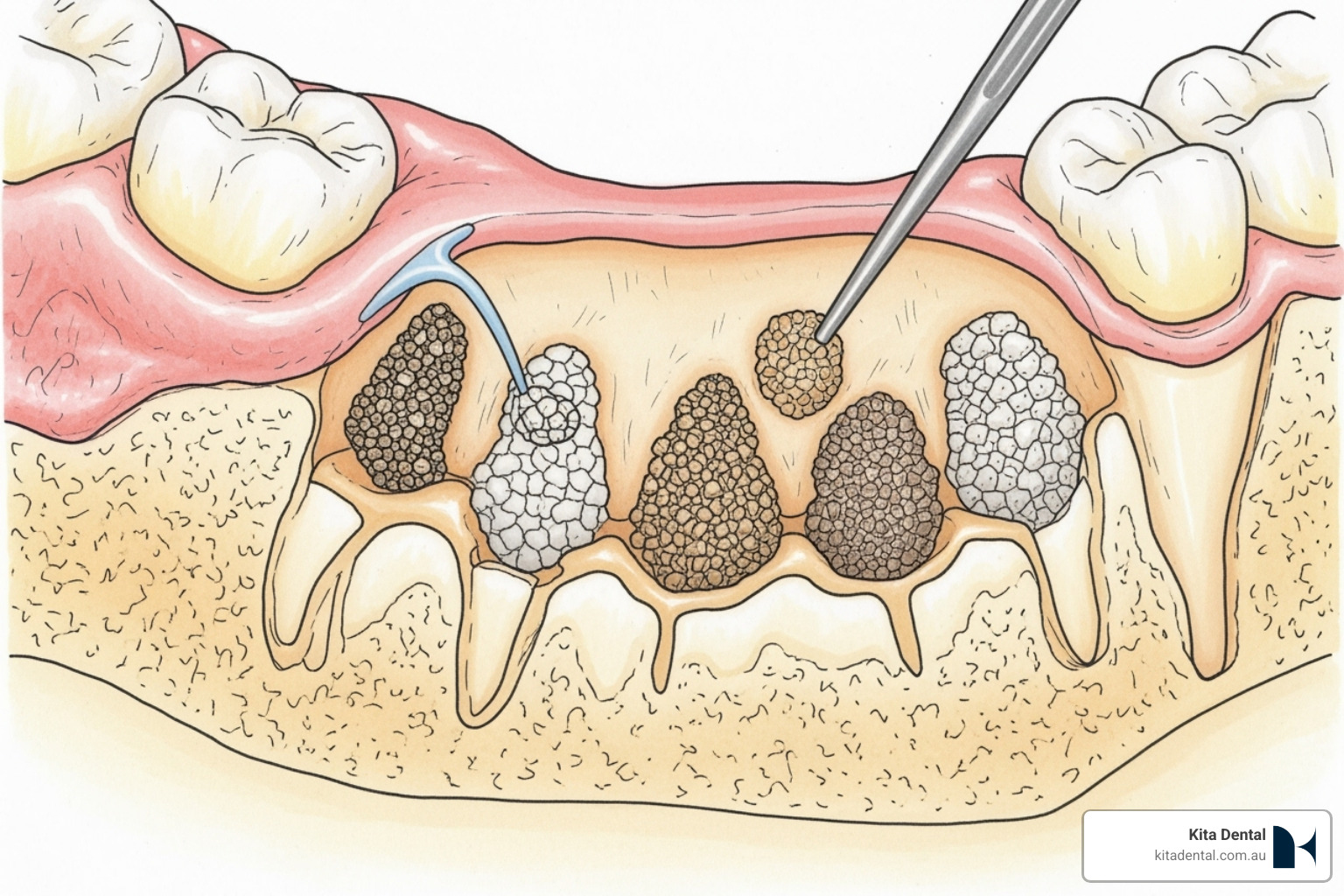
Autografts use your own bone, typically harvested from your chin, jaw, or another area of your body. This is considered the gold standard because your own bone contains living cells and natural growth factors that actively stimulate new bone formation. The downside? You’ll need a second surgical site, which means additional healing time and potential discomfort.
Allografts come from human donors and are carefully processed to ensure safety. While they don’t contain living cells like your own bone, they provide an excellent scaffold for your body’s bone-forming cells to grow on. The major advantage is avoiding a second surgical site for you.
Xenografts are derived from animal sources, most commonly bovine bone. Like allografts, they’re thoroughly processed for safety and act primarily as a framework for your natural bone to grow around. They’re readily available and eliminate the need for harvesting your own bone.
Alloplastic materials are synthetic bone substitutes made from calcium phosphates, bioactive glasses, or specialized polymers. These engineered materials offer unlimited supply with no risk of disease transmission. While they vary in effectiveness, modern synthetic grafts can be specifically designed for optimal bone regeneration.
For deeper insights into the science behind bone substitute materials, scientific research provides comprehensive analysis of current options and future developments.
The Bone Grafting Process and Timeline
Understanding the bone grafting vs graft-less approach for implant timeline helps you plan for this significant commitment. Traditional bone grafting requires patience, but the results create an incredibly solid foundation for your new teeth.
Your journey begins with a comprehensive consultation at a Mascot clinic. We use advanced 3D CBCT imaging to map your jawbone precisely, determining exactly where grafting is needed and which material will work best for your situation.
The surgical procedure itself involves carefully accessing the bone through your gum tissue, placing the chosen graft material, and often covering it with a protective membrane. We then suture everything back into place, beginning the crucial healing phase.
Here’s where patience becomes essential. Your healing period typically spans 4 to 9 months, during which the grafted material slowly integrates with your natural bone. This isn’t just waiting time – it’s active bone regeneration happening inside your jaw.
Once your graft has fully matured, we can place your dental implants. In select cases with adequate initial bone stability, we might perform simultaneous graft and implant placement, but this depends entirely on your specific bone condition.
After implant placement, you’ll need another 3 to 6 months for osseointegration before receiving your final restoration. While this timeline might seem lengthy, traditional grafting creates incredibly stable, long-lasting results.
The risks, though relatively uncommon, include infection, graft failure, nerve damage, and prolonged swelling. However, when performed by experienced practitioners, bone grafting has excellent success rates and provides a reliable foundation for implant success.
It’s worth noting that delaying implant placement after successful grafting may compromise your investment. Without the stimulation that implants provide, even grafted bone can deteriorate over time, potentially requiring additional procedures in the future.
The Innovative Alternative: Graft-less Implant Solutions
The world of dental implants has transformed dramatically over the past decade. Where patients once faced lengthy bone grafting procedures followed by months of waiting, modern graft-less approach for implant techniques now offer a faster, less invasive path to a complete smile. These innovative solutions work with your existing bone structure, making full arch restorations possible even when traditional methods might seem out of reach.
For many patients in Mascot seeking full arch implant solutions, graft-less techniques represent a game-changing alternative. Rather than spending months rebuilding bone, these approaches strategically work around anatomical limitations to deliver immediate results. The difference in treatment experience can be remarkable – instead of multiple surgeries spread over nearly a year, many patients walk out with a complete set of temporary teeth on the same day as their implant surgery.
Techniques for Avoiding Bone Grafts
The magic of graft-less implant solutions lies in clever engineering and strategic placement. These techniques maximize the use of available bone while bypassing areas that would typically require extensive grafting.
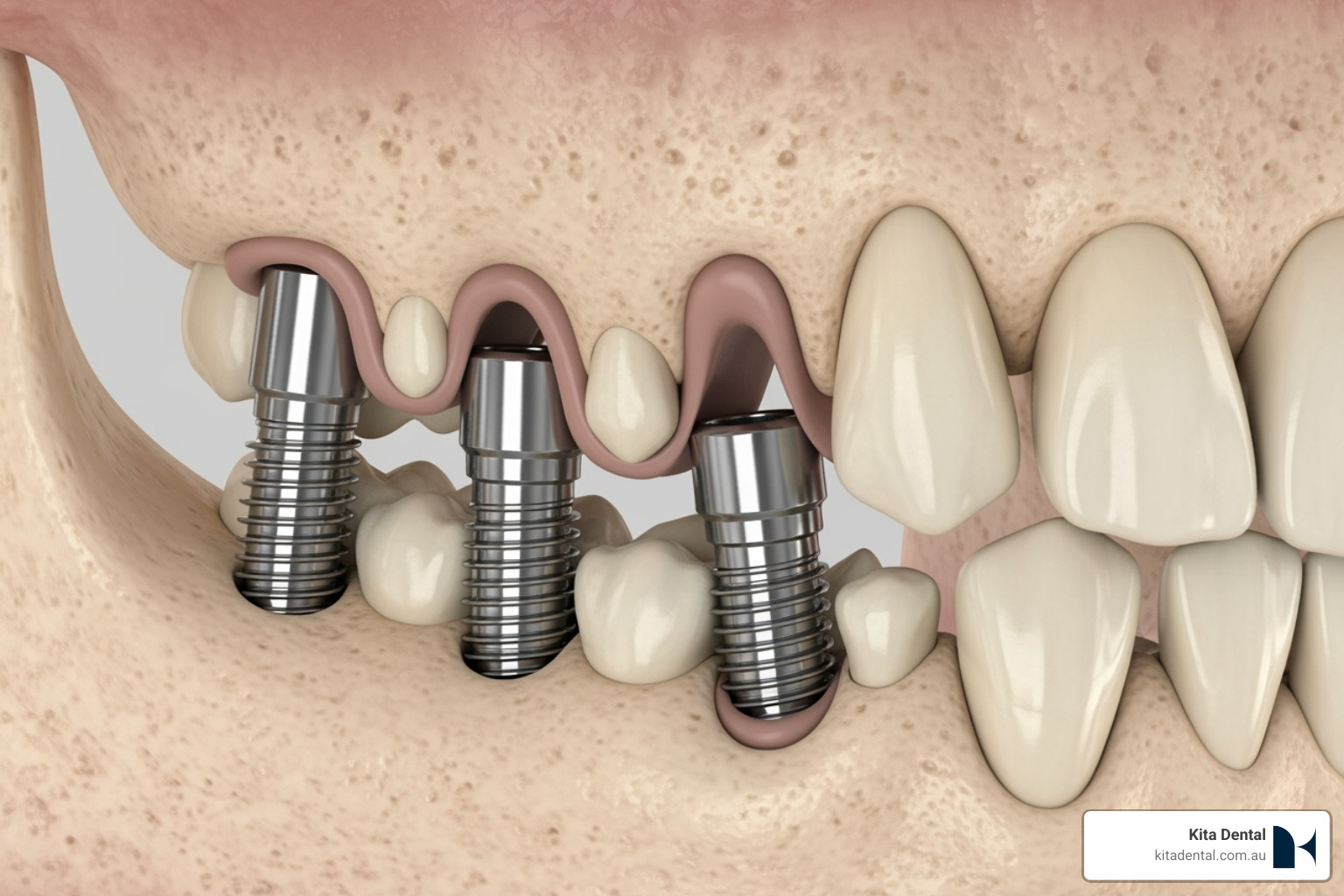
All-on-4® treatment concept has revolutionized full arch restoration by using just four implants to support an entire set of teeth. The secret is in the angled placement of the back implants at 45 degrees, which allows them to anchor into the strongest available bone while avoiding the maxillary sinuses in the upper jaw. This strategic angling often provides enough stability for immediate loading, meaning you can leave the dental clinic with a functional set of teeth the same day.
Angled implants extend beyond the All-on-4® concept, offering flexibility in various clinical situations. By tilting implants to engage the densest available bone, we can often achieve excellent primary stability without any grafting. This technique is particularly valuable when working with moderate bone loss or challenging anatomy.
For patients with severe upper jaw bone loss, zygomatic implants offer an extraordinary solution. These longer implants anchor directly into the cheekbone rather than the jawbone, completely bypassing the need for extensive upper jaw bone grafting. While this might sound complex, modern zygomatic techniques have made this procedure highly predictable and safe.
Short implants represent another breakthrough in graft-less treatment. In areas where bone height is limited, particularly in the back regions of the mouth, using shorter implants eliminates the need for vertical bone grafting while maintaining excellent long-term success rates. This approach significantly reduces treatment complexity and patient discomfort.
Exploring these solutions with a qualified implant dentist will help determine how they might work for your specific situation.
When is a Graft-less Approach the Right Choice?
The bone grafting vs graft-less approach for implant decision isn’t one-size-fits-all, but certain situations make graft-less techniques particularly attractive. Understanding when you might be a good candidate helps set realistic expectations for your treatment journey.
Moderate bone loss often represents the sweet spot for graft-less techniques. While you might not have enough bone for traditional implant placement, strategic positioning can still achieve excellent stability. Many patients are surprised to learn they’re candidates for immediate solutions when they expected months of bone grafting.
If you’re seeking faster results, graft-less approaches offer compelling advantages. Instead of waiting 6-15 months for grafting and healing, many patients complete their full arch restoration in just a few days. This timeline difference can be life-changing, especially for those who’ve been struggling with failing teeth or uncomfortable dentures.
Specific anatomical considerations often make graft-less techniques the preferred choice. When sinuses have expanded or nerves are positioned in challenging locations, angled implants can work around these structures more neatly than attempting to rebuild bone in difficult areas.
Health factors sometimes make extensive surgery inadvisable. For patients with certain medical conditions or those taking medications that affect healing, a minimally invasive graft-less approach can be significantly safer than major bone grafting procedures.
Full arch restoration cases represent where graft-less techniques truly shine. Whether you’re dealing with failing teeth across an entire arch or have been wearing dentures, solutions like All-on-4® can provide immediate stability and function. The change from loose dentures to fixed teeth in a single day often exceeds patients’ expectations.
The key to success with any graft-less approach lies in thorough evaluation and expert planning. Using advanced 3D imaging, a dentist can determine exactly which technique will deliver the best results for your unique situation, ensuring your new smile is both beautiful and built to last.
Bone Grafting Vs Graft-less Approach for Implant: A Direct Comparison
When you’re facing the choice between bone grafting vs graft-less approach for implant treatment, it’s natural to feel a bit overwhelmed. Both pathways can lead to a beautiful, functional smile, but they take very different routes to get there. Think of it like choosing between two different journeys to the same destination – one might be scenic but longer, while the other is more direct.
The key factors that influence this decision include your individual bone anatomy, how quickly you want to complete treatment, your comfort level with multiple surgeries, and your specific health considerations. For those interested in expanding their knowledge in the field of implant dentistry, we highly recommend exploring resources from reputable dental implant organizations for further learning.
Understanding these differences helps you make an informed choice that aligns with your lifestyle and expectations. Let’s break down exactly how these approaches compare across the most important factors.
Key Differences: Bone Grafting vs. Graft-less Approach for Implant
The differences between these two treatment paths become clear when we examine them side by side:
| Feature | Bone Grafting Approach | Graft-less Approach |
|---|---|---|
| Treatment Time | 6-15 months total (4-9 months graft healing + implant process) | 1-2 days for full arch, 3-6 months total |
| Number of Surgeries | Multiple procedures (graft surgery + implant placement + restoration) | Single-stage procedure (often same-day teeth) |
| Patient Morbidity | Higher initial discomfort, longer recovery periods | Minimal discomfort, faster return to normal activities |
| Overall Cost-Effectiveness | Higher investment due to multiple procedures and extended timeline | More streamlined, often more cost-effective overall |
The bone grafting approach typically involves a longer journey with multiple healing phases. You’ll first undergo the grafting procedure, wait several months for the bone to mature, then have your implants placed, followed by another healing period before receiving your final teeth.
In contrast, the graft-less approach often allows patients to walk out with a new smile on the same day as their implant surgery. This is particularly true for full arch restorations, where techniques like All-on-4® can provide immediate function and aesthetics.
Long-Term Success: Bone Grafting vs. Graft-less Approach for Implant
One of the most important questions patients ask is: “Which approach will give me better long-term results?” The good news is that both methods have excellent track records when performed by experienced practitioners.
Implant survival rates are remarkably similar between the two approaches. Traditional implants placed in grafted bone show success rates of approximately 98.73%, while graft-less techniques achieve 97.92% success rates. This small difference is clinically insignificant, meaning both approaches are highly predictable.
Bone stability around implants tends to be excellent in both scenarios. Grafted bone, once fully healed and integrated, provides a robust foundation that can last decades. Similarly, implants placed using graft-less techniques into existing healthy bone demonstrate excellent long-term stability.
Prosthetic complications – issues with the crowns, bridges, or full arch restorations – occur at similar rates regardless of whether the underlying implants were placed in grafted or natural bone. The key factor is proper treatment planning and execution.
What really matters for long-term success is choosing the right approach for your specific situation. A patient with severe bone loss might achieve better predictability with grafting, while someone with moderate bone loss could enjoy faster results with a graft-less technique. The statistics show that both paths lead to successful, long-lasting outcomes when the treatment plan matches the patient’s needs.
Advanced 3D imaging is used to assess your bone quality, helping you and your dentist understand which approach offers the best combination of predictability, comfort, and timeline for your unique situation.