Skip to content
Protecting Your Smile Investment
How to prevent peri-implantitis is a critical question for anyone with dental implants. This bacterial infection affects about 20% of patients and can cause implant failure if not addressed.
Quick Prevention Steps:
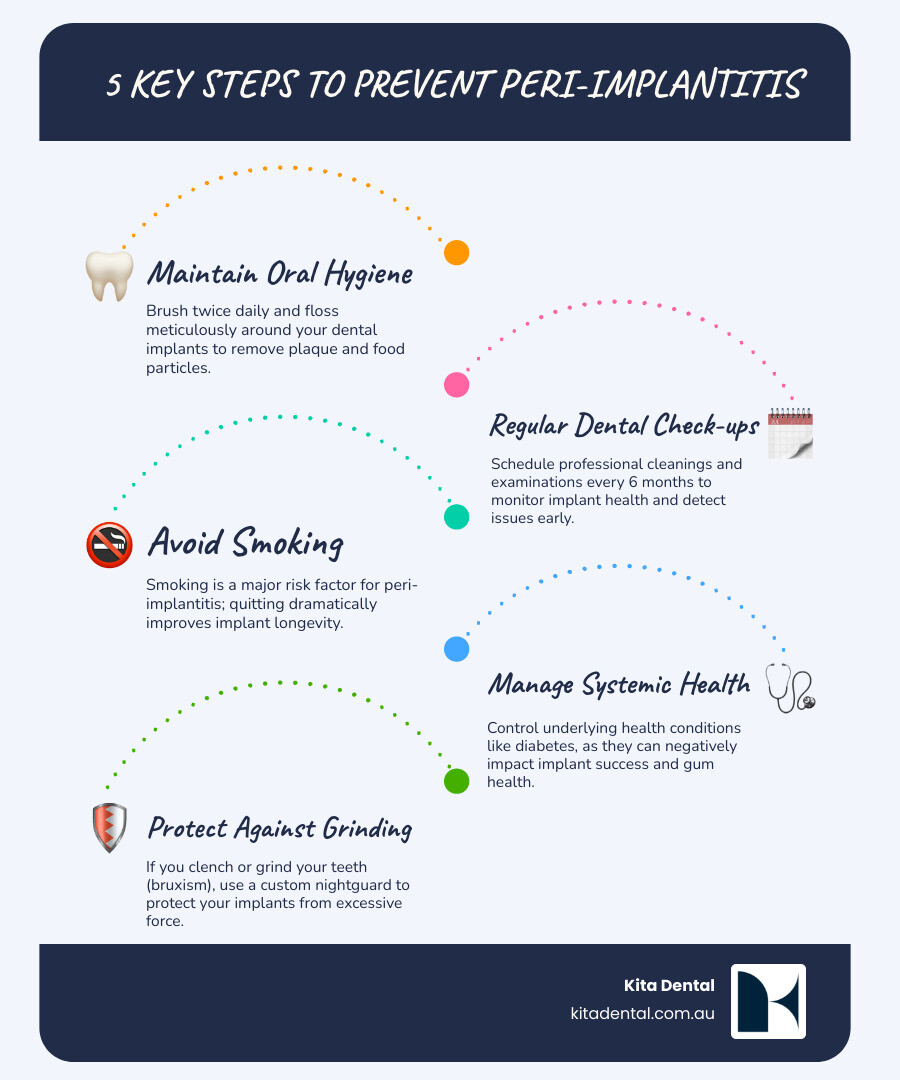
- Brush twice daily with a soft-bristled toothbrush and low-abrasive toothpaste.
- Use interdental brushes or water flossers to clean around implants.
- Schedule professional cleanings every 6 months (or as recommended).
- Quit smoking, the most significant modifiable risk factor.
- Manage health conditions like diabetes that increase infection risk.
- Watch for warning signs like red, swollen, or bleeding gums.
Peri-implantitis occurs when bacteria cause inflammation that damages the soft tissue and bone supporting an implant. Unlike natural teeth, implants lack a key protective barrier, making prevention essential. The good news is that peri-implantitis is largely preventable. Its early stage, peri-implant mucositis, is completely reversible, but once bone loss occurs, treatment becomes more complex.
The team at Kita Dental in Mascot has extensive training in implantology and experience in preventing peri-implantitis
What is Peri-Implantitis and Why Should You Be Concerned?
Dental implants are a valuable investment in your smile, with success rates between 95% and 98%. However, they require proper care to protect them from peri-implantitis.
Peri-implantitis is essentially gum disease for dental implants. It begins as a bacterial infection in the surrounding soft tissues and can progress to destroy the supporting bone, potentially causing the implant to loosen and fail.
Unlike natural teeth, which have a protective periodontal ligament, dental implants lack this natural defense mechanism. Implants fuse directly to the jawbone (a process called osseointegration), which means bacteria can spread more quickly and cause more damage than around natural teeth.
Statistics show that peri-implantitis affects approximately 20% of dental implant patients. For patients in Mascot and across Sydney with full arch implants, understanding how to prevent peri-implantitis is especially important, as these restorations represent a significant investment.
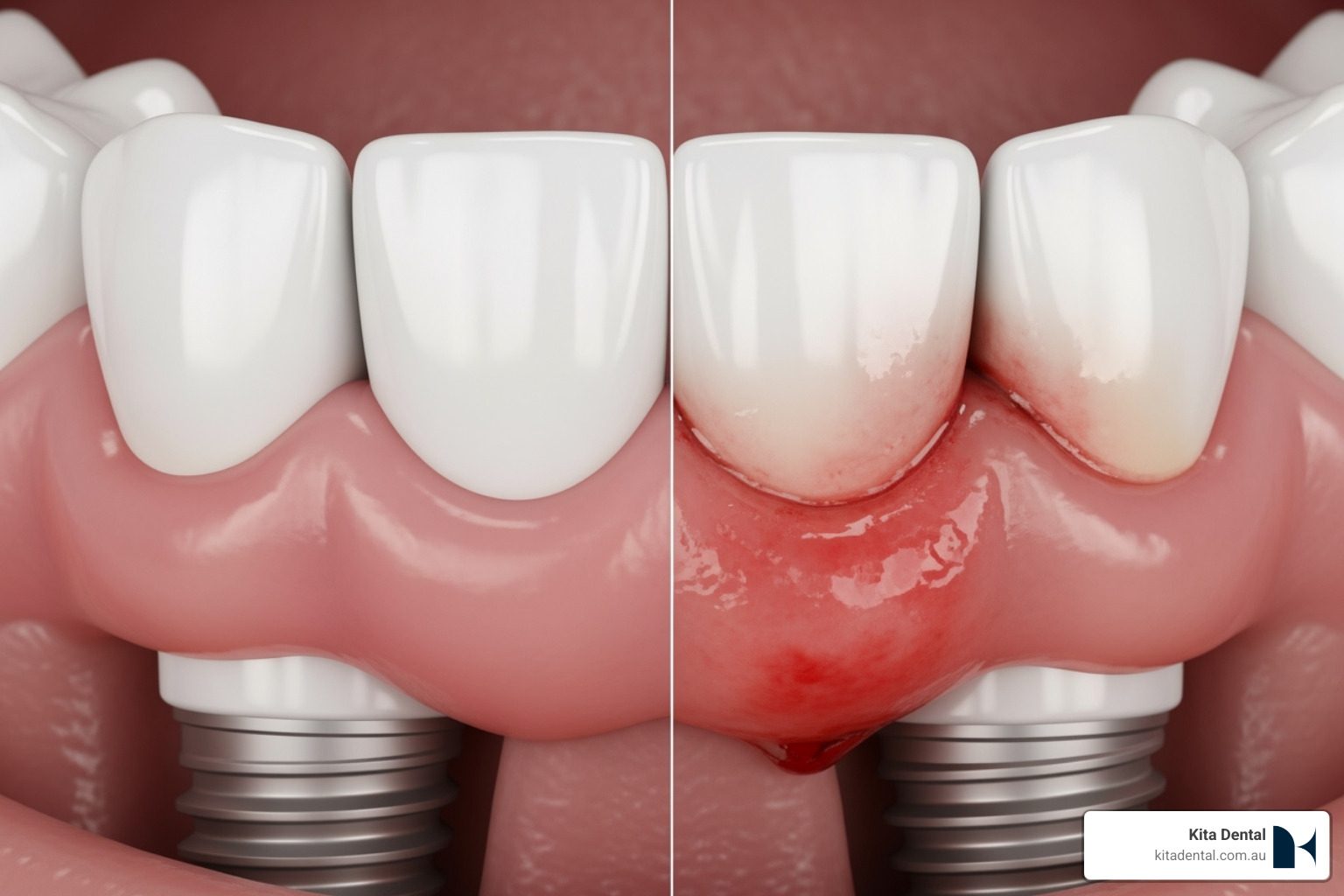
The disease typically starts as peri-implant mucositis, the implant equivalent of gingivitis. At this early stage, you might notice red, swollen gums, some bleeding when brushing, or tenderness. Crucially, there is no bone loss yet.
Peri-implant mucositis is completely reversible with professional cleaning and diligent oral hygiene. If ignored, it can progress to peri-implantitis, where irreversible bone loss begins. This progression is why prevention and early detection are so critical. The bacterial infection thrives on biofilm (plaque) that builds up around your implants, making regular monitoring your best defense against losing your smile investment.
Identifying the Culprits: Causes and Key Risk Factors
Peri-implantitis doesn’t develop randomly; specific factors create an environment where it can thrive. The primary cause is bacterial plaque—a sticky film that accumulates around implants. If not removed, this plaque forms a biofilm, a protected colony where harmful bacteria multiply, triggering the inflammation that leads to bone loss.
While bacteria are the main cause, several risk factors increase your vulnerability. Understanding these is key to knowing how to prevent peri-implantitis.
Poor oral hygiene is the most significant contributor. This is especially true for full arch implants, which require meticulous cleaning to reach all surfaces.
Smoking dramatically increases your risk by reducing blood flow to the gums, impairing your body’s ability to fight infection and heal. It also encourages plaque buildup.
If you have a history of gum disease (periodontitis), the bacteria that caused problems for your natural teeth can also attack your implants.
Uncontrolled diabetes is another major risk factor, as high blood sugar slows healing and makes you more susceptible to infections.
Bruxism (teeth grinding or clenching) places excessive pressure on your implants, which can destabilise the foundation and make it more prone to issues.
Sometimes, excess dental cement left behind after crown placement can irritate the gums and create a surface for bacteria to collect. At Kita Dental, we are meticulous about removing all cement to prevent this.
Here are the primary risk factors for peri-implantitis:
- Poor oral hygiene habits
- Smoking or tobacco use
- History of gum disease (periodontitis)
- Uncontrolled diabetes or other systemic health conditions
- Teeth grinding or clenching (bruxism)
- Residual dental cement around implants
Fortunately, most of these risk factors are manageable. By working together, we can create a personalised prevention strategy to keep your implants healthy.
Your Proactive Guide on How to Prevent Peri-Implantitis
The secret to long-term implant health is a commitment to three pillars: excellent daily care, regular professional maintenance, and smart lifestyle choices. For our patients in Mascot with dental implants, especially full arch implants, this proactive approach is essential.
Master Your At-Home Oral Hygiene Routine
Your daily cleaning routine is your first line of defense. Implants rely entirely on you to keep them free of plaque.
-
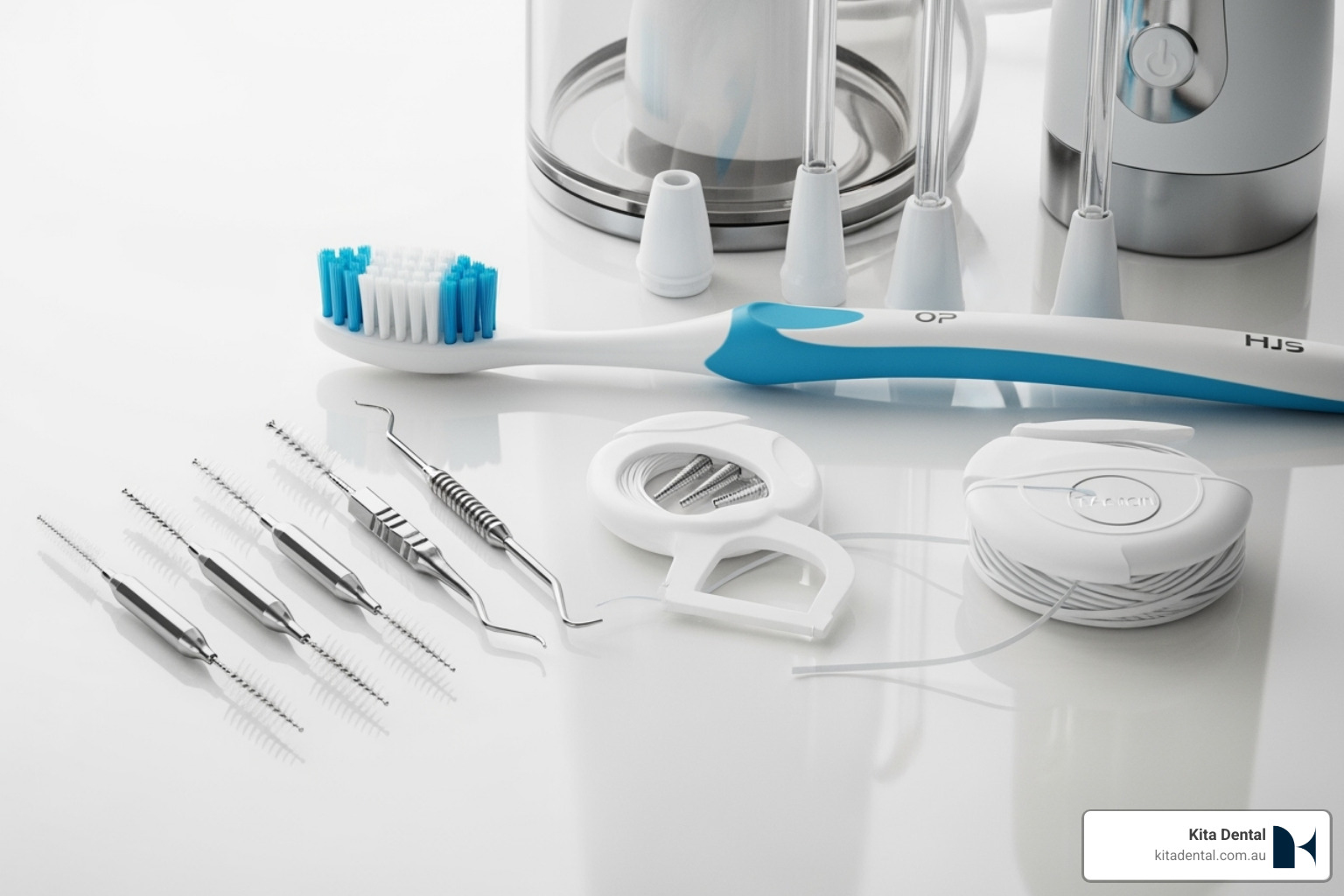
Brushing: Use a soft-bristled toothbrush and low-abrasive toothpaste twice daily. Focus on the gumline where the implant crown meets the tissue, as this is a primary site for bacteria to hide.
-
Interdental Cleaning: Brushing alone isn’t enough. Interdental brushes are essential for cleaning between implants and adjacent teeth. We can help you find the correct size to clean effectively without causing damage.
-
Water Flossers: A water flosser is invaluable, especially for full arch implants. It flushes out debris and bacteria from under and around the restoration in areas that are otherwise difficult to reach.
-
Specialised Floss: Use implant-specific floss for tight spaces, as it’s designed to glide smoothly without fraying.
The goal is to disrupt biofilm consistently. We also recommend a pH-neutral, alcohol-free antimicrobial mouth rinse to supplement your cleaning routine.
The Crucial Role of Professional Dental Care
Even the best home care needs professional support. Our team at Kita Dental has the expertise and specialised tools to catch problems early.
-
Regular Check-ups: We typically recommend visits every six months, but this can vary based on your risk factors. We conduct a comprehensive assessment of your implant health at each visit.
-
Professional Cleaning: We use special instruments made from softer materials like titanium or plastic to clean your implants without scratching the surface, removing hardened plaque that home care can’t.
-
Periodontal Probing: We gently measure gum pocket depths around your implants to check for bleeding and inflammation, which are key early indicators of trouble.
-
X-rays: We take annual radiographs to monitor the bone level around your implants, comparing them to your baseline scans to detect even subtle changes early.
Your personalized maintenance schedule will be custom to your specific needs, considering your health, habits, and implant type.
More info about our dental check-ups
Lifestyle Choices for Long-Term Implant Health
Your daily choices significantly impact your implant’s success.
-
Smoking Cessation: Quitting smoking is the single most important step you can take. Smoking impairs blood flow, weakens your immune response, and dramatically increases your risk of peri-implantitis.
-
Managing Systemic Health: Work with your GP to manage conditions like diabetes. Controlled blood sugar reduces chronic inflammation and lowers your infection risk.
-
Balanced Nutrition and Hydration: A healthy diet and adequate hydration support your body’s immune function and help maintain healthy saliva flow.
-
Protecting Against Bruxism: If you grind or clench your teeth, a custom nightguard can protect your implants from excessive force that can weaken their support structures.
These lifestyle choices, combined with diligent home care and professional maintenance, form a comprehensive strategy for how to prevent peri-implantitis.
Recent studies show that early intervention significantly improves implant survival rates.
Recognizing the Warning Signs and When to Seek Help
Knowing how to prevent peri-implantitis includes recognizing problems early. Your body provides warning signs, and acting on them quickly is crucial, as early-stage issues are often completely reversible. At Kita Dental, we encourage our Mascot patients to be vigilant partners in their implant health.
Early Symptoms of Peri-Implant Mucositis
These signs indicate reversible inflammation (peri-implant mucositis) and require attention:
- Red or Inflamed Gums: Healthy gum tissue is pink. If the tissue around your implant appears dark red, it’s a sign of inflammation.
- Swollen, Puffy Gums: The tissue may look raised or feel tender compared to the gums around your natural teeth.
- Bleeding During Cleaning: Healthy gums around implants should not bleed with gentle brushing or flossing. Any bleeding is a red flag.
- Mild Tenderness: A new sensitivity around the implant site when eating or cleaning can signal early inflammation.
Advanced Symptoms of Peri-Implantitis
These symptoms suggest the condition has progressed to peri-implantitis, and bone loss may have begun. Seek professional help immediately.
- Pus or Discharge: A yellowish or whitish fluid when you press on the gum indicates an active infection.
- Persistent Bad Taste or Breath: A lingering unpleasant taste or odour that doesn’t resolve with cleaning can signal a deeper infection.
- Visible Implant Threads: Gum recession that exposes parts of the implant post is a sign of tissue and bone loss.
- A Loose or Mobile Implant: This is the most serious warning sign. Any movement indicates significant bone loss and requires an emergency evaluation to see if the implant can be saved.
If you notice any of these symptoms, especially with full arch implants, contact us at Kita Dental. Early intervention provides the best chance of preserving your implant.
More info about emergency dental services
What Happens if Peri-Implantitis Develops? A Look at Treatment
If peri-implantitis develops, effective treatment options are available. At Kita Dental, our goal is to stop the disease from progressing and save the implant whenever possible. The treatment approach depends on the severity of the condition.
Non-Surgical Treatment for Early Stages
For early-stage peri-implantitis, non-surgical treatments are often highly effective at halting the infection.
-
Professional Debridement: This involves an intensive deep cleaning around the implant to remove all bacterial plaque and biofilm. We use specialised instruments made of materials like titanium that will not scratch or damage the implant surface.
-
Implant Surface Decontamination: After mechanical cleaning, we may use antimicrobial agents or advanced laser therapy to eliminate bacteria in microscopic crevices, creating a clean environment for healing.
-
Antimicrobial Therapy: We may recommend specific mouth rinses, apply antimicrobial gels directly to the site, or, in some cases, prescribe systemic antibiotics to control the infection.
Successful non-surgical treatment allows the gum tissue to heal. Regular follow-ups are crucial to monitor your progress.
Recent studies show that early intervention significantly improves implant survival rates.
Surgical options for how to prevent peri-implantitis from worsening
When there is significant bone loss or non-surgical treatment is insufficient, surgical intervention may be necessary to save the implant.
-
Flap Surgery: We gently lift the gum tissue to gain direct access to the implant and bone. This allows for a thorough cleaning of the implant surface and removal of diseased tissue.
-
Implantoplasty: If bone loss has exposed the rougher surface of the implant threads, we can smooth and polish this area. This makes the surface less hospitable to bacteria and easier for you to clean.
-
Bone Grafting: To address bone loss, we can place bone graft material into the defect around the implant. A protective membrane is often used to guide the body in regenerating new, healthy bone.
-
Implant Removal: This is a last resort for cases with severe, irreversible bone loss where the implant cannot be saved. Removing a failing implant is sometimes necessary to protect your overall oral health.
At Kita Dental, we will discuss all possibilities with you, explaining the pros and cons of each approach so you can make an informed decision about your care.
Frequently Asked Questions about Peri-Implantitis Prevention
It’s natural to have questions about protecting your dental implants. At Kita Dental in Mascot, we believe informed patients are empowered to maintain their smiles for life.
Can peri-implantitis be reversed?
This depends on the stage. Peri-implant mucositis, the early stage involving only gum inflammation, is completely reversible with professional cleaning and improved home care. However, once it progresses to true peri-implantitis and bone loss has occurred, the damage is not fully reversible. While treatment can stop the disease and save the implant, the lost bone cannot be completely restored without procedures like bone grafting. This is why early detection is so critical.
How often should I have my dental implants checked in Sydney?
Most patients benefit from professional check-ups and cleanings every six months. However, your schedule is personalised based on your risk factors. If you smoke, have a history of gum disease, or manage diabetes, we may recommend more frequent visits, such as every three to four months. This allows us to monitor your implant health closely and intervene at the first sign of trouble.
Are some people more at risk for peri-implantitis?
Yes, certain factors increase your risk. These include:
- Smokers: Tobacco use impairs healing and immune response.
- Individuals with a history of periodontitis: The same bacteria can affect implants.
- People with uncontrolled diabetes: This can increase inflammation and infection risk.
- Poor oral hygiene: This is a universal risk factor.
- Bruxism (teeth grinding): This puts excessive stress on implants.
If you fall into a high-risk category, we can work with you to create a custom prevention plan, which might include more frequent visits or a custom nightguard for bruxism.
Conclusion: Partnering for a Lifetime of Healthy Implants

Your dental implants, whether a single tooth or a full arch, are an investment in your quality of life. Protecting them requires a partnership between you and our team at Kita Dental.
Prevention is a shared responsibility. Your commitment to understanding how to prevent peri-implantitis through daily cleaning and healthy lifestyle choices is the foundation. Our role is to provide the expert monitoring, specialised cleanings, and professional guidance to support your efforts.
We have helped countless patients in Mascot and Sydney enjoy the confidence that comes with a healthy, complete smile. We are passionate about helping you maintain your dental implants for a lifetime.
At Kita Dental, you are part of our dental family. We are dedicated to your long-term oral health and are here seven days a week to provide support.
Peri-implantitis is largely preventable when we work together. If you notice any changes around your implants or are due for a maintenance visit, please reach out.
Book your implant maintenance appointment
Clinically reviewed by the Kita Dental team, Mascot, NSW.