Skip to content
Why Superannuation for Dental Implants is Changing Lives in Australia
Superannuation for dental implants has become a lifeline for many Australians facing expensive dental work. Between 2022 and 2023, over $313 million was accessed from super funds for dental care, showing a significant rise in people using this option.
Quick Answer: Can you use super for dental implants?
- Yes – Through the ATO’s Compassionate Release of Superannuation program
- Eligibility – Must be Australian/NZ citizen or permanent resident
- Requirements – Treatment must alleviate chronic pain or be medically necessary
- Process – Apply via myGov with medical reports and treatment quotes
- Timeframe – 14-21 business days for ATO processing
- Coverage – No limit on withdrawal amount for eligible treatments
Missing teeth affect more than your smile; they impact your ability to eat, speak, and feel confident. The cost of dental implants can feel overwhelming, especially when you’re already dealing with pain and a reduced quality of life.
For many in Mascot and across Sydney, early super access has meant the difference between ongoing dental problems and getting the treatment they desperately need. This is about restoring function and preventing further health complications, not just cosmetic changes.
The process requires careful planning, but it’s achievable when you understand the requirements and work with experienced professionals.
I’m Dr. Kent Boon, Principal Dentist at Kita Dental. I’ve guided many patients through the superannuation for dental implants process. My experience with full arch implants has shown me how transformative this funding can be for patients who thought treatment was out of reach.
Can You Use Super for Dental Implants in Australia?
Yes, you can use your superannuation for dental implants. For many Australians, this has been a game-changer, especially if cost has been a barrier to essential treatment. The Australian Taxation Office (ATO) has a program designed to help.
The Compassionate Release of Superannuation (CRS) program allows early access to your super for medical treatment you can’t otherwise afford. This is a legitimate pathway that has helped thousands get the dental care they need.
To be eligible, the treatment must be medically necessary. This applies if missing teeth cause chronic pain, difficulty eating, or significantly impact your quality of life. The ATO looks for treatments that alleviate acute or chronic pain or address conditions affecting your ability to function.
Your superannuation can be a lifeline when your health is at stake. For residents in Mascot and across Sydney, this has opened the door to full arch implant treatments that were previously out of reach.
For official guidelines, the most reliable source is the ATO’s website for early super access.

Eligibility Criteria for Early Super Release
To use your superannuation for dental implants, you must meet the ATO’s specific criteria, which ensure funds are accessed only for genuine needs.
First, you must meet the ATO’s residency requirements for early release. This pathway is not available for temporary visa holders.
The most important criterion is your dental condition. You must demonstrate that you have chronic pain or impaired function affecting your daily life. For patients considering full arch implants, this could mean difficulty chewing, constant discomfort, or serious social and psychological distress.
You must also show an inability to afford treatment otherwise. The ATO will assess your financial situation to confirm you’ve explored other options, such as private health insurance or payment plans.
Finally, the treatment can be for yourself or a dependant, meaning you can access your super to help a child or partner who meets the criteria.
At Kita Dental, we guide patients through this process and can help you understand if your situation aligns with these requirements. More info about our implant services can help you understand what’s involved.
What Dental Treatments Can Be Covered?
The compassionate release program covers a range of dental procedures beyond superannuation for dental implants, provided they are medically necessary.
Dental implants are a key treatment, from single tooth replacements to comprehensive Dental Implants Sydney solutions. Implants prevent bone loss, restore chewing function, and improve overall health.
Full arch treatment offers a life-changing solution for extensive tooth loss. Our Full Arch Treatment options can provide a complete, stable set of teeth that function naturally.
Oral surgery for serious health issues may also qualify, including complex extractions or procedures needed to prepare your mouth for implants.
Bone grafting is sometimes essential before implant placement. Our Bone Grafting Dental Implants Guide explains how this provides the foundation for successful implants when bone loss has occurred.
Other treatments like periodontal therapy for severe gum disease, root canal treatment for infected teeth, and even some orthodontic treatments may be eligible if they address chronic pain or functional problems.
The common thread is always medical necessity. Purely cosmetic procedures do not qualify, but when dental issues affect your health and function, accessing super is a viable option.
The Step-by-Step Process for Using Superannuation for Dental Implants
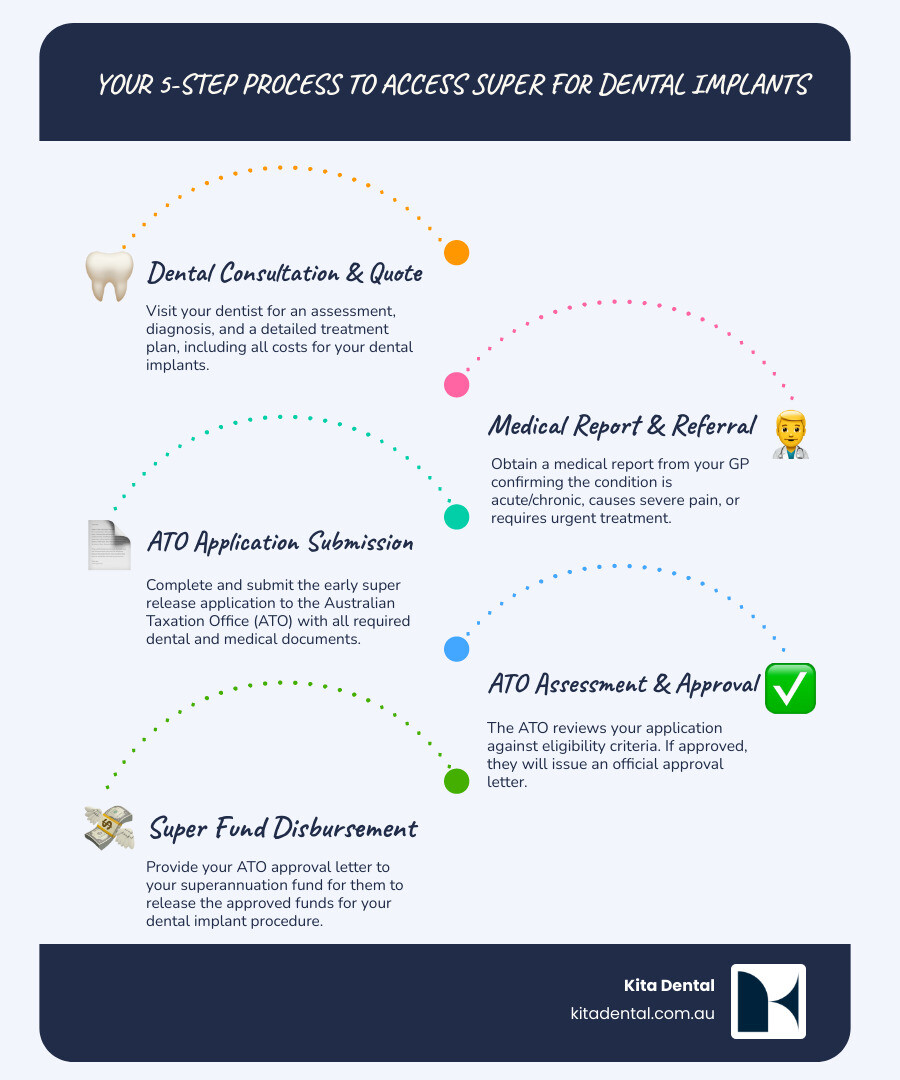
Applying for superannuation for dental implants can seem overwhelming, but the process is manageable once you understand the steps. We’ve guided many patients through this journey.
While there is paperwork and waiting involved, these steps are worth taking when you’re dealing with the daily challenges of missing teeth.
Here’s a walkthrough of the process, from your first consultation to receiving funds via the ATO and myGov.
Step 1: Dental Consultation and Treatment Plan
Your journey begins with a thorough assessment at Kita Dental. We take time to understand your dental condition and how it impacts your life, such as causing chronic pain, difficulty chewing, or other functional issues. This is key, as the ATO needs to see that the treatment is medically necessary.
From this assessment, we develop a personalised treatment plan, whether you need single implants or a full arch restoration. This plan, along with a detailed, itemised quote, becomes crucial evidence for your application.
To learn more about what modern implant treatment can achieve, our Best Dental Implants Guide offers valuable insights.
Step 2: Gathering Required Documentation
With your treatment plan and quote, you’ll need to gather specific documentation for the ATO. Getting this paperwork right is crucial for approval.
You need two medical reports. The first is a dentist’s report, which we prepare. It details your condition and explains why implant treatment is medically necessary to address chronic pain or functional issues. The second report comes from your GP or another dental practitioner, which strengthens your application by confirming the impact on your overall health.
Along with the medical reports, you’ll need your detailed treatment plan and your quote or unpaid invoice (generally no more than six months old).
We recommend reviewing the ATO’s specific guidelines: Evidence required for your application. We’ll help ensure your dental documentation supports your application.
Step 3: Submitting Your Application to the ATO
With your documents ready, you can submit your application through the myGov portal.
Log into your myGov account, steer to ATO services, and find the early release of superannuation option. Select ‘compassionate grounds’ and then ‘medical treatment’. Upload clear, readable copies of all your documents: your dental report, GP report, treatment plan, and quote.
Processing timeframes are typically 14-21 business days. While this wait can be difficult, it allows the ATO to assess each case fairly.
Some people use third-party assistance services to manage the application, which charge a fee. While we don’t recommend specific companies, this is an option if you’re uncomfortable handling the process yourself.
Step 4: Approval and Receiving Your Funds
Receiving your ATO approval letter is the green light for your treatment. The letter will specify the approved withdrawal amount.
Your next step is to contact your super fund. They will need a copy of the ATO approval letter to release the money. The fund release process usually takes another 5 to 10 working days.
Funds are typically paid directly to us for your treatment, ensuring the money is used as intended. Once funding is secure, we can schedule your Implant Treatment. This is when the planning pays off, and you’re on your way to a restored smile and improved quality of life.
Weighing the Pros and Cons of Early Super Release
Deciding to use your superannuation for dental implants is a significant choice. You must weigh the immediate health benefits against the long-term financial impact on your retirement. The right path depends on your personal circumstances.
At our Mascot clinic, we’ve seen many patients consider this decision. There’s no single right answer, but understanding the implications helps you make a choice that aligns with your health needs and financial goals.
Think of it as balancing your present quality of life against your future retirement comfort.
The Benefits of Using Super for Your Dental Implants
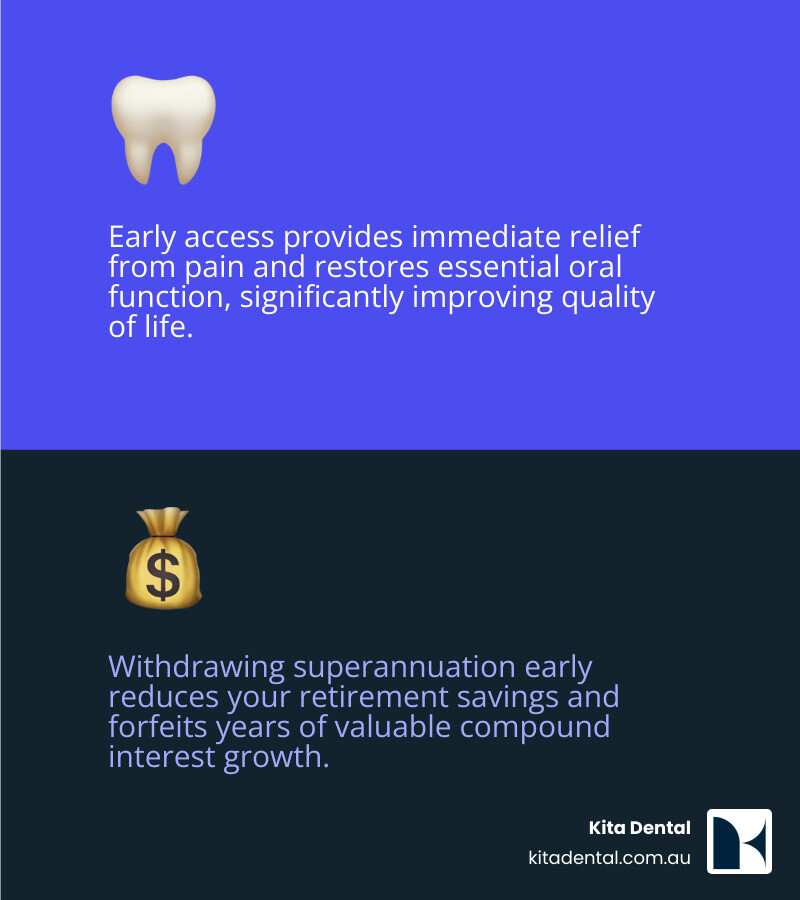
The change we see in patients after they receive dental implants is remarkable. It’s about getting your life back.
- Immediate access to essential care is a key benefit when other funding options are unavailable. For those in chronic pain or with difficulty eating, super provides a vital bridge to treatment.
- Pain relief is often the most profound benefit, ending the constant ache that affects your sleep, mood, and concentration.
- Improved quality of life extends to enjoying meals, speaking clearly, and smiling confidently. Our experience with Full Arch Treatment shows how dramatically life can improve. Learn more in our guide on Chewing and Speaking with Full Arch Implants.
- Avoiding high-interest debt from personal loans or credit cards is a practical advantage. You’re using your own funds, not borrowing from a lender.
- No credit checks or loan approvals are required, making this option accessible regardless of your financial history.
The Potential Risks and Drawbacks
While the benefits are compelling, it’s crucial to understand the potential downsides.
- Reduced retirement savings is the most significant long-term impact. The money you withdraw, plus its potential future compound growth, will be lost from your retirement fund.
- The loss of compound interest is especially significant for younger patients, as the money has less time to recover and grow.
- Tax implications apply to the withdrawal. The amount is taxed as a super lump sum, typically at 17-22% depending on your age, which reduces the funds available for treatment.
- Potential loss of insurance cover is a risk, as your super may include life, income protection, or disability insurance that could be affected by a withdrawal.
- The application process can be complex and may be rejected on technical grounds, requiring resubmission.
- Impact on government benefits is another consideration, as an early super release might affect your eligibility for Centrelink or other benefits.
Weigh these risks against your current health situation. If dental problems severely impact your life, the trade-off may be worthwhile. We always recommend discussing this with a financial advisor.
Frequently Asked Questions about Super for Dental Implants
We hear these questions almost daily from our patients in Mascot and across Sydney who are exploring superannuation for dental implants. Let me share the answers that matter most to you.
How much super can I withdraw for dental implants?
There’s no set maximum limit on how much you can withdraw. The ATO bases the approved amount on the actual cost of your medically necessary treatment, as detailed in your itemised quote.
This is especially important for comprehensive work like full arch implants. If the treatment is medically necessary, you can typically access the full amount required, provided you have sufficient funds in your super account. The ATO assesses whether the amount is reasonable, which is why our detailed quotes are so important.
Are there tax implications when using super for dental implants?
Yes, accessing your super early has tax implications. The funds are treated as a super lump sum withdrawal and are taxed.
Your age determines the tax rate. If you’re under 60, the taxable portion is typically taxed at up to 17% plus the Medicare levy. If you’re 60 or over, it’s generally tax-free. Because everyone’s situation is unique, we strongly recommend consulting a financial advisor to understand the exact tax implications for you.
What happens if my super is not enough or my application is rejected?
If your application is rejected or your super is insufficient, you still have options. A rejection from the ATO usually includes feedback, allowing you to re-apply with stronger evidence, such as more detailed medical reports.
If your super balance is too low, you can combine the withdrawal with other funding, like our flexible Dental Implants Payment Plan. It may also be possible to use a dependant’s super for your treatment, or vice versa.
We are here to help you explore all these alternatives to ensure cost doesn’t prevent you from getting the care you need. We see patients seven days a week and are committed to helping you find a solution.
Your Next Steps Towards a New Smile
You now understand how superannuation for dental implants works in Australia. While the process seems complex, thousands have successfully used it to restore their smiles and quality of life.
It’s a significant decision that requires you to weigh the immediate health benefits against the long-term impact on your retirement. Professional advice from a financial advisor is crucial at this stage.
At Kita Dental in Mascot, we have walked many patients through this exact journey. We understand the medical reports and detailed treatment plans the ATO requires and know how life-changing the right dental treatment can be.
Our team can provide the comprehensive dental assessment and documentation needed for your application. We’ll help you understand the ATO’s criteria and create a personalised treatment plan, from individual implants to a complete full arch solution.
Don’t let financial barriers keep you from the treatment you need. The path to accessing your super for dental care has opened doors for countless Australians.
Your journey to a restored smile starts with a single phone call. We’re here to answer your questions and help you explore all your options.
Learn more about our dental implant fees and funding pathways and take that important first step. Our friendly team at Kita Dental is ready to guide you through the process.
This article has been medically reviewed for accuracy by Dr. Kent Boon, Principal Dentist at Kita Dental.