Skip to content
Why Prompt Action is Essential for Wisdom Tooth Infection Treatment
Wisdom tooth infection treatment involves professional dental care, including antibiotics, cleaning the infected area, and often surgical removal of the tooth. In Mascot, Sydney, we also plan for long-term function by discussing tooth replacement options when removal is necessary, including single-tooth and full-arch implant solutions.
The key steps are:
- Immediate Relief: Professional cleaning to remove trapped bacteria and debris, plus prescribed antibiotics (like Metronidazole or Amoxicillin) to control the infection.
- Pain Management: Prescription or over-the-counter pain relievers to manage discomfort.
- Definitive Solution: Surgical extraction of the wisdom tooth to prevent recurring infections.
- Tooth Replacement Planning: If a tooth is removed, we discuss options to restore your bite and smile, such as dental implants for single teeth or full-arch implant solutions when multiple teeth are compromised.
- Emergency Care: Seek immediate help for difficulty swallowing, severe swelling, fever, or breathing problems.
A wisdom tooth infection, or pericoronitis, occurs when bacteria build up around a partially erupted or impacted third molar, causing pain and swelling. This condition affects about 81% of people aged 20-29 and is responsible for 6-9% of emergency dental visits in Australia annually.
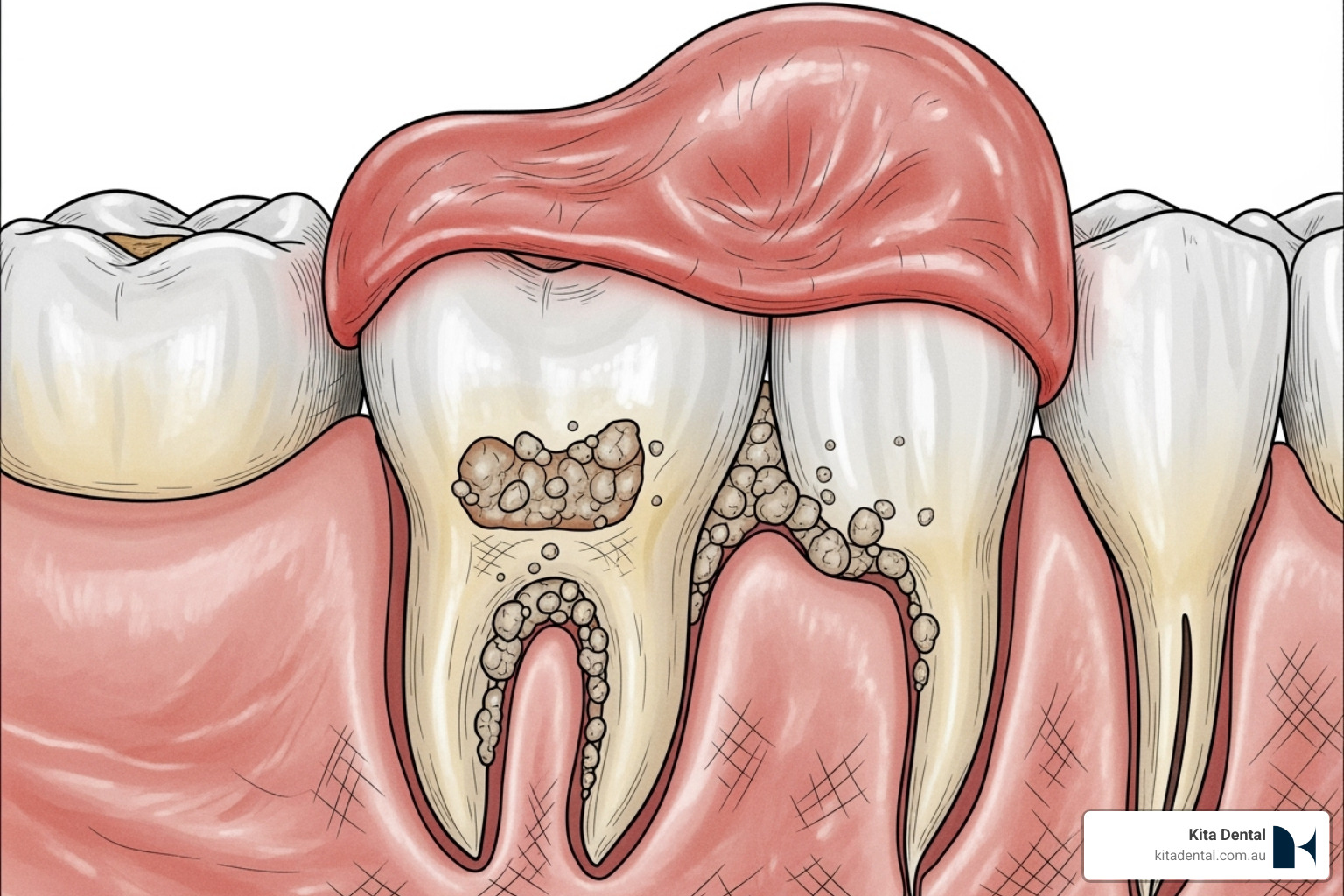
Because wisdom teeth are at the back of the mouth, they are hard to clean. A partially erupted tooth can create a gum flap (operculum) that traps food and bacteria, creating a perfect breeding ground for infection.
Without proper treatment, a wisdom tooth infection can spread to your jaw, neck, and even your bloodstream, leading to a life-threatening condition called sepsis. Fortunately, most infections respond well to prompt professional treatment. When extraction is necessary, timely planning for an implant helps preserve bone and chewing function.
Understanding your treatment options is key. For residents in Mascot and surrounding Sydney areas, access to quality dental care means faster relief, better outcomes, and clear pathways to tooth replacement when needed.
As Dr. Kent Boon, Principal Dentist at Kita Dental in Mascot, I have experience in wisdom tooth infection treatment and a full range of implant solutions, including complex extractions and full-arch implant care. My training in oral surgery and implantology across Australia has equipped me to handle even the most challenging cases with precision and care. Let’s explore the most effective treatments to get you out of pain and back to confident chewing.
Understanding Wisdom Tooth Infections: Symptoms and Causes
Your wisdom teeth, or third molars, typically erupt between ages 17 and 25. By this time, your other 28 teeth have often claimed all the available space, leaving little room for these newcomers.
When space is limited, wisdom teeth can become impacted—stuck beneath the gum line or emerging at awkward angles. Sometimes they only partially break through the gum, which is where the trouble often begins.
A partially erupted wisdom tooth can be covered by a flap of gum tissue (an operculum). This flap traps food particles and bacteria in a spot your toothbrush can’t reach. The warm, moist environment of your mouth becomes an ideal breeding ground for bacteria, leading to a painful infection dentists call pericoronitis.
But impaction isn’t the only cause. Even fully erupted wisdom teeth are notoriously difficult to clean due to their location. Cavities can develop easily, and if left untreated, they can allow bacteria to invade the tooth’s pulp and surrounding gums, causing an infection that requires wisdom tooth infection treatment.
If a tooth cannot be saved and must be removed, we can plan to replace it with a dental implant to restore function and protect jawbone volume. Where several back teeth are failing or missing, a full-arch implant solution may be considered to stabilise the bite and improve chewing. This is particularly important for patients in Mascot, Sydney who want to maintain their quality of life and oral function.
Research on pericoronitis shows it’s one of the most common dental issues for young adults in our Mascot practice. The infection can also increase the risk of damage to adjacent teeth.
What are the Common Symptoms of an Infected Wisdom Tooth?
An infected wisdom tooth sends clear signals. Symptoms can range from mildly annoying to debilitating.
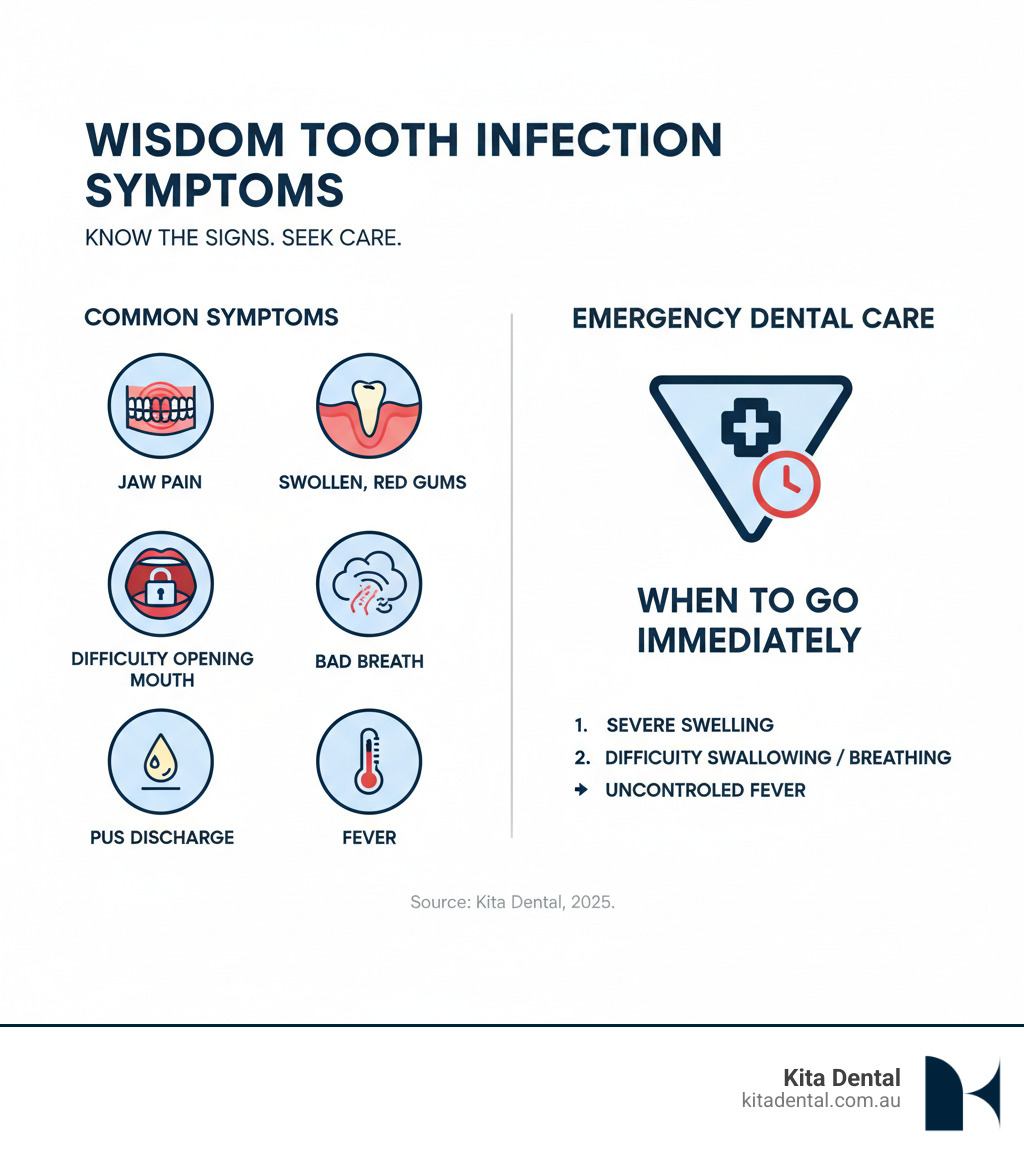
- Pain or swelling: A dull ache or sharp, throbbing pain in the back of your jaw, possibly radiating to your ear or neck. The gums will likely feel tender and look puffy.
- Red, inflamed gums: The tissue around the wisdom tooth may feel warm and appear darker than the surrounding healthy gums.
- Jaw stiffness: Known as trismus, this tightness can make it difficult to open your mouth, eat, or talk.
- Bad breath or an unpleasant taste: Caused by bacteria and pus accumulating around the infected area.
- Difficulty opening your mouth or chewing: This often accompanies jaw stiffness and can make simple activities uncomfortable.
- Pus discharge: A yellowish or whitish fluid from the gum is a clear sign of a bacterial infection needing immediate attention.
- Swollen lymph nodes: The nodes in your neck or under your jaw may become tender as your immune system fights the infection.
- Fever: A low-grade fever indicates a systemic response to the infection and is a clear sign you need professional care.
How Impaction and Cavities Lead to Infection
When a wisdom tooth is impacted, it creates pockets where bacteria can thrive undisturbed. The gum flap over a partially erupted tooth is a prime example, trapping food particles that bacteria feast on, triggering the painful inflammation of pericoronitis. This is a common reason people in Mascot seek urgent wisdom tooth infection treatment.
Even fully erupted wisdom teeth are challenging to clean. Plaque builds up easily, leading to cavities that can allow bacteria to penetrate the tooth’s inner pulp. Because of their proximity to second molars, poor hygiene around wisdom teeth can also put neighbouring teeth at risk of decay and damage. If an extraction becomes necessary, discussing implant replacement early—especially socket preservation to maintain bone—can streamline your return to comfortable chewing.
When to Seek Professional Dental Care in Mascot
If you suspect a wisdom tooth infection, it’s always best to see a dentist. Dental infections don’t resolve on their own and require professional intervention.
Call us at Kita Dental in Mascot if you experience:
- Persistent pain lasting more than 3-4 days.
- Severe pain that disrupts your sleep or daily activities.
- Significant swelling in your gums, cheek, or jaw.
Some symptoms require emergency action. Difficulty breathing or swallowing is a dangerous sign that the infection may be spreading to your airway. If you experience this, go to an emergency department or contact our practice immediately for guidance. We offer comprehensive emergency dental services in Mascot, Sydney, seven days a week. A fever or chills also indicates a more widespread infection that needs professional wisdom tooth infection treatment.
Untreated, an infection can lead to serious health complications. The bacteria can spread, causing cellulitis (a skin infection of the face and neck) or a dental abscess (a painful pocket of pus requiring professional drainage).
Over time, cysts can form around impacted wisdom teeth, potentially damaging nearby tooth roots and weakening your jawbone. In rare cases, bacteria can enter the bloodstream and cause sepsis, a life-threatening condition requiring hospitalisation.
Prompt care not only resolves infection faster, it also preserves options like immediate or early implant placement if a tooth must be removed. At your visit, we can discuss single-tooth and full-arch implant options that may be appropriate for your situation in Mascot, Sydney.
Pericoronitis accounts for roughly 6-9% of emergency dental visits annually in Australia, but most cases resolve well with prompt care.
At Kita Dental, we’re open seven days a week to provide the urgent wisdom tooth infection treatment you need. Our Mascot location is convenient for residents across inner Sydney. Don’t let worry keep you from seeking care. We’d much rather see you early for simple, effective treatment—and, if needed, plan for a smooth transition to implant-based tooth replacement—than have you risk serious complications.

Your Guide to Professional Wisdom Tooth Infection Treatment
When you visit Kita Dental with a painful wisdom tooth, our wisdom tooth infection treatment approach is designed to provide fast relief and a lasting solution—while also protecting your long-term oral health with appropriate implant options if removal is required.
Initial Assessment and Diagnosis
Treatment begins with a comprehensive dental examination. We’ll assess the affected area, discuss your symptoms, and take dental X-rays. These images show us the tooth’s position, help us spot issues like cysts or damage to adjacent teeth, and allow us to gauge the infection’s severity. Based on our findings, we’ll create a clear wisdom tooth infection treatment plan with you. We believe you should understand every step of your care. You can learn more about our approach on our general dental care page. If an extraction is indicated, we’ll also discuss timing and suitability for a single-tooth implant or, in cases of multiple failing teeth, a full-arch implant solution custom to your needs in Mascot, Sydney.
Professional Cleaning and Antibiotics for Wisdom Tooth Infection Treatment
Next, we tackle the infection directly. This starts with a professional cleaning of the infected area, where we carefully flush out bacteria and debris from under the gum flap (operculum) with an antiseptic solution.
Cleaning alone is often not enough for an active infection, so we may prescribe antibiotics like Metronidazole or Amoxicillin to fight the specific bacteria. A prescription antibacterial mouthwash such as chlorhexidine can also help reduce bacteria and calm inflammation.
It’s crucial to finish the entire course of antibiotics, even if you start feeling better. This ensures the infection is completely eliminated and prevents it from returning stronger. This combination of cleaning and medication reduces inflammation, kills harmful bacteria, and brings you much-needed relief—setting the stage for definitive care, which may include extraction and implant planning where appropriate.
Surgical Options: When Extraction is the Best Wisdom Tooth Infection Treatment
Sometimes, managing the infection only treats the symptom. If the tooth is impacted, badly decayed, or causes recurring infections, removal is often the best long-term solution.
We may recommend extraction for:
- Recurring infections that return despite cleaning and antibiotics.
- Severe impaction where the tooth is stuck, causing pain, or damaging other teeth.
- Significant decay or damage to the wisdom tooth or the one next to it.
The extraction can be done with local anaesthesia (numbing the area) or general anaesthesia (where you sleep through the procedure), depending on the complexity and your comfort. Our team is highly experienced with wisdom tooth extractions, including complex cases. In some situations, we may perform a coronectomy, removing only the crown of the tooth to protect nearby nerves.
When removal is necessary, we will discuss replacement options such as dental implants to restore function and aesthetics. This may involve socket preservation grafting and staged or immediate implant placement, assessed on a case-by-case basis. For several missing or non-restorable teeth, a full-arch implant approach can provide a stable, natural-feeling smile. Our goal is always to prevent future problems and protect your overall oral health. We’ll ensure you understand our recommendations every step of the way.
Managing Symptoms at Home: Temporary Relief Measures
While waiting for your dental appointment, you can take steps at home to ease your symptoms. However, these home remedies are not a cure for an infection. They are a temporary comfort toolkit to manage pain until you can receive professional wisdom tooth infection treatment.

- Over-the-counter pain relief: Ibuprofen is effective as it targets both pain and inflammation. Paracetamol is another good option. Always follow dosage instructions and consult us if you have other health conditions or are taking other medications.
- Warm salt water rinse: This is a simple yet powerful remedy. Mix half a teaspoon of salt in a cup of warm water, swish for 30 seconds, and spit. Repeat several times a day, especially after meals, to soothe gums, reduce inflammation, and keep the area clean.
- Cold compress: If you have facial swelling, apply an ice pack wrapped in a cloth to your cheek for 15-20 minutes at a time. This helps numb the area and reduce swelling.
- Clove oil: Used for centuries for dental pain, clove oil contains a natural antiseptic and pain reliever. Use it sparingly. Dilute a single drop with a carrier oil (like olive oil) and apply it to the gum with a cotton swab. Too much can cause irritation.
- Gentle oral hygiene: Continue brushing your other teeth, but be very gentle around the infected area. A soft-bristled brush is best. Rinsing with an over-the-counter antibacterial mouthwash can also help reduce bacteria.
These measures can provide temporary comfort, but if your symptoms worsen, contact us at Kita Dental immediately. Your infection needs professional attention to heal properly. If an extraction is likely, avoiding smoking and maintaining excellent hygiene can support healing and preserve options for future implant placement.
After Treatment: Recovery and Preventing Future Infections
Proper aftercare is crucial following your wisdom tooth infection treatment. Whether you had a cleaning and antibiotics or an extraction, following recovery instructions is key to healing properly and preventing future issues.

If you’ve had a wisdom tooth extracted, some discomfort, swelling, and minor bleeding are normal for the first few days. Healing typically takes one to two weeks, with most improvement seen after the first week.
During the initial days, stick to soft, gentle foods like yoghurt, mashed potatoes, soups, and smoothies. Avoid anything crunchy, spicy, or very hot or cold. Do not use straws, as the sucking motion can dislodge the blood clot in the socket and cause a painful condition called dry socket.
Continue to manage discomfort with prescribed or recommended pain medication. Gentle warm salt water rinses will help keep the area clean and promote healing. A cold compress on your cheek can also relieve swelling.
We will schedule follow-up appointments to monitor your healing. It’s important to attend these check-ups. While rare, a minor infection can occur at the extraction site. If you notice persistent pain, increased swelling, or any discharge, contact us immediately.
If you plan to replace a removed tooth with a dental implant, we will discuss timing (immediate vs staged), bone preservation, and temporary tooth options. To support long-term implant health and reduce the risk of peri-implantitis, maintain excellent daily cleaning, attend regular professional check-ups and cleans, and avoid smoking. Peri-implantitis prevention is crucial for the longevity of your implants, particularly in the Mascot, Sydney climate where regular maintenance is essential.
Best Practices for Preventing Wisdom Tooth Problems
The best approach is to prevent problems before they start. At Kita Dental in Mascot, Sydney, we are passionate about helping you maintain optimal oral health.
- Good oral hygiene: This is your strongest defence. Make a conscious effort to brush and floss thoroughly around your wisdom teeth. A small-headed toothbrush and antibacterial mouthwash can help access these hard-to-reach areas.
- Regular dental check-ups: These visits allow us to monitor your wisdom teeth with exams and X-rays. We can spot potential issues like impaction before they become painful infections. Early detection is key. For more on our approach, see our page on preventative care.
- Early assessment and proactive removal: If we determine your wisdom teeth are likely to cause future problems, we may recommend removing them proactively. This can prevent pain and more complex issues later. We will always discuss these options with you thoroughly, as detailed in our guide to wisdom teeth.
- Implant maintenance when applicable: If you receive an implant, follow your custom maintenance plan, including periodic reviews, professional cleaning around the implant, and a custom night guard if you grind your teeth. This helps ensure implant longevity and prevents complications.
Following these practices helps protect your entire smile and supports long-term success if implant treatment is part of your care plan.
Your Next Steps Towards a Pain-Free Smile
If you’re suffering from a wisdom tooth infection, don’t wait. The pain and swelling are clear signs that you need professional dental care sooner rather than later. Untreated infections can escalate, but with prompt care, most respond well to wisdom tooth infection treatment.
At Kita Dental in Mascot, Sydney, we offer a compassionate, patient-centred approach. We’re here to understand your concerns, explain your options, and find the best solution for you. Whether you need immediate relief, are planning a single-tooth dental implant after extraction, or are considering a full-arch implant to restore multiple missing or failing teeth, our experienced team is ready to help.
Dr. Kent Boon and our dedicated staff have extensive experience with wisdom tooth infection treatment and implant dentistry, from simple cases to complex surgical extractions and full-arch implant solutions. We are open seven days a week, so you can get the care you need, when you need it.
For patients in Mascot and surrounding Sydney areas, we also offer guidance on funding and finance options, including information about superannuation release for dental treatment when applicable. This can help make necessary treatments, including implants and full-arch implant procedures, more accessible.
Taking the first step is simple. Call us or book an appointment online. We’ll conduct a thorough assessment and create a personalised treatment plan that prioritises your comfort and long-term oral health. To learn more before your visit, you can learn everything you need to know about wisdom teeth and discuss implant options with our team at your appointment.
This article has been clinically reviewed by Dr. Kent Boon, Principal Dentist at Kita Dental in Mascot, Sydney.