Skip to content
Why Your Jawbone Needs the Right Foundation for Implants
Clinically reviewed by Dr. Kent Boon, Principal Dentist at Kita Dental (Mascot, NSW).
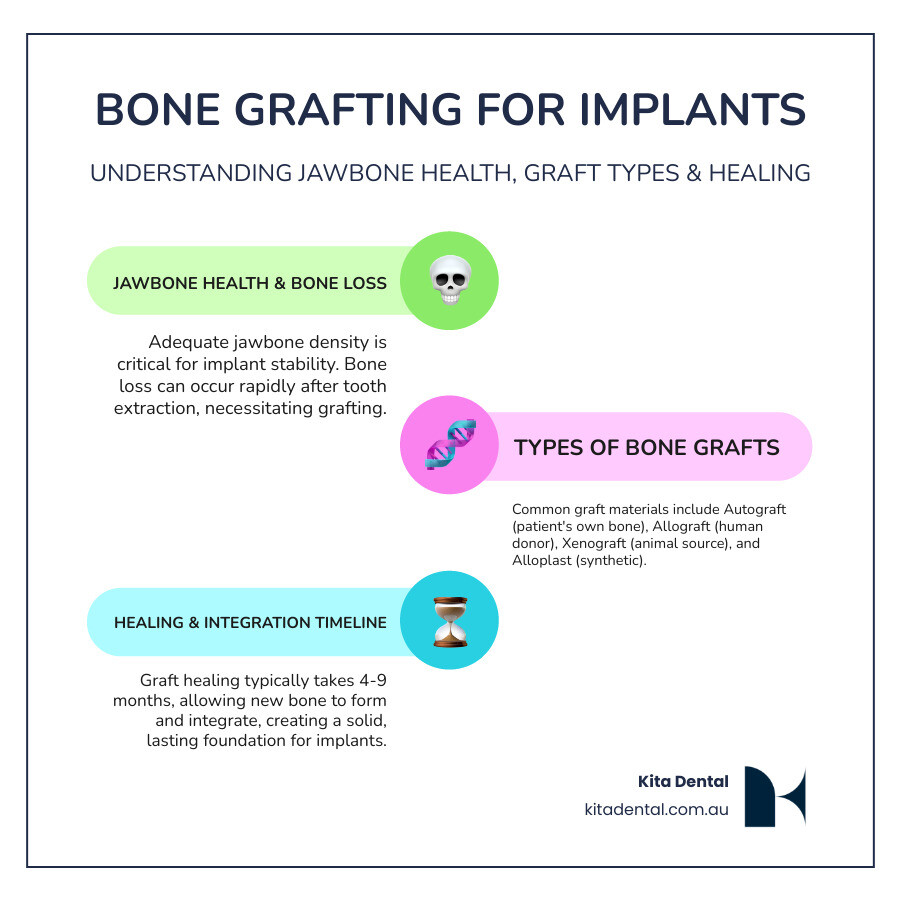
Bone grafting for dental implants rebuilds lost jawbone to create a strong foundation for implant placement. When you lose a tooth, the surrounding bone deteriorates. Without enough bone density, dental implants cannot be securely placed or may fail over time.
Key facts about bone grafting for dental implants:
- Nearly half of all implant procedures require bone grafting first
- 3-6 months healing time is typically needed before implant placement
- Four main types of graft materials are available (your own bone, donor bone, animal-derived, or synthetic)
- Success rate is very high when proper aftercare instructions are followed
- Essential for aesthetics, especially for front teeth, to support gum tissue
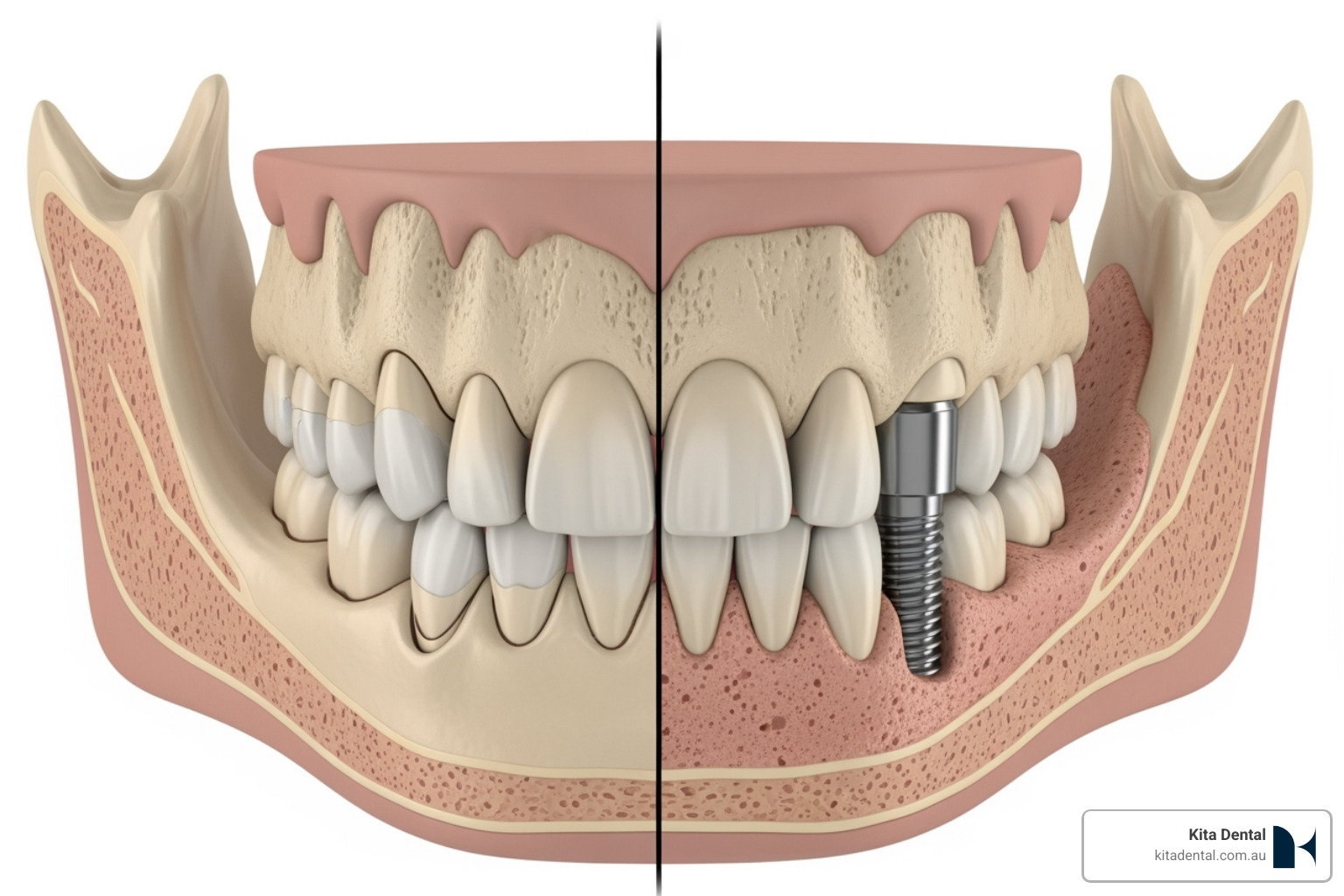
Your jawbone needs stimulation from tooth roots to stay healthy. When a tooth is missing for months or years, that bone shrinks away through a process called resorption, leaving insufficient support for an implant that needs to last for decades.
Think of it like building a house—you wouldn’t put a foundation on unstable ground. Your implant needs solid bone to handle chewing forces and to look natural with your gums.
I’m Dr. Kent Boon, and with experience in full arch implant rehabilitation, I’ve seen how proper bone grafting for dental implants transforms not just smiles, but patients’ confidence and quality of life. The investment in building the right foundation pays dividends for years to come.
Why Bone Grafting is Essential for Dental Implant Success
When you lose a tooth, your jawbone begins to shrink through a process called bone resorption or jawbone atrophy. Without stimulation from a tooth root, the bone deteriorates. This presents a challenge for dental implants, which need dense, healthy bone to anchor securely for decades of reliable function. Insufficient bone volume can lead to implant instability or complete failure.
Bone grafting for dental implants is now very common because of this natural bone loss. A 2016 study found that nearly half of implant sites required grafting before implants could be successfully placed, making it a standard part of modern implant dentistry.
The benefits extend beyond mechanical stability. As your jawbone shrinks, it affects your facial structure, potentially causing a sunken appearance or deeper wrinkles. By rebuilding lost bone, we not just prepare for your implant but also help preserve your natural facial contours.
At our Mascot clinic, patients often feel they’ve turned back the clock on their appearance. Whether you’re considering Dental Implants Mascot or a more comprehensive restoration, the foundation we build today determines your smile’s success for years to come.
Who is a Good Candidate for a Bone Graft?
Most people who have been missing teeth for more than a few months will likely need some level of bone grafting. Your need for a graft depends on several factors we assess during your consultation.
- Long-term missing teeth are the most common reason. The longer a tooth has been missing, the more significant the bone loss.
- Gum disease (periodontitis) actively destroys the bone that supports your teeth, often more than patients realise.
- Jaw trauma or injury from accidents or even aggressive tooth extractions can damage or remove healthy jawbone. Bone grafting can effectively rebuild these areas.
- Insufficient bone volume can be due to natural anatomy or genetics, where some people simply have thinner or softer jawbones.
- For patients considering Full Arch Implants, bone grafting is even more critical. These restorations replace an entire arch of teeth, and every implant requires solid, uniform bone support to ensure the restoration functions properly for decades.
The Benefits of a Strong Foundation
Investing in bone grafting for dental implants is an investment in your smile’s future.
- Improved implant outcomes start with osseointegration, the fusion of bone with the implant. Dense bone creates the ideal environment for this, giving you a stable implant that can handle all chewing forces.
- Improved aesthetics are especially important for front teeth. Adequate bone volume supports your gum tissue, preventing a “long tooth” look or unsightly black triangles between teeth, ensuring your implant blends seamlessly.
- Prevents further bone loss as the graft material acts as a scaffold for new bone growth, strengthening the entire area over time.
- Supporting facial tissues is a key benefit. Your jawbone supports the muscles and skin of your lower face. Rebuilding lost bone helps maintain youthful facial contours and prevents a “sunken” look.
- Increased implant longevity means your investment lasts. Implants in properly grafted bone can last for decades. The extra months spent building the right foundation can add decades to your implant’s lifespan.
Types of Grafts and The Procedure for Bone Grafting for Dental Implants
When it comes to bone grafting for dental implants, choosing the right material is crucial. We have several excellent options, and the choice depends on your individual needs, the amount of bone we need to rebuild, and the graft’s location in your jaw. These materials all serve the same purpose: creating a strong foundation for your future implant.
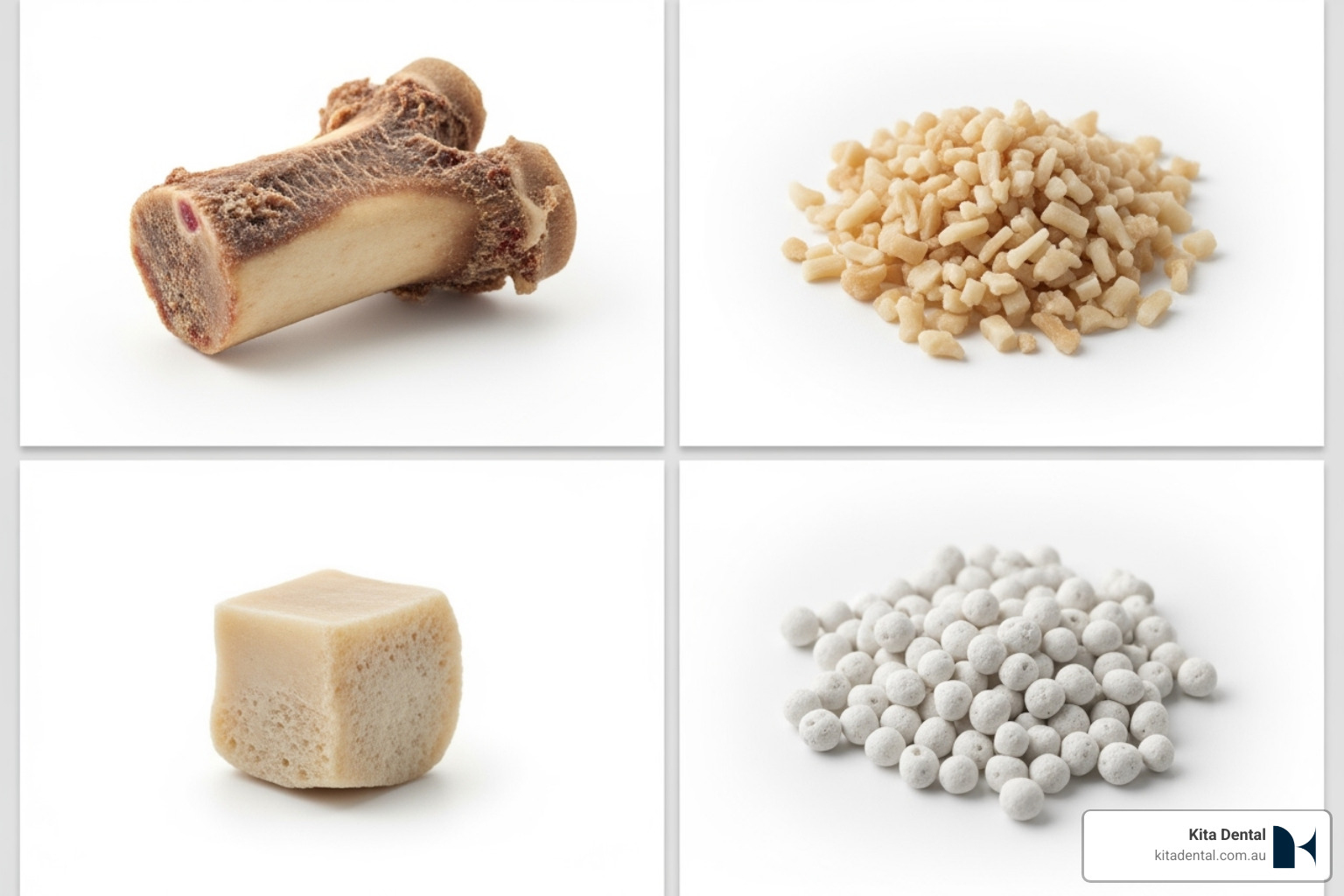
During your consultation at our Mascot clinic, we’ll walk you through these options. For more information, please visit our Bone Graft Dental Implant page.
The 4 Main Types of Bone Grafts
Understanding your options can help you feel more confident about your treatment.
| Graft Type | Source | Key Features | Advantages | Considerations |
|---|---|---|---|---|
| Autograft | Patient’s own body (e.g., hip, tibia, or another part of the jaw) | Contains living bone cells, growth factors | “Gold standard” (according to scientific sources) due to faster healing and new bone formation; excellent compatibility. | Requires a second surgical site for harvesting, more invasive. |
| Allograft | Donated human bone (processed and sterilised from a tissue bank) | Biologically compatible, acts as a scaffold for new bone. | No second surgical site; readily available. | No living cells; slower integration than autograft; ethical considerations for some patients. |
| Xenograft | Animal bone (e.g., cow or pig-derived) | Acts as a scaffold for new bone growth. | No second surgical site; abundant supply. | Animal origin may be a concern for some patients; slower integration compared to autografts. |
| Alloplast | Synthetic materials (e.g., calcium phosphate, bioactive glass) | Biocompatible, designed to stimulate bone growth. | No second surgical site; no animal or human donor concerns. | No living cells; integration can vary; may not be suitable for all types of bone defects. |
- Autografts are often called the “gold standard” because they use your own bone. Scientific sources show they heal faster and more predictably, but they require a second surgical site for harvesting.
- Allografts use processed and sterilised human donor bone. It acts as a safe, biocompatible scaffold for your own bone to grow into, eliminating the need for a second surgical site.
- Xenografts come from animal sources and act as a scaffold for new bone. These materials have been used safely and effectively for decades.
- Synthetic options (alloplasts) are lab-created materials that mimic natural bone to stimulate growth. They are ideal for patients who prefer to avoid human or animal donor materials.
What to Expect During the Procedure
The bone grafting for dental implants procedure is more straightforward than most people imagine. We’ve refined our process to ensure your comfort and the best outcome.
- Consultation and Planning: Your journey starts with a consultation, including advanced 3D CBCT imaging. This gives us a detailed view of your jawbone for precise treatment planning.
- Anaesthesia and Comfort: Your comfort is our priority. The area is numbed with local anaesthesia, and we offer sedation options for anxious patients, reflecting our commitment to Pain-Free Dental Implants.
- Graft Placement: The procedure involves a small incision in the gum to access the jawbone. We then place the chosen graft material into the deficient area, where it acts as a scaffold for new bone growth.
- Protection: Often, a protective membrane is placed over the graft. This barrier prevents gum tissue from interfering with the slower process of bone formation.
- Suturing: Finally, we suture the gum tissue back into place. These sutures protect the graft during early healing and are typically removed at a follow-up appointment.
The procedure usually takes one to two hours. We keep you informed throughout and provide detailed recovery instructions before you leave our Mascot clinic.
The Healing Journey: Recovery, Timeline, and Success
The healing phase after bone grafting for dental implants is when your body builds new bone around the graft material, creating a strong foundation for your future implants. During this time, a process called osseointegration occurs, where your natural bone fuses with the graft material to form a solid, integrated structure.
This healing process requires patience. Most grafts need three to six months to integrate fully. For larger grafts, such as those supporting Full Arch Implants, healing can take up to nine or even twelve months. This timeline affects when you can receive your implant, as we must wait for the bone to be strong enough. This step is crucial for creating a smile that lasts a lifetime.
We’ll monitor your progress with regular check-ups. Our experienced team at Kita Dental will guide you through every step, from grafting to final implant placement, as part of our comprehensive Restorative Dentistry services.
Your Recovery and Aftercare Guide
A smooth recovery is essential for success. Following our aftercare instructions will minimise discomfort and promote optimal healing, though some tenderness, swelling, and bruising are normal.
- First Week: Tenderness and swelling are normal and usually subside in 7-10 days. You may also notice tiny, sand-like bone fragments from the site, which is typically normal.
- Diet: Stick to soft foods like soups, yoghurt, and smoothies for the first few days, gradually reintroducing normal foods as you feel comfortable.
- Swelling Management: Use ice packs on your jaw for the first 24-48 hours. Keep your head liftd with extra pillows when resting to minimise swelling.
- Oral Hygiene: After 24 hours, begin gentle rinsing with a prescribed mouthwash or warm salt water. Avoid vigorous swishing or spitting.
- Activities to Avoid: Avoid touching the surgical area, using straws, and strenuous exercise for at least 48 hours. It’s critical to avoid alcohol for at least two weeks and all smoking or vaping, as tobacco severely compromises healing.
- Full Healing: While you’ll feel better in a week or two, full biological healing takes months. Patience is essential, as rushing this process can compromise your implant’s long-term success.
Factors for a Successful Bone Grafting for Dental Implants
The success of your bone grafting for dental implants is a partnership between our clinical expertise and your commitment to aftercare.
- Follow Aftercare Instructions: This is the most important factor you can control. Adhering to our guidelines for diet, hygiene, and activity dramatically reduces complication risks.
- Avoid Smoking: Smoking severely hampers healing and significantly increases the risk of graft failure. We strongly encourage you to quit.
- Maintain Oral Hygiene: Excellent, gentle oral hygiene as instructed prevents infection and allows proper healing.
- Attend Follow-up Appointments: These sessions are essential for monitoring integration, checking for complications, and determining the right time for implant placement.
- Overall Health: Your general health is significant. Conditions like uncontrolled diabetes or certain medications can affect bone regeneration. We’ll discuss your health history to ensure the best outcome.
By working together, we can maximise your graft’s success and create a strong foundation for your new smile here in Mascot.
Frequently Asked Questions
We know that considering bone grafting for dental implants brings up many questions. Here are straightforward answers to some common concerns we hear from our patients in Mascot.
Is the bone grafting procedure painful?
The bone grafting for dental implants procedure itself is not painful. We use effective local anaesthesia to completely numb the area. For anxious patients, we offer sedation options to ensure you are relaxed and comfortable.
After the anaesthesia wears off, expect some mild to moderate soreness, similar to a tooth extraction. Swelling and bruising are also normal. This discomfort is manageable with pain relievers and by applying ice packs for the first day or two. Most significant pain subsides within a few days, with initial recovery taking one to two weeks.
How long until I can get my dental implant after a bone graft?
Patience is key. The timing for your dental implant depends on how well your body heals and integrates the new bone, a process called osseointegration that cannot be rushed.
The typical healing window is three to six months. For larger grafts, such as those for Full Arch Implants, healing can take nine to twelve months. While this may seem long, placing an implant before the graft has matured could jeopardise the entire procedure. The exact timing varies, and we will monitor your progress with check-ups and imaging to determine the ideal time for implant placement, ensuring the strongest foundation.
Can my body reject the bone graft?
The term “rejection” isn’t quite right for bone grafts, as your body won’t have an immune response to the graft material. However, a graft can fail to integrate with your natural bone. While uncommon, it’s important to understand the causes:
- Infection: This is the primary risk. We use sterile techniques, and it’s crucial that you follow post-operative hygiene instructions and take any prescribed antibiotics.
- Poor healing response: Factors like smoking, uncontrolled diabetes, or certain medications can hinder healing, which is why we review your medical history thoroughly.
- Inadequate post-operative care: Disturbing the site or not following dietary and hygiene instructions can interfere with healing and compromise success.
At Kita Dental, we take every precaution for a successful bone grafting for dental implants procedure. We use proven techniques, select the right material for you, and provide comprehensive aftercare instructions. Working together maximises the chance of a successful outcome.
Your Foundation for a Lasting Smile in Mascot
A confident, healthy smile starts with the right foundation. Bone grafting for dental implants is often an essential step towards achieving a durable, beautiful smile with Teeth Dental Implants.
Just as a house needs a solid foundation, so do your dental implants. Creating a strong base with bone grafting sets you up for decades of confident smiling, eating, and speaking.
At our Mascot dental clinic, we’ve seen this foundational step transform lives. Whether for a single implant or a comprehensive solution like full arch implants, adequate bone density is crucial for the success and aesthetics of your final result.
We understand dental procedures can feel overwhelming. Our friendly team will explain every step, answer your questions, and ensure you feel comfortable and informed throughout your journey. The investment in proper bone grafting pays long-term dividends, creating a foundation that supports your facial structure, maintains a youthful appearance, and gives you the confidence to smile freely.
If you’re wondering if bone grafting is the right first step for your smile goals, we’d love to discuss your unique needs and create a personalised treatment plan.
Ready to take the first step towards your strongest possible smile foundation? Contact Us today to schedule your consultation. We’re here to answer all your questions and help you build the lasting, beautiful smile you deserve right here in Mascot.