Are Dental Implants Painful?
Short answer: no, you shouldn’t feel pain during the procedure itself, but you can expect manageable soreness for a few days afterwards.
What You’ll Feel During the Procedure
Local anaesthetic fully numbs the mouth before anything begins, so you shouldn’t feel pain while the implant is placed. Most people describe the sensation as pressure or vibration rather than pain, and this is partly because the jawbone, where the implant sits, has far fewer nerve endings than a tooth or gum.
On top of the local anaesthetic, many people choose sedation to stay relaxed throughout. The right level depends on the complexity of your case, and your personal preference. This is discussed with you beforehand.
Sedation Options
- Oral sedation — a tablet taken before your appointment. You stay awake and able to communicate, but feel relaxed and a little drowsy. Suits mild to moderate anxiety.
- IV (twilight) sedation — a deeper level of relaxation for more involved procedures or significant anxiety. You’re in a semi-awake state, able to respond to instructions, but often with little to no memory of the procedure afterwards. Because of this, you’ll need someone to drive you home.

What Happens After: A Realistic Recovery Timeline
Day 1: As the anaesthetic wears off, soreness in the gums and cheeks is normal. Swelling begins, along with mild to moderate discomfort. You’ll likely feel tired and hungry, especially after fasting. Rest, hydration, and your prescribed pain relief are the priority.
Days 2–3: Swelling and bruising typically peak here, sometimes extending to the cheeks, jaw, or neck.
Around day 5: Most people report feeling noticeably better by this point, with discomfort easing day by day.
Week 1: A soft-food diet is important while the surgical site settles. Many people return to desk-based work within days, though this varies by individual and by how extensive the surgery was.
Weeks 2–4: Visible healing has largely settled, swelling reduces and energy returns to normal. It’s still worth avoiding hard, crunchy, or chewy foods during this stretch.
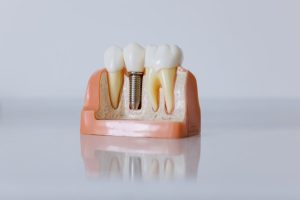
Months 2–6: Beneath the surface, the implant is fusing with the jawbone. You won’t feel this happening, but it’s the phase that determines the implant’s long-term stability, which is why healing can’t be rushed.
If you’ve also had a bone graft or multiple extractions, recovery can take a little longer. Your dentist will give you a timeline suited to your specific case.
Managing Discomfort at Home
- You can apply a cold ice-pack to the outer cheek for 10–15 minutes at a time during the first 24 hours
- Take over-the-counter pain relief (as directed). It is recommended to organise this before your appointment so it’s ready when you get home
- Stick to soft foods (soups, mashed vegetables, yoghurt, smoothies) for several weeks, avoiding hard, spicy, or crunchy foods
- Brush other teeth gently, avoiding the surgical site for the first day or two
- From the day after surgery, rinse with warm salt water a few times a day, especially after eating
- Avoid strenuous activity for the first few days to reduce swelling

Why It’s Not as Bad as People Expect
A lot of the fear around implants comes from comparing them to older dental procedures, or simply not knowing what actually happens. A few things worth knowing:
- The jawbone has far fewer nerve endings than a tooth socket, which is why many people find implant placement more comfortable than a tooth extraction.
- Precise pre-surgical planning: a 3D scan of your jaw lets your dentist map out exactly where each implant will go before you’re even in the chair, which generally means a more efficient, less invasive procedure.
- Everyone’s pain tolerance and healing speed differs, so it’s worth talking through your own concerns and options directly with your dentist rather than going on averages alone.
Written by Dr Kent Boon
April 3 2026
All on X treatments at Kita Dental are led by Dr Kent, Principal Dentist and Implantologist, who holds a Master of Oral Implantology. Kita Dental is a dental clinic located in Mascot, NSW, with a strong focus on dental implants.
This article is general information only and is not a substitute for personalised advice from a registered dental practitioner. Outcomes vary from patient to patient.