Skip to content
Protecting Your Investment: Essential Care for Full Arch Implants
Caring for full arch implants is the cornerstone of ensuring your new smile lasts a lifetime. These advanced dental solutions offer a stable, natural-looking replacement for missing teeth, restoring your ability to chew, speak, and smile with confidence. To maintain their health and functionality, a clear understanding of daily maintenance and long-term care is essential.
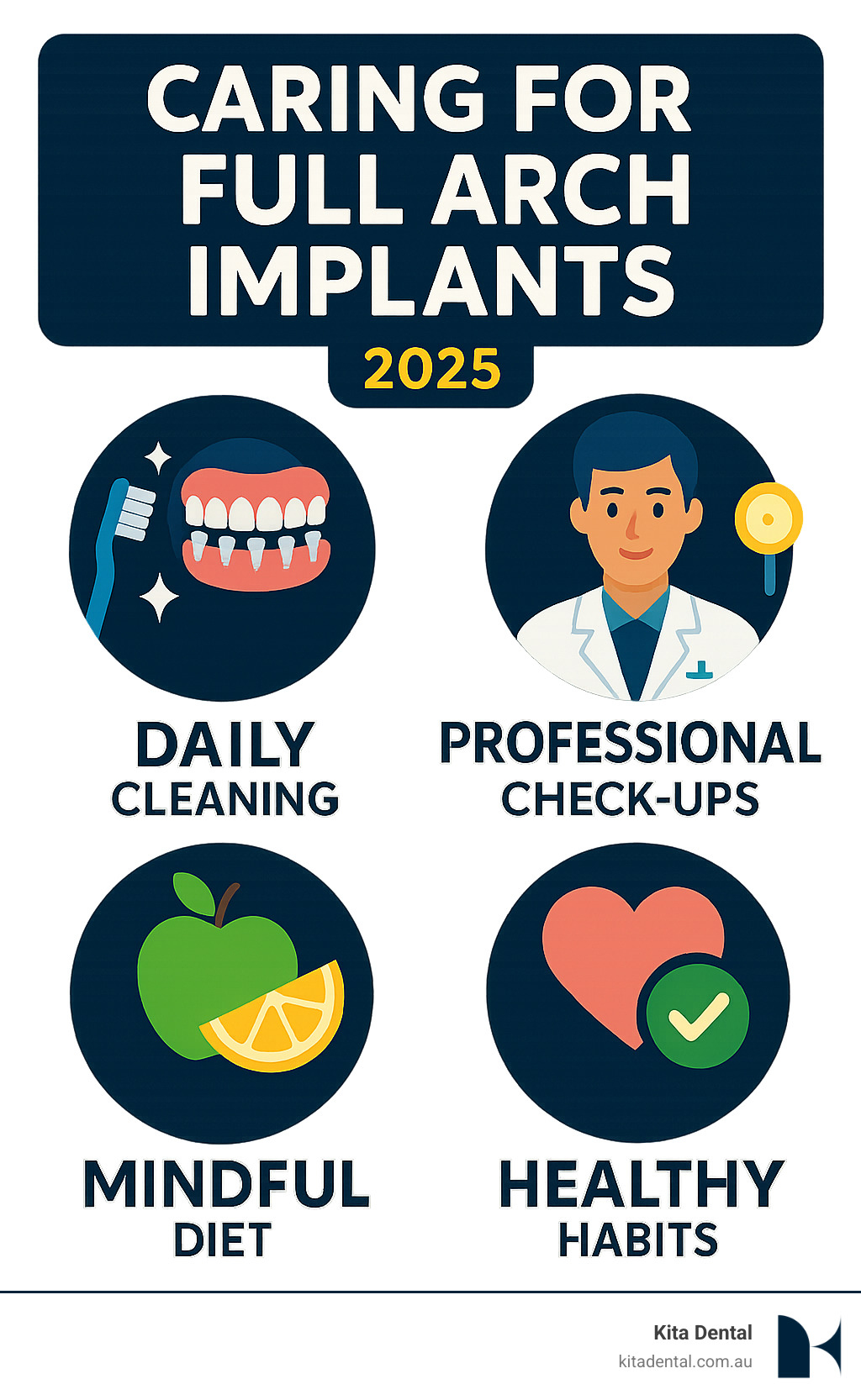
Here’s a quick overview of what you need to do:
- Daily Cleaning: Carefully brush and floss your implants every day using the right tools.
- Professional Check-ups: Visit your dentist regularly for professional cleanings and assessments.
- Mindful Diet: Choose foods that support your oral health and avoid those that can cause damage.
- Healthy Habits: Steer clear of habits that could compromise your implants’ longevity.
Full arch implants are a significant investment in your oral health. While they cannot develop cavities, they are still susceptible to plaque buildup and gum inflammation if neglected. Consistent care prevents complications and protects your investment for decades.
My name is Dr. Kent Boon, and as Principal Dentist at Kita Dental, I’ve seen how proper caring for full arch implants transforms lives. With my extensive post-graduate education in implantology, I’m committed to guiding patients through successful, long-term implant care.
Medically reviewed by Dr. Kent Boon, Principal Dentist, Kita Dental (Mascot, NSW). Reviewed on 23 December 2024. Manual review completed.
Your Daily Guide to Caring for Full Arch Implants
Just like natural teeth, your full arch implants require consistent daily care to prevent plaque buildup, maintain gum health, and ward off potential infections. A little effort each day goes a long way in ensuring your implants remain sparkling and strong.
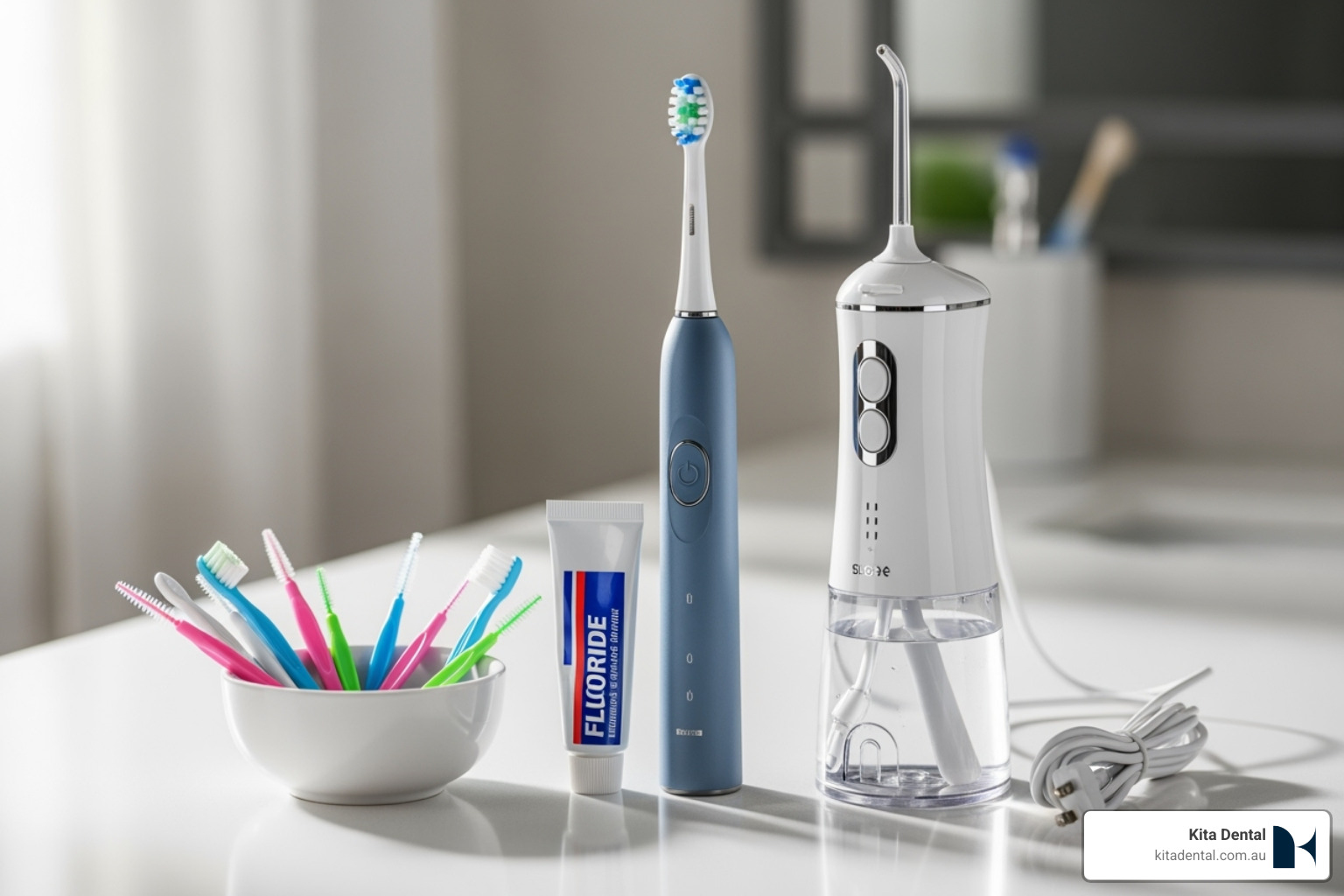
Essential daily oral hygiene practices for caring for full arch implants
The heart of caring for full arch implants is your morning and evening routine. Brush your implants twice a day for at least two minutes each time. A soft-bristled toothbrush, manual or electric, is your implant’s best friend. Hard bristles can scratch your implant surface and irritate your gums. Pair your gentle brush with a non-abrasive toothpaste.
When brushing, pay special attention to the gum line where your prosthetic bridge meets your gum tissue, as this area is a magnet for plaque. Use gentle, circular motions. After your procedure, your dentist may suggest rinsing with warm water instead of brushing the area directly. You’ll gradually return to gentle brushing as you heal.
Flossing and Interdental Cleaning: Reaching Critical Areas
While brushing handles the surface, flossing and interdental cleaning are crucial for the areas your toothbrush can’t reach. These tools are essential for caring for full arch implants.
- Water Flosser: This device uses a gentle stream of water to dislodge food and plaque from around and under your bridge. Use it twice daily on a low or medium setting.
- Implant-Specific Floss: Products like Super Floss have a stiff end to thread under your bridge, allowing you to clean each section thoroughly.
- Interdental Brushes: These tiny brushes are excellent for cleaning around implants and abutments if you have enough space between your bridge and gums. Use the size recommended by your oral hygienist.
- Rubber Tip Gum Stimulator: This tool helps dislodge stubborn food particles and promotes healthy blood flow in your gum tissue.
For personalised guidance on the best cleaning techniques, our team at Kita Dental in Mascot is always here to help. Learn more about our dental implant services.
Fixed vs. Removable Prostheses: Key Cleaning Differences
While the principles of care are the same, the techniques vary depending on whether you have a fixed or removable prosthesis.
Fixed full arch bridges are permanently attached. Your daily routine focuses on brushing the bridge and gum line with a soft-bristled brush and using tools like a water flosser, implant-specific floss, or interdental brushes to clean underneath the bridge where debris accumulates.
Removable implant-supported dentures snap onto your implants and are removed for cleaning. You’ll remove the denture at least twice daily, brushing it with a denture cleaner (not regular toothpaste). Soaking it overnight in a denture solution is also recommended. Don’t forget to gently clean the implant abutments in your mouth with a soft-bristled toothbrush.
| Cleaning Method | Fixed Full Arch Bridges | Removable Implant-Supported Dentures |
|---|---|---|
| Daily Brushing | Brush bridge surface and gum line with soft-bristled brush | Remove dentures and brush separately with denture cleaner |
| Flossing/Interdental | Thread floss under bridge, use water flosser and interdental brushes | Clean implant abutments with soft brush and interdental tools |
| Overnight Care | Leave in place, continue regular oral hygiene | Remove and soak in denture cleaning solution |
| Professional Maintenance | Regular cleanings; occasional bridge removal for deep cleaning | Regular check-ups for both dentures and implant sites |
| Special Considerations | Focus on cleaning under the bridge where debris accumulates | Clean attachments and clips carefully; inspect for wear |
Consistency and using the right techniques are key. At Kita Dental, we’ll ensure you’re comfortable with your cleaning routine.
Professional Maintenance: Your Partner in Implant Longevity
While diligent home care is crucial, it’s only half the story. Regular professional check-ups and cleanings are vital for the long-term health of your implants. Think of your dental team as your dedicated pit crew, ensuring your smile runs smoothly for years to come.
These biannual visits to Kita Dental in Mascot, Sydney, allow us to monitor your implants, detect potential issues early, and perform thorough cleanings that aren’t possible at home. This partnership between your home care and our professional expertise is what ensures the longevity of your full arch implants.
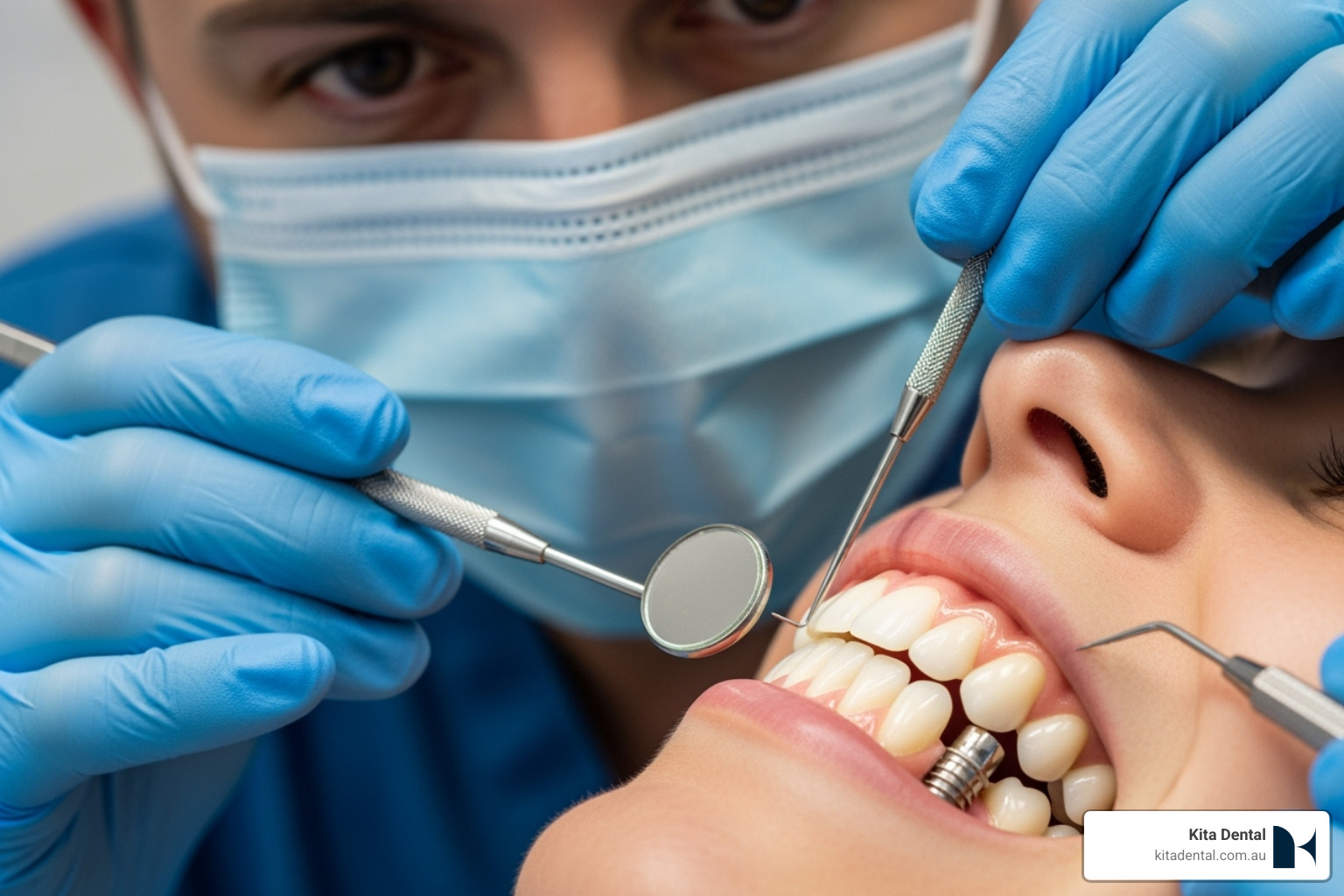
What to Expect During a Professional Cleaning
A professional cleaning for full arch implants is a comprehensive assessment designed to protect your investment. During your visit, we will:
- Discuss any concerns and review your home care routine.
- Check your bite (occlusion) to ensure it’s balanced and not putting stress on your implants.
- For fixed bridges, we may periodically remove the prosthesis to thoroughly clean the implant abutments and the underside of the bridge.
- Use specialised tools to remove plaque and calculus (hardened plaque) without scratching the implant surfaces.
- Inspect all components, including prosthetic screws, for wear and tear, tightening them to the correct torque.
- Take periodic X-rays to assess the health of the implants and the supporting bone.
- Review your home care routine and offer updated tips or product recommendations.
Our goal is always to provide a comfortable experience. Learn more about our approach to pain-free dental procedures.
Signs of Complications and When to Seek Help
While caring for full arch implants diligently reduces risks, it’s important to recognise potential complications. The most common issue is peri-implantitis, an inflammatory condition similar to gum disease that can lead to bone loss and implant failure if untreated. Understanding this condition is crucial for all implant patients.
Watch for these signs of potential complications:
- Gum Changes: Red, swollen, or tender gums around your implants.
- Bleeding or Pus: Any bleeding or discharge from the gum line when brushing or flossing.
- Bad Breath or Taste: A persistent bad taste or chronic bad breath that doesn’t improve with cleaning.
- Looseness: Any feeling that your prosthesis or an individual implant is loose or wobbly.
- Pain or Discomfort: Persistent or worsening pain long after the initial healing phase.
- Difficulty Chewing: Sudden discomfort or difficulty when chewing.
When to Seek Professional Dental Help:
Contact Kita Dental immediately if you experience severe or worsening pain, significant bleeding, any signs of infection like pus, a fever over 38°C, or any looseness in your prosthesis or implants. Prompt action can prevent minor issues from becoming major problems.
Lifestyle and Diet: Protecting Your New Smile
Your full arch implants are designed for durability, but certain dietary choices and lifestyle habits can impact their longevity. Making mindful decisions is an active part of protecting your investment in a beautiful, functional smile.

Dietary Considerations for Implant Health
Proper nutrition is vital for both healing and long-term implant health.
Immediately After the Procedure:
A soft food diet is essential for the first few weeks to allow the implants to fuse with your jawbone. Recommended foods include smoothies, lukewarm soups, yogurt, mashed potatoes, and scrambled eggs. Avoid anything hot, spicy, chewy, or hard that could put pressure on the healing sites.
Long-Term Dietary Habits:
Once healed, you can enjoy most foods. However, to protect your implants, it’s wise to:
- Avoid Extremely Hard Foods: Biting on ice, hard candies, or popcorn kernels can put undue stress on your prosthesis and implants.
- Limit Sugary and Acidic Items: These can contribute to gum inflammation around your implants. For more information, you can consult general health advice on foods that can harm your teeth.
- Eat Nutrient-Rich Meals: A balanced diet supports overall health, which is vital for strong bones and healthy gums.
Habits to Modify for Preventing complications through proper caring for full arch implants
Certain lifestyle habits can significantly impact the success of your implants. Modifying these is a crucial part of caring for full arch implants.
- Smoking and Vaping: This is one of the most detrimental habits. It impairs blood flow, hinders healing, and dramatically increases the risk of peri-implantitis and implant failure. We strongly advise against smoking and vaping.
- Excessive Alcohol Consumption: Alcohol can interfere with healing and negatively impact oral health. It should be avoided in the initial healing phase.
- Teeth Grinding (Bruxism): The excessive force from grinding can damage your prosthesis and implants. If you grind your teeth, we can create a custom night guard to protect your new smile.
- Using Teeth as Tools: Avoid opening packages or biting nails with your implants to prevent chipping or cracking.
- Contact Sports: Wear a custom-fitted mouthguard during sports to protect your implants from accidental trauma.
Frequently Asked Questions about Full Arch Implant Care
At Kita Dental in Mascot, Sydney, we believe an informed patient is a confident patient. Here are answers to some common questions about caring for full arch implants.
How long do full arch implants last with proper care?
With meticulous daily cleaning and regular professional check-ups, the titanium dental implants themselves are designed to last a lifetime. They integrate with your jawbone to create a permanent foundation. The prosthetic bridge that sits on top is very durable but is subject to normal wear and tear. It may need to be replaced every 15 to 20 years, similar to how you might replace the tyres on a car. This is a normal part of long-term maintenance to keep your smile functional and beautiful.
What should I do for minor bleeding or discomfort after the procedure?
It’s normal to experience some minor bleeding, swelling, and discomfort right after your procedure. We will provide detailed post-operative instructions, but here are some general tips:
- Bleeding: Gently bite down on a clean piece of gauze for 30-60 minutes. Avoid vigorous spitting or drinking through a straw.
- Swelling: Apply a cold pack to the cheek area for 20-minute intervals during the first 24-48 hours.
- Discomfort: Follow the personalised pain management plan we provide. Over-the-counter pain relievers are often sufficient. Stick to the recommended dosage.
- Rest: Avoid strenuous activity for at least 48 hours and stick to a soft diet to promote healing.
If you experience severe bleeding, worsening pain, or signs of infection (like pus or a fever over 38°C), please call Kita Dental immediately.
Can I use a regular electric toothbrush on my full arch implants?
Yes, an electric toothbrush with a soft-bristled head is an excellent tool for caring for full arch implants. Many patients find them more efficient at removing plaque. However, immediately after surgery, we may advise using a manual soft-bristled toothbrush to be extra gentle on the healing tissues. Once you’ve healed, you can switch to an electric toothbrush. Always use a soft brush head and non-abrasive toothpaste, and follow the specific recommendations from our team at Kita Dental.
A Lifetime of Confident Smiles Starts with Great Care
Your journey with full arch implants is a partnership between you and our team at Kita Dental. It’s built on consistent daily care, regular professional maintenance, and smart lifestyle choices. The effort you put in today protects your investment and pays dividends for years to come.
Proper aftercare restores the joy of eating your favourite foods, allows you to speak with clarity, and preserves a strong, healthy jawbone. Most importantly, it brings back the natural, uninhibited smile you deserve. This renewed confidence can positively impact every aspect of your life, from social situations to professional interactions.
Here in Mascot, Sydney, we’ve witnessed countless patients experience this change. The aftercare routine we’ve outlined isn’t just a list of tasks; it’s your pathway to reclaiming your quality of life.
Our commitment to you extends well beyond your initial treatment. We are here for the long haul, ready to support your implant health and celebrate your oral health journey with you. Your new smile is a fresh start, and with our ongoing partnership, it will serve you faithfully for decades.
Ready to take the next step in your implant journey? Learn more about our approach to teeth dental implants and find out how we can help you maintain that confident smile for life.