
Beyond the Standard Polish
Clinical Review: This article has been manually reviewed and approved for clinical accuracy by Dr. Kent Boon, Principal Dentist at Kita Dental (Mascot, Sydney).
Manual Review Completed: Yes
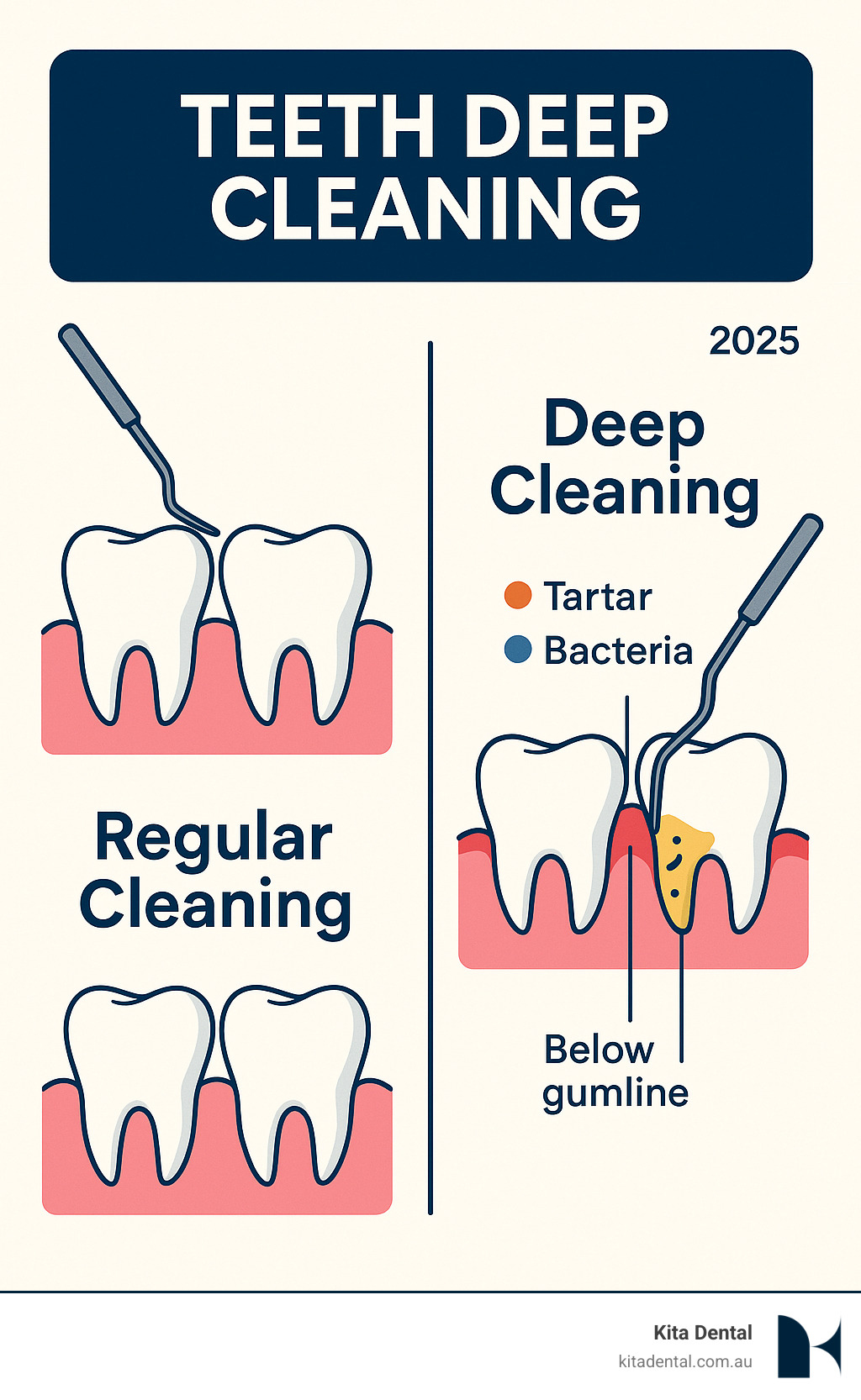
Teeth deep cleaning is a specialized dental procedure that goes far beyond your regular six-monthly clean, targeting bacteria and plaque buildup below the gum line to treat gum disease and prevent tooth loss.
What is teeth deep cleaning?
- Also called scaling and root planing
- Removes plaque and tartar from below the gum line
- Smooths tooth roots to help gums reattach
- Treats gingivitis and periodontitis
- Usually requires 1-2 appointments of 1-2 hours each
When do you need it?
- Gum pockets deeper than 3 mm
- Bleeding, swollen, or receding gums
- Persistent bad breath
- Loose teeth or bone loss
While your regular dental cleaning focuses on polishing teeth above the gum line, deep cleaning addresses the hidden bacterial infection that causes gum disease. This isn’t just about oral health — untreated gum disease can lead to tooth loss and affect your eligibility for cosmetic treatments like dental veneers or Invisalign.
The procedure involves two main steps: scaling removes tartar buildup below the gums, while root planing smooths the tooth roots to prevent future bacterial accumulation. Most patients experience minimal discomfort thanks to local anaesthetic.
Deep cleaning serves as the essential foundation for maintaining healthy gums, especially important for busy professionals in Mascot and Sydney who want to preserve their smile for years to come.
Dr. Kent Boon, Principal Dentist at Kita Dental in Sydney, has helped countless patients restore their gum health through teeth deep cleaning procedures. His approach combines gentle technique with modern dental technology to ensure patient comfort throughout the treatment process.
Signs You Need a Teeth Deep Cleaning and Why It’s Crucial
Here’s something that might surprise you: gum disease affects nearly half of all Australian adults, yet many people don’t realize they need teeth deep cleaning until they’re already experiencing serious symptoms. The good news? Catching the warning signs early can save your teeth and prevent more complex dental problems down the track.
Understanding how gum disease develops is key to recognizing when you need help.
It all starts with gingivitis – the early stage where your gums become red, swollen, and bleed easily when you brush or floss. Think of it as your mouth’s way of waving a red flag. At this point, the damage is still reversible with proper treatment and improved home care.
But when gingivitis goes untreated, it progresses to periodontitis – the advanced stage where infection spreads below the gum line. This is where things get serious. The bacteria create deep pockets between your teeth and gums, potentially causing bone loss and loose teeth. This is exactly when teeth deep cleaning becomes essential.
So how do you know if you’ve crossed that line?
The most obvious sign is bleeding gums during brushing or flossing. While many people dismiss this as “normal,” healthy gums shouldn’t bleed during routine cleaning. You might also notice swollen or red gums that feel tender to touch, almost like they’re constantly irritated.
Persistent bad breath (halitosis) that doesn’t improve with regular brushing is another telltale sign. This isn’t just morning breath – it’s the result of bacteria thriving below your gum line where your toothbrush can’t reach.
As the condition progresses, you might notice receding gums that make your teeth appear longer than usual. Some patients even experience loose teeth or changes in how their bite feels. These are serious warning signs that shouldn’t be ignored.
The most definitive indicator comes from your dental examination. During a periodontal pocket depth measurement, we use a special probe to measure the spaces between your teeth and gums. Healthy gums have pocket depths of 1-3mm, but anything greater than 3mm indicates the need for deep cleaning. A comprehensive periodontal evaluation is key for diagnosis and helps us determine exactly what treatment you need.
Why deep cleaning becomes crucial for your future dental health
At Kita Dental in Mascot, we often meet patients who think they can simply “brush harder” to solve their gum problems. Unfortunately, once bacteria establish themselves below the gum line, regular brushing and flossing cannot reach these areas effectively – it’s like trying to clean the inside of a narrow bottle with a regular cloth.
Here’s where deep cleaning becomes the essential foundation for virtually every other dental treatment:
If you’re considering dental implants, healthy gums are absolutely prerequisite for successful implant placement and long-term stability. The same applies to cosmetic procedures – gum disease must be treated before we can place treatments like dental veneers. Even orthodontic treatment with Invisalign or braces requires healthy gums to move teeth safely and effectively.
But the impact goes beyond just your mouth. The bacteria from gum disease can enter your bloodstream, potentially affecting your heart health and increasing inflammation throughout your body. This makes teeth deep cleaning not just a dental procedure, but a genuine investment in your overall wellbeing.
For busy professionals in Mascot and Sydney, maintaining healthy gums is particularly important. You need a smile that looks great and functions properly for years to come – and that all starts with addressing gum disease before it progresses further.
The Deep Cleaning Procedure: A Step-by-Step Guide

Let’s walk through exactly what happens during your teeth deep cleaning appointment. Many patients find that understanding the process helps them feel more comfortable and confident about their treatment.
Teeth deep cleaning is a two-part procedure that we typically complete using a quadrant approach. This means we treat one quarter of your mouth at a time, which keeps the treatment manageable and allows us to focus thoroughly on each area.
Most patients need between one to two visits, with each appointment lasting about 1-2 hours. If your gum disease is more extensive, we might split the treatment across two appointments, handling two quadrants per visit. This approach ensures your comfort while giving each area the attention it deserves.
The beauty of this systematic approach is that we can provide thorough care without overwhelming you. Plus, it makes the numbing process much more comfortable when we’re working on smaller sections at a time.
Step 1: Scaling
Scaling is where we tackle the root cause of your gum problems – the plaque and tartar buildup that’s hiding below your gum line. Think of it as a deep clean for areas your toothbrush simply can’t reach.
The purpose of scaling is straightforward: we’re removing all that hardened bacterial buildup from the subgingival areas (that’s the fancy term for below the gum line). This bacterial colony is what’s causing your gum inflammation and bleeding.
We use a combination of manual scaling tools and modern technology to get the job done. Our scalers and curettes are specially designed instruments that allow us to carefully remove tartar deposits with precision. These hand tools give us excellent control and tactile feedback, so we can feel exactly what we’re working on.
We also use ultrasonic scalers, which are pretty amazing tools that use high-frequency vibrations to break up even the most stubborn tartar deposits. The water spray function on these instruments serves a dual purpose – it helps flush away debris and bacteria while keeping the area comfortable during treatment.
What will you feel during scaling? With local anaesthetic on board, you’ll experience more of a scraping sensation rather than pain. The ultrasonic scalers create a gentle vibrating feeling, and the water spray helps keep everything comfortable as we work.
Is Scaling Good for Teeth? Absolutely. This process removes the bacterial toxins that are causing your gum inflammation and stops the progression toward more serious periodontal disease.
Step 2: Root Planing
Once we’ve removed all the tartar buildup, we move to root planing – the step that really sets deep cleaning apart from regular cleaning. This is where we create the ideal environment for your gums to heal and reattach.
The purpose of root planing is to smooth the tooth roots below the gum line. You might wonder why this matters, but here’s the thing – rough root surfaces are like tiny hiding spots where bacteria love to set up camp again.
During root planing, we’re smoothing tooth roots to eliminate these bacterial hideouts. We’re also removing bacterial toxins that have penetrated into the root surface. These toxins actually prevent your gums from healing properly, so getting rid of them is crucial.
The real magic happens in encouraging gum reattachment. When we create smooth, clean root surfaces, your gums can actually reattach and heal properly. It’s like giving your gums a fresh start.
This step is also about preventing future buildup. Those smooth root surfaces make it much harder for plaque and tartar to accumulate again, which means better long-term results for you.
Most patients are amazed at how much tighter and healthier their gums feel just a few weeks after root planing. It’s particularly important if you’re planning cosmetic treatments like dental veneers or Invisalign in the future – healthy gums are the foundation for any successful dental work.
More on scaling and root planing provides additional information about this proven treatment approach.
The combination of scaling and root planing doesn’t just treat the immediate infection – it creates the perfect conditions for long-term gum health. Whether you’re in Mascot or anywhere in Sydney, this treatment serves as the essential foundation for maintaining your natural teeth for life.
Preparation, Recovery, and Long-Term Benefits

Getting ready for your teeth deep cleaning appointment doesn’t require anything complicated, but a few simple steps can make your experience smoother and help you heal faster afterward.
How to Prepare for Your Teeth Deep Cleaning
When you book your appointment at Kita Dental, we’ll have a thorough chat about your medical history and any medications you’re currently taking. This isn’t just paperwork – certain conditions like heart problems or joint replacements might mean you need antibiotics before treatment, and blood thinners may need a quick discussion with your doctor.
Staying hydrated before your appointment helps with comfort during the procedure, while avoiding alcohol is important since it can interfere with healing. If you’re feeling anxious about the treatment, don’t hesitate to discuss this with us – we have various comfort options available and can talk through sedation if that would help you feel more relaxed.
The night before your appointment, continue your normal brushing and flossing routine, even if your gums are a bit tender. Don’t skip this step or try to brush extra hard – just your regular gentle routine is perfect. A light meal before treatment is fine, but avoid anything too heavy that might make you uncomfortable.
Is Teeth Deep Cleaning Painful?
Here’s what most of our patients are relieved to find: teeth deep cleaning is much more comfortable than they expected. The biggest difference between what people imagine and what actually happens comes down to modern pain management techniques.
We use local anaesthetic to completely numb the treatment area before we begin, and we often apply numbing gel first to minimize any discomfort from the injection itself. Once you’re numb, the sensation feels more like pressure and scraping rather than anything painful.
Our team checks in with you throughout the procedure to make sure you’re comfortable. Many patients are surprised to find they can actually relax during treatment once they realize how manageable it feels. The discomfort versus pain distinction is important – while you’ll feel us working, it shouldn’t hurt.
Aftercare and Recovery
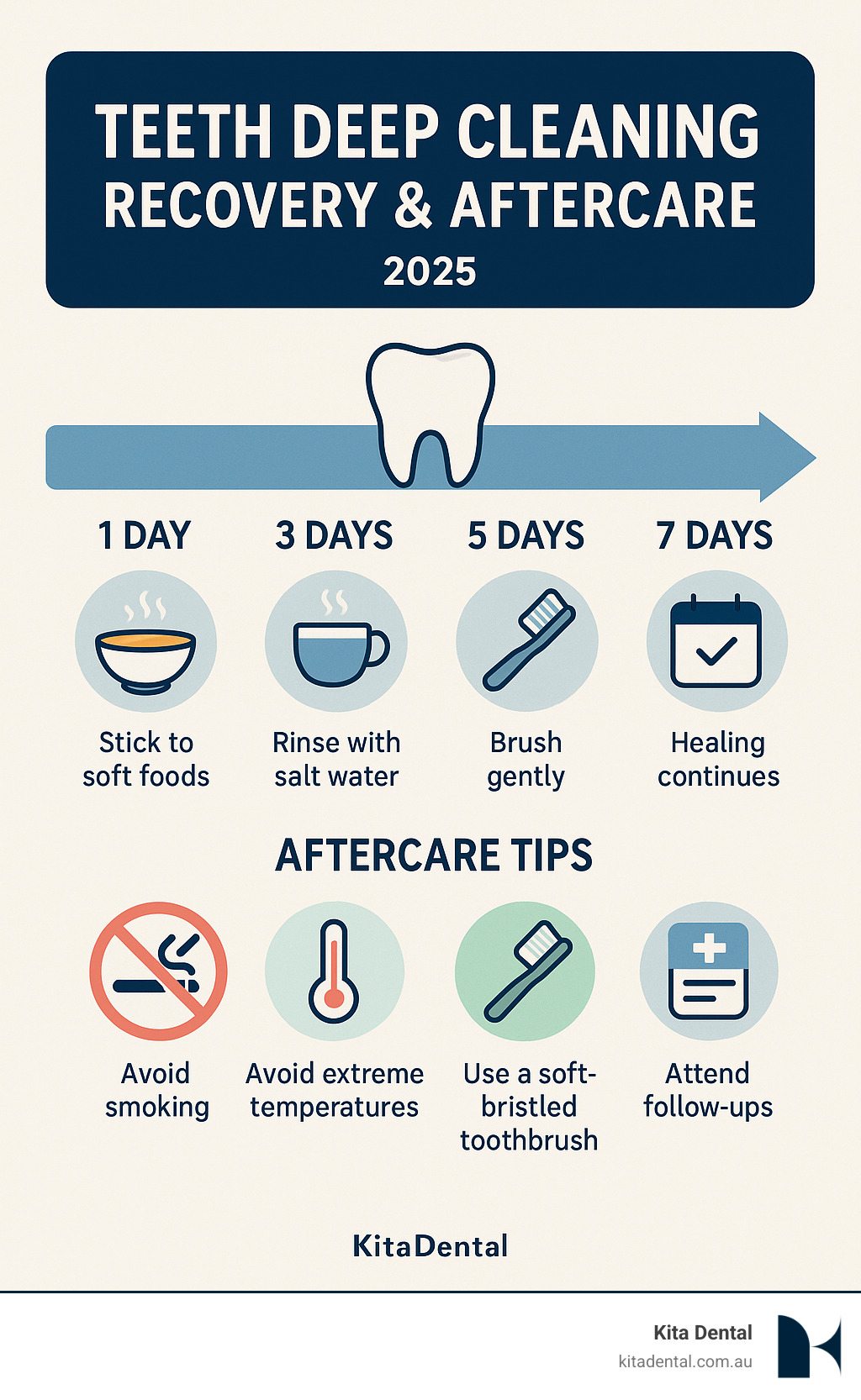
Your gums will need about 5-7 days to heal properly after teeth deep cleaning. During this time, you might experience some post-procedure sensitivity and tenderness, along with minor bleeding – all completely normal signs that your gums are healing.
Soft foods become your best friend for the first few days. Think soups, yogurt, pasta, and other gentle options that won’t irritate your healing gums. Avoiding extreme temperatures is equally important, so skip the ice cream and hot coffee temporarily.
Warm salt-water rinses two to three times daily help promote healing and keep the area clean. Mix half a teaspoon of salt in warm water and gently swish it around your mouth. When it comes to gentle oral hygiene, switch to a soft-bristled toothbrush and avoid aggressive brushing that could disrupt the healing process.
Avoiding smoking is crucial during recovery, as it significantly impairs healing and increases your risk of infection. If you’re a smoker, this might be a great opportunity to consider quitting altogether – your gums (and overall health) will thank you.
We’ll schedule follow-up appointments to monitor your healing progress and make sure everything is progressing as expected. These check-ups are important for ensuring the best possible outcome from your treatment.
Benefits and Potential Risks
The change that happens after teeth deep cleaning extends far beyond just healthier gums. 5 Benefits of Teeth Scaling demonstrates how this treatment stops gum disease progression before it can advance to more serious stages that threaten your teeth.
Protecting tooth roots from bacterial damage is perhaps the most important immediate benefit. By removing the bacteria that cause inflammation and infection, we’re essentially giving your teeth a fresh start. This prevents tooth loss by maintaining the supporting structures that keep your teeth stable and secure.
The overall health improvements might surprise you. Research shows that treating gum disease reduces systemic inflammation linked to heart disease and diabetes. Plus, eliminating the bacteria responsible for persistent bad breath means you can feel confident in social and professional situations.
For our patients in Mascot and Sydney who are considering dental implants, dental veneers, or Invisalign treatment, teeth deep cleaning creates the healthy foundation these procedures need to succeed. You simply can’t build lasting cosmetic or restorative work on diseased gums – it’s like trying to build a house on unstable ground.
Temporary sensitivity is the most common side effect, usually resolving within a week. Some patients experience minor gum recession, though this often improves overall gum health. Slight bleeding for the first day or two is normal, and infection risk is extremely rare when you follow proper aftercare instructions.
The benefits of this treatment far outweigh these minimal risks, especially when you consider the alternative of progressive gum disease leading to tooth loss. At Kita Dental, we see teeth deep cleaning as an investment in your long-term oral health and the foundation for any future dental work you might want.
Frequently Asked Questions about Deep Cleaning
How is a deep cleaning different from a regular cleaning?
Think of your regular dental cleaning as a thorough house cleaning – we focus on the surfaces you can see, polishing and maintaining what’s already healthy. Teeth deep cleaning, on the other hand, is more like renovating a house with structural problems – we need to go deeper to address the underlying issues.
The fundamental difference lies in where we’re working and why. Your regular six-monthly cleaning is preventative maintenance that keeps healthy gums healthy. We clean above the gum line, polish your teeth, and apply fluoride – all the good stuff that takes about 30-45 minutes and doesn’t require any numbing.
Deep cleaning is therapeutic treatment for active gum disease. We’re working below the gum line where bacteria have established themselves in pockets deeper than 3mm. This requires local anaesthetic because we’re treating infected areas that would otherwise be uncomfortable to clean thoroughly.
During your regular cleaning, we’re essentially maintaining the status quo. With teeth deep cleaning, we’re actively treating disease and creating the foundation for healing. The procedure takes 1-2 hours per session because we’re methodically removing years of bacterial buildup and smoothing root surfaces.
Why Do I Need Scaling and Root Planing Instead of a Regular Cleaning? The answer comes down to the severity of your gum condition – once bacteria establish themselves below the gum line, regular cleaning simply cannot reach them effectively.
How often is a deep cleaning needed?
Here’s the good news: teeth deep cleaning isn’t something you should need regularly like your standard cleanings. It’s a specific treatment for gum disease that, ideally, you’ll only need once if you maintain proper care afterward.
Think of it as getting your car’s engine rebuilt – you don’t want to do it every year, but once it’s done properly, regular maintenance should keep everything running smoothly.
After your deep cleaning, we’ll see you for a follow-up appointment in 4-6 weeks to check how well your gums are healing. This isn’t another deep cleaning – it’s an assessment to ensure everything is progressing as expected.
From there, you’ll need periodontal maintenance cleanings every 3-4 months instead of the standard six-monthly schedule. These more frequent visits help us catch any early signs of gum disease recurrence before they become serious problems.
Your individual needs depend on several factors. Some patients with excellent home care and no significant risk factors maintain healthy gums easily with this routine. Others with aggressive gum disease, genetic predisposition, or risk factors like smoking may need periodic deep cleanings every few years.
At Kita Dental, we tailor your maintenance schedule based on how your gums respond to treatment and your individual risk factors. Our goal is to help you avoid needing another deep cleaning while maintaining the healthy foundation for any future dental implants, Invisalign treatment, or cosmetic dentistry you might want.
Can gum disease come back after a deep cleaning?
Unfortunately, yes – gum disease can return if you don’t maintain proper care. But here’s the encouraging part: teeth deep cleaning gives you a fresh start, and with the right ongoing care, many patients successfully prevent recurrence for years.
Think of it like renovating your home – the deep cleaning fixes the structural problems, but you still need to maintain the house to keep it in good condition.
Your daily home care becomes absolutely crucial after deep cleaning. This means brushing twice daily with fluoride toothpaste, flossing daily (or using interdental brushes if flossing is challenging), and using antimicrobial mouthwash if we’ve recommended it. An electric toothbrush can be particularly helpful for removing plaque more effectively than manual brushing.
Professional maintenance is equally important. Those 3-4 monthly cleanings aren’t just suggestions – they’re essential for monitoring your gum health and catching any early signs of disease recurrence. During these visits, we measure pocket depths and can address any problems before they require another deep cleaning.
Certain risk factors make recurrence more likely. Smoking is by far the biggest threat to your gum health – it impairs healing and dramatically increases your risk of gum disease returning. Some people are genetically more susceptible to gum problems, while health conditions like diabetes can also increase risk.
The reality is that patients who commit to excellent home care and regular maintenance typically maintain healthy gums long-term. Those who skip cleanings or neglect daily care often find themselves needing repeat treatment.
At Kita Dental in Mascot, we work with you to develop a realistic maintenance plan that fits your lifestyle and addresses your specific risk factors. Our goal is to help you maintain the healthy gums you’ve achieved through deep cleaning, creating the perfect foundation for any future dental veneers, Invisalign, or other treatments you might want.
Conclusion: Your Foundation for a Healthy Smile in Mascot
Think of teeth deep cleaning as laying the groundwork for everything you want to achieve with your smile. Just like you wouldn’t build a house on shaky foundations, you can’t expect lasting results from cosmetic treatments without healthy gums supporting them.
Throughout this guide, we’ve walked through how deep cleaning tackles the sneaky bacterial infection hiding below your gum line — the stuff your regular toothbrush just can’t reach. When we remove that buildup through scaling and root planing, we’re not just treating today’s problem. We’re creating the perfect environment for your gums to heal and stay healthy for years to come.
Here’s what makes this treatment so important: it’s not optional when you have gum disease. Teeth deep cleaning is a necessary step that stops periodontitis in its tracks and gives you back control over your oral health.
The beauty of this foundation approach becomes clear when you consider your future dental goals. Planning to get dental veneers for that perfect smile? Your gums need to be healthy first. Thinking about Invisalign or braces to straighten your teeth? Healthy gums are essential for safe tooth movement. Considering dental implants to replace missing teeth? They simply won’t succeed without a solid, disease-free foundation.
Why we love what we do at Kita Dental: We get to see the change that happens when patients invest in their gum health. It’s not just about stopping bleeding gums or fixing bad breath (though those improvements are wonderful). It’s about giving you the confidence that comes with knowing your smile is built to last.
Our boutique practice here in Mascot exists to make dental care feel different. We know that teeth deep cleaning might sound intimidating, but our gentle approach and modern techniques ensure you’ll be comfortable throughout the entire process. We take pride in changing not just smiles, but how people feel about going to the dentist.
The reality is simple: healthy gums are where every beautiful smile begins. Whether you’re a busy professional in Sydney who needs their smile to make a great first impression, or someone who simply wants to keep their natural teeth for life, this treatment provides the foundation you need.
If you’re noticing bleeding gums, persistent bad breath, or any of the other warning signs we’ve discussed, don’t put off getting help. Early intervention with teeth deep cleaning can prevent much more complex problems down the road and save your natural teeth.
Learn more about our comprehensive general dental care services and find how we can help you achieve and maintain the healthy smile you deserve.
Your smile is our priority, and we’re here to help you build it on the strongest possible foundation.