
Why Understanding Insurance Coverage for Invisalign Matters
Does insurance cover invisalign is one of the most common questions we hear from patients. The answer depends on your specific health fund and policy, but many patients are surprised to learn that their fund may treat Invisalign the same as traditional braces.
Quick Answer:
- Most Australian private health funds with orthodontic benefits cover Invisalign.
- Coverage typically ranges from 50-80% of treatment costs.
- Lifetime limits usually apply (commonly $1,000-$3,000).
- 12-month waiting periods are standard for new policies.
- Pre-authorisation may be required before treatment begins.
Navigating insurance can feel overwhelming, but understanding what your policy covers before you start treatment is key. This knowledge helps you plan financially and avoid unexpected out-of-pocket expenses.
We’ve helped countless patients steer their insurance benefits for Invisalign. Understanding does insurance cover invisalign is essential for providing clear financial expectations. This guide will help you maximize your benefits for your smile change.
Understanding Invisalign as an Orthodontic Solution
When patients ask “does insurance cover Invisalign?”, they’re often surprised that most health funds treat it just like traditional braces. This is because Invisalign is a legitimate orthodontic treatment, not just a cosmetic procedure.
Invisalign is the modern approach to teeth straightening. Instead of metal brackets, it uses a series of clear, custom-made aligners to gradually guide your teeth into their ideal positions. Each aligner is made from a special, TGA-approved flexible plastic called SmartTrack.
This clear aligner technology is highly precise. Each aligner moves specific teeth by a fraction of a millimetre. You’ll wear each set for one to two weeks before progressing to the next, straightening your teeth as you go about your daily life.
The main appeal for many patients is the freedom Invisalign offers. You can remove your aligners for meals or special occasions, so there are no food restrictions or worries about having metal in photos.
Invisalign effectively corrects bite issues and straightens teeth for a wide range of problems, including crowded teeth, gaps between teeth, and bite problems like overbites, underbites, and crossbites. The treatment requires wearing the aligners for 20 to 22 hours daily, but their comfort and near-invisibility make this easy for most patients.
Both adults and teens find Invisalign appealing. Adults appreciate the professional look, while teens enjoy the absence of “metal mouth.” The treatment is equally effective for both age groups, making it a great family option.
Crucially, straighter teeth are easier to clean, which reduces the risk of gum disease, prevents abnormal wear, and puts less stress on your jaw. This is why many health funds recognise Invisalign as medically necessary orthodontic care, not just a cosmetic treatment.
For those seeking a complete smile change, Invisalign is often the perfect foundation. Once your teeth are aligned, you might explore other cosmetic dental procedures to perfect your smile. An experienced team of cosmetic dental professionals can help you plan the ideal treatment sequence.
The Role of Invisalign in Cosmetic Dentistry
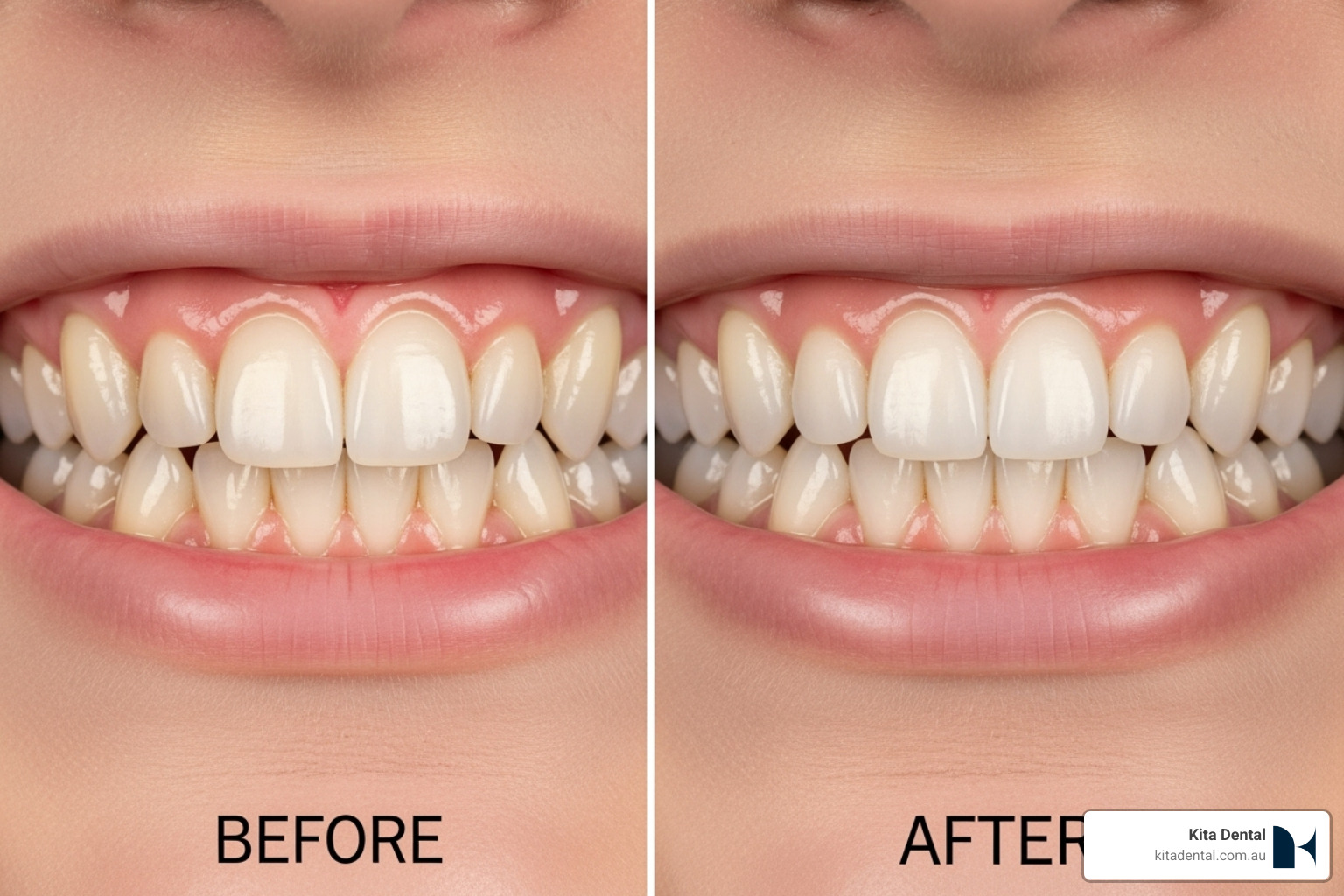
Invisalign isn’t just about moving teeth; it’s about achieving your desired smile. In cosmetic dentistry, we view Invisalign as the foundation that makes other improvements possible.
Correcting crooked teeth and closing gaps with Invisalign creates the perfect canvas for any additional cosmetic work. The change can be dramatic, boosting confidence and creating a more balanced, youthful appearance. It’s not just about improving overall aesthetics; it’s about improving how you feel about yourself.
What makes Invisalign so valuable in smile design is its predictability. Using advanced 3D imaging, we can show you a preview of your final smile before treatment even begins. This helps in planning complementary treatments, such as dental veneers to refine tooth shape or professional whitening to brighten your newly aligned smile.
Because health funds often recognise the functional benefits of Invisalign, you may find better coverage than expected. When patients ask “does insurance cover Invisalign?” for cosmetic reasons, we explain that the functional improvements often qualify the treatment for orthodontic benefits.
So, Does Insurance Cover Invisalign in Australia?
This is the critical question for anyone considering this investment in their smile. The good news is that many Australian health funds do offer coverage for Invisalign treatment.
It’s not a simple “yes” or “no.” Coverage depends on your policy details. Private health insurance policies with “extras” or “ancillary” cover often include orthodontic benefits that apply to Invisalign. These benefits are usually part of a “major dental” or “orthodontic” category.
Most health funds cover Invisalign the same way they cover traditional braces. They are concerned with the orthodontic treatment itself, not the type of appliance. Depending on your provider and level of cover, you might qualify for a percentage of the fee (often 25% to 50%) or a set dollar amount. These benefits typically have “lifetime limits” – a maximum amount your fund will pay for orthodontics per person, commonly ranging from $1,000 to $3,000. For general information on orthodontic treatments in Australia, a great resource is the Australian Society of Orthodontists.
How Health Funds Classify Invisalign Treatment
Understanding how health funds classify Invisalign is crucial. The key distinction is whether the treatment is considered purely cosmetic or medically necessary.
Health funds are more likely to provide coverage if the treatment corrects a functional problem, such as:
- Significant bite correction (overbites, underbites, crossbites)
- Crowded teeth that are difficult to clean, leading to gum issues
- Misalignment causing abnormal wear on teeth
If your treatment plan clearly outlines these functional benefits, your chances of receiving a rebate increase significantly. An experienced dental team is crucial in preparing treatment plans that articulate these advantages to support your claim.
How to find out if your specific dental insurance plan covers Invisalign
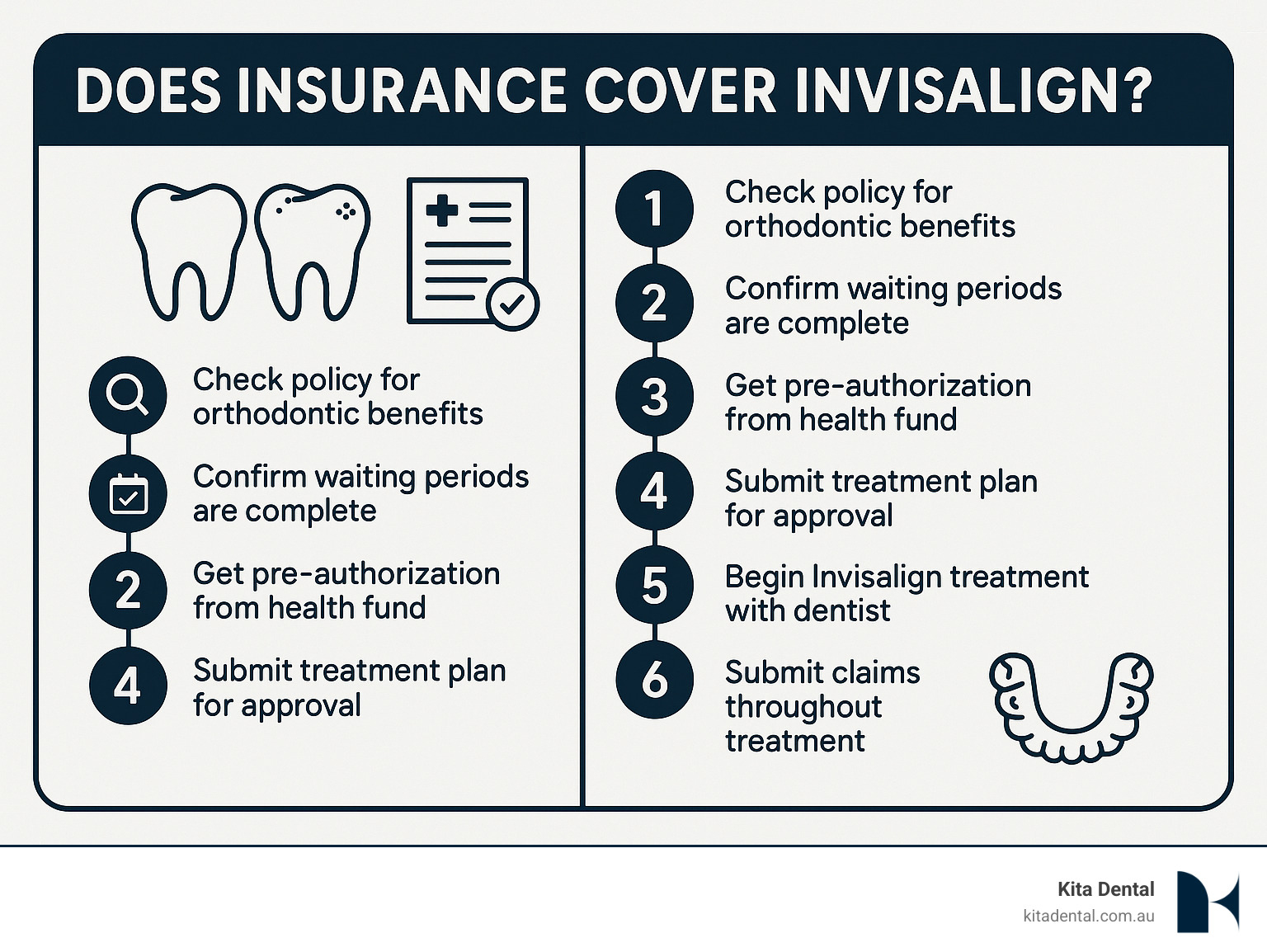
Navigating your policy is a vital step. Here’s a guide to uncovering your specific coverage:
-
Review Your Policy: Look for terms like “orthodontic benefits,” “major dental,” or “extras” to find your coverage details, including any exclusions.
-
Understand Lifetime Limits: Most orthodontic benefits have a lifetime maximum per person. Check your remaining limit, especially if you’ve had previous orthodontic work.
-
Check Waiting Periods: Most funds have a waiting period for orthodontics, typically 12 months. You must complete this period before starting treatment to be eligible for a rebate.
-
Contact Your Health Fund: The most reliable method is to call your fund directly. They can provide accurate, up-to-date information on your entitlements.
-
Get a Pre-Authorisation: Many funds require a “pre-treatment estimate.” Your dentist submits a detailed treatment plan and costs to your fund before you start. The fund then confirms the exact rebate you can expect, eliminating guesswork.
A Step-by-Step Guide to Maximising Your Insurance Benefits

Now that you know how does insurance cover invisalign works, it’s time to ensure you get every dollar you’re entitled to. The key to maximising your benefits is being prepared and asking the right questions.
Patients who take a proactive approach to understanding their insurance often save thousands on their Invisalign treatment.
Key Questions to Ask Your Health Fund
When you call your health fund, have this list of strategic questions ready to get all the information you need for financial planning:
- What is my lifetime limit for orthodontics? This is the maximum amount your fund will ever contribute.
- How much of my lifetime limit remains? This is crucial if you’ve had prior orthodontic treatment.
- Is there a waiting period for orthodontic benefits, and have I completed it? Most funds require a 12-month waiting period.
- Does my policy cover Invisalign specifically, or is it under general orthodontic benefits? Get confirmation for peace of mind.
- What percentage of the treatment cost is covered? This helps you calculate your out-of-pocket expenses.
- Are there any age restrictions for orthodontic coverage? Some older policies may have age limits.
- Is pre-authorisation required, and what is the process? Following the correct procedure is essential for receiving benefits.
- Are there any other exclusions or conditions I should know about? This helps uncover any potential surprises.
Working With Your Dentist for a Smooth Process
Working with a dental team that understands the insurance process is a major advantage. A good dental practice will have a streamlined process to reduce your stress.
Your dentist’s treatment plan submission process should be designed with insurance in mind. They can create a detailed digital plan that outlines your orthodontic needs in a language health funds understand.
Your dentist should provide pre-treatment estimates that clearly list the proposed treatment, item numbers, and timeframes. They can submit this to your fund for pre-authorisation, so you know your exact rebate before committing to treatment.
An experienced administrative team excels at coordinating with health funds. With your permission, they can submit your requests and ensure all necessary documentation is provided correctly, which often speeds up approvals.
Your dental clinic can help with navigating paperwork and ensure compliance with fund requirements by maintaining detailed records that meet their standards. You don’t have to become an insurance expert; the clinic can handle the complex coordination while you focus on your exciting smile change.
What to do if your insurance does not cover Invisalign
Sometimes, you might find your health fund coverage is limited, or you may not have private health insurance with orthodontic benefits. While does insurance cover invisalign is an important question, it shouldn’t be the only path to achieving the straight smile you want.
Financial barriers shouldn’t prevent you from feeling confident about your smile. Many dental practices have developed several alternative funding pathways to make Invisalign treatment accessible, regardless of your insurance situation.
-
Flexible payment plans: Many clinics offer interest-free payment plans directly. This allows you to break down the treatment cost into manageable weekly or fortnightly instalments that fit your budget.
-
Accessing your superannuation: Under Australia’s Compassionate Release of Super (CRS) program, you may be eligible to access your super funds early if your Invisalign treatment addresses a medical necessity, such as correcting bite issues that affect chewing or cleaning. Your dental team can provide the necessary clinical documentation to support your application to the ATO if you meet the criteria.
-
Third-party financing: Your clinic can connect you with reputable healthcare financing companies that specialise in dental treatments. They often feature low-interest rates or interest-free periods.
A good dental practice is committed to working with you to find a solution that aligns with your budget, ensuring quality treatment remains within reach.
Frequently Asked Questions about Invisalign and Insurance
Dental clinics get asked about insurance for Invisalign almost daily. Here are direct answers to the most common questions patients have when wondering does insurance cover invisalign.
Is Invisalign covered the same as traditional braces by health funds?
Yes, in most cases. Australian health funds with orthodontic cover typically treat Invisalign and traditional braces the same. Their focus is on the orthodontic treatment itself, not the specific appliance used. The benefit amount from your policy (e.g., a lifetime limit of $2,000) applies equally to both. The final out-of-pocket cost may differ based on the total treatment fee, but the insurance contribution percentage or dollar amount usually remains the same.
Can I use my superannuation for Invisalign treatment?
Yes, this is possible under Australia’s Compassionate Release of Super (CRS) program, but there are strict requirements. The treatment must be deemed medically necessary by the Australian Taxation Office (ATO) to address significant functional or chronic health issues. Purely cosmetic treatment does not qualify. The process involves a formal application to the ATO with supporting evidence from dental specialists. Your dental team can provide the required clinical documentation if your case meets the ATO’s criteria.
Are there waiting periods for orthodontic cover?
Yes, this is a crucial point. Most Australian health funds have a waiting period for major dental and orthodontic benefits, which is typically 12 months. You must have held the appropriate level of cover for this entire period before you can claim benefits for Invisalign. Starting treatment before the waiting period is over will make you ineligible for a rebate. Always confirm your specific waiting period with your health fund before committing to treatment.
Your Path to a Straighter Smile in Sydney
Starting your Invisalign journey is a rewarding investment in yourself. A new smile can change not just an appearance, but an entire outlook on life.
The key takeaway is that does insurance cover invisalign is a question with positive answers for many. Most patients with private health insurance find that their orthodontic benefits can significantly reduce their out-of-pocket expenses.
Verifying coverage is crucial. Understanding what your health fund will contribute allows you to plan your finances with confidence. We always recommend getting a pre-authorisation from your fund to eliminate any guesswork.
Multiple funding paths exist to make your dream smile achievable. Whether you use your health fund benefits, flexible payment plans, or other options, a solution can be found that works for you.
Professional guidance simplifies the process. From your first consultation to navigating health fund paperwork, a dedicated dental team can support you. They can partner with you to coordinate with your insurer and ensure all documentation is handled correctly, making your journey as smooth as possible.
Ready to begin? Book an appointment to explore how Invisalign, braces, dental veneers, or even dental implants can lift your smile.