
Why Your Gums Might Need Professional Intervention
A gingival graft procedure is a surgical treatment that repairs receding gums by taking healthy gum tissue from one area of your mouth and placing it over exposed tooth roots. This procedure stops further gum recession, reduces tooth sensitivity, and protects your teeth from decay and bone loss.
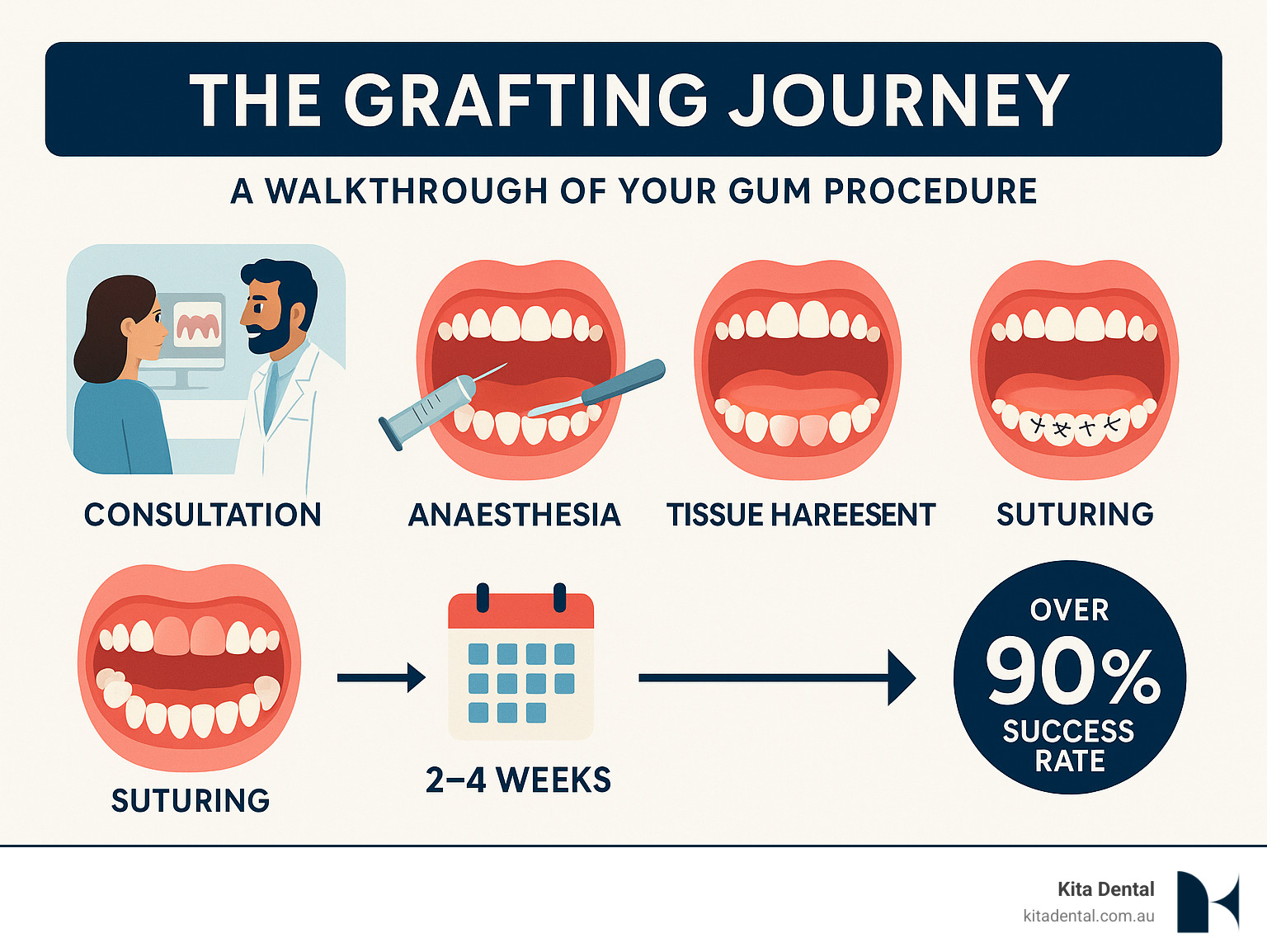
Key Steps in a Gingival Graft Procedure:
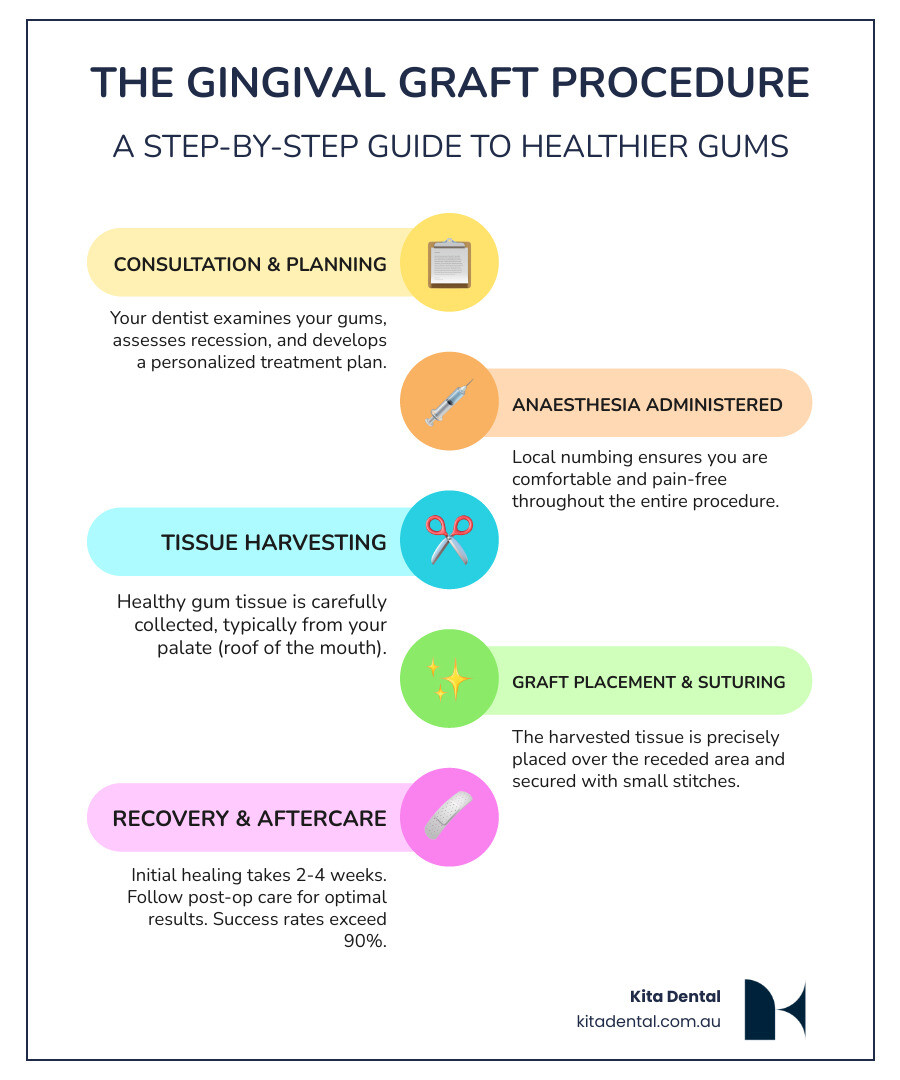
- Consultation and planning – Your dentist examines your gums and creates a treatment plan
- Anaesthesia – Local numbing ensures you’re comfortable throughout
- Tissue harvesting – Healthy gum tissue is carefully removed from a donor site (usually the palate)
- Graft placement – The harvested tissue is positioned over the receded area
- Suturing – The graft is secured with small stitches
- Recovery – Healing takes 2-4 weeks with proper aftercare
When your gums recede, they expose the sensitive roots of your teeth. This creates a domino effect – increased sensitivity to hot and cold foods, higher risk of root decay, and potential bone loss around your teeth. Left untreated, gum recession affects 4% to 12% of adults and often goes unnoticed until it becomes severe.
The good news? Gingival grafting boasts success rates of over 90% and can completely halt the progression of gum recession. Modern techniques have made the procedure significantly less painful with faster healing times compared to older methods.
Our principal dentists at Kita Dental in Sydney have performed numerous gingival graft procedures, backed by extensive post-graduate training in gum grafting. Our experience has shown that early intervention with a gingival graft procedure not only protects your oral health but also improves your confidence in your smile.
Understanding Gum Recession and the Need for Grafting
Does a sudden twinge of pain from a hot or cold drink make you wince? This sensitivity could be a sign of gum recession, where the gum tissue pulls back, exposing the delicate roots of your teeth. Many of our patients at Kita Dental in Mascot don’t notice this until it becomes more advanced.
When your tooth roots are exposed, they lose their natural protection. Unlike the enamel-covered crown, exposed roots are vulnerable. This leads not only to tooth sensitivity but also an increased risk of decay and, if left untreated, potential bone loss that can loosen teeth.
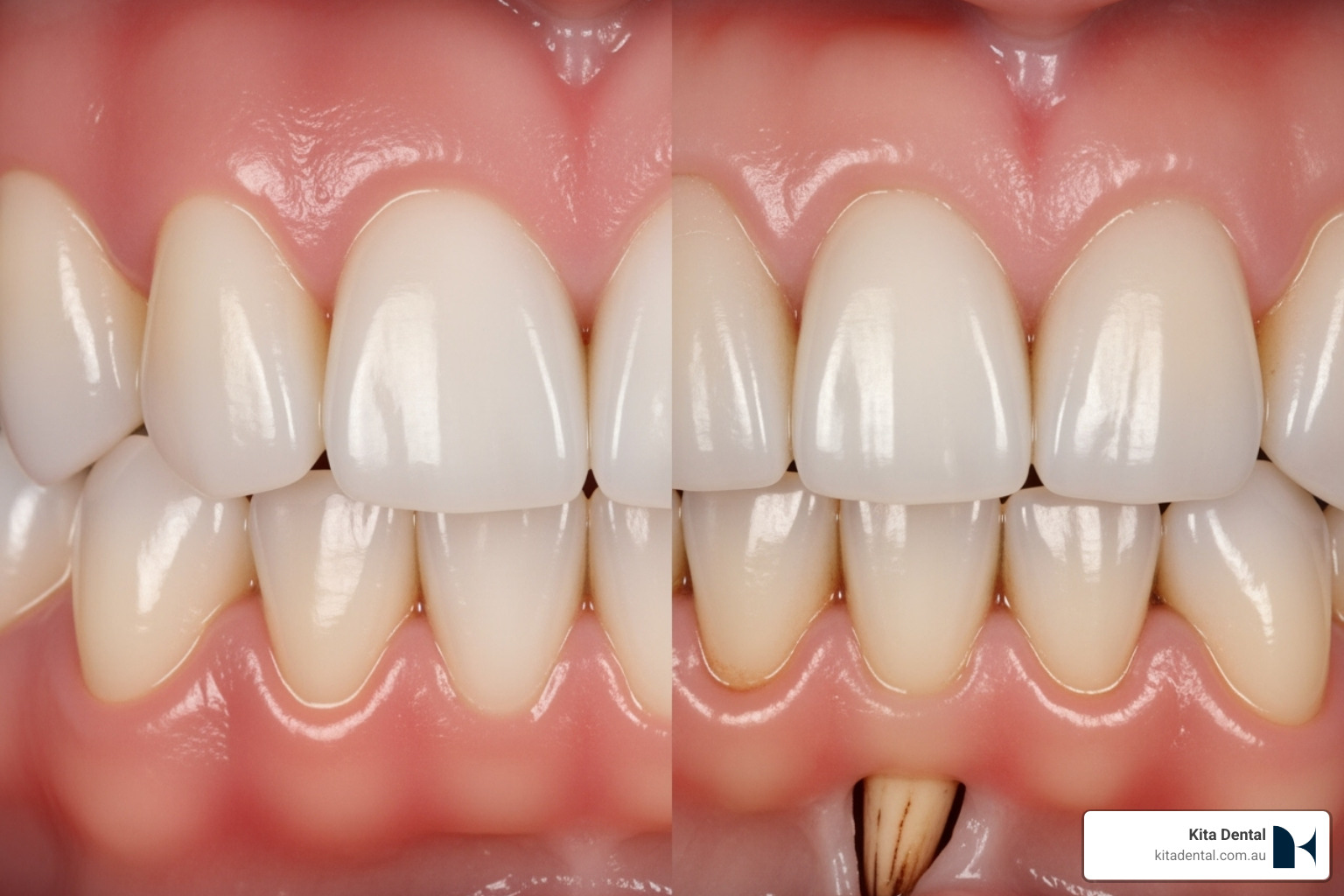
A gingival graft procedure, also known as periodontal plastic surgery, is the definitive solution. This treatment involves transplanting healthy gum tissue to cover the exposed roots, effectively halting bone loss and preventing further damage. Beyond protecting your oral health, this procedure also offers a significant cosmetic benefit by improving smile appearance and restoring a natural, even gumline.
What Causes Gums to Recede?
Several factors can contribute to gum recession. According to the Australian Dental Association, the most common cause is periodontal disease, an infection that damages gum tissue and the underlying bone. However, other factors include:
- Aggressive brushing: Using a hard-bristled brush or too much force can wear away gum tissue.
- Genetics: Some people are naturally predisposed to thin gums.
- Hormonal changes: Fluctuations during puberty, pregnancy, or menopause can increase gum sensitivity.
- Orthodontic treatment & misaligned teeth: Braces or crooked teeth can put pressure on the gums.
- Teeth grinding (bruxism): Clenching or grinding puts excessive force on your teeth and gums.
Early detection is key. Our approach to preventative dental care helps identify and manage these risks before they become severe.
The Benefits of a Gum Graft
A gum graft offers both immediate relief and long-term protection. Key benefits include:
- Stops further recession: It creates a durable barrier against future gum loss.
- Reduces tooth sensitivity: By covering exposed roots, it protects them from temperature changes and reduces pain.
- Prevents root cavities: The graft shields the softer root surface, which is more susceptible to decay than tooth enamel.
- Improves gum health: It establishes a healthier environment that’s easier to clean and maintain.
- Improves smile aesthetics: The procedure restores a natural, even gum line, significantly improving the appearance of your smile.
- Supports dental implants: Adequate gum tissue is vital for the long-term health and appearance of dental implants, making grafting a key part of the process for many patients.
The Main Types of Gingival Grafts
When considering a gingival graft procedure, it’s helpful to understand that there isn’t a one-size-fits-all approach. We choose the most appropriate type of graft based on your specific needs, the extent of recession, and the characteristics of your gum tissue.
Here’s a comparison of the main types of gum grafts we commonly perform:
| Graft Type | Donor Site | Primary Use | Aesthetic Outcome – |
- a-zA-L |
| Connective-Tissue Graft | Palate (under a flap) | Most common for root exposure, strengthening, improving aesthetics | Typically results in a natural, consistent gum line |
| Free Gingival Graft | Palate (directly) | Increasing keratinized tissue, thickening thin gums, often around implants | Can sometimes have a slightly different texture or colour match than surrounding tissue initially, but often blends well over time |
| Pedicle (or Lateral) Graft | Adjacent gum tissue | Root coverage when there’s plenty of nearby healthy gum tissue | Excellent aesthetic results due to an intact blood supply and tissue match |
Connective-Tissue Graft
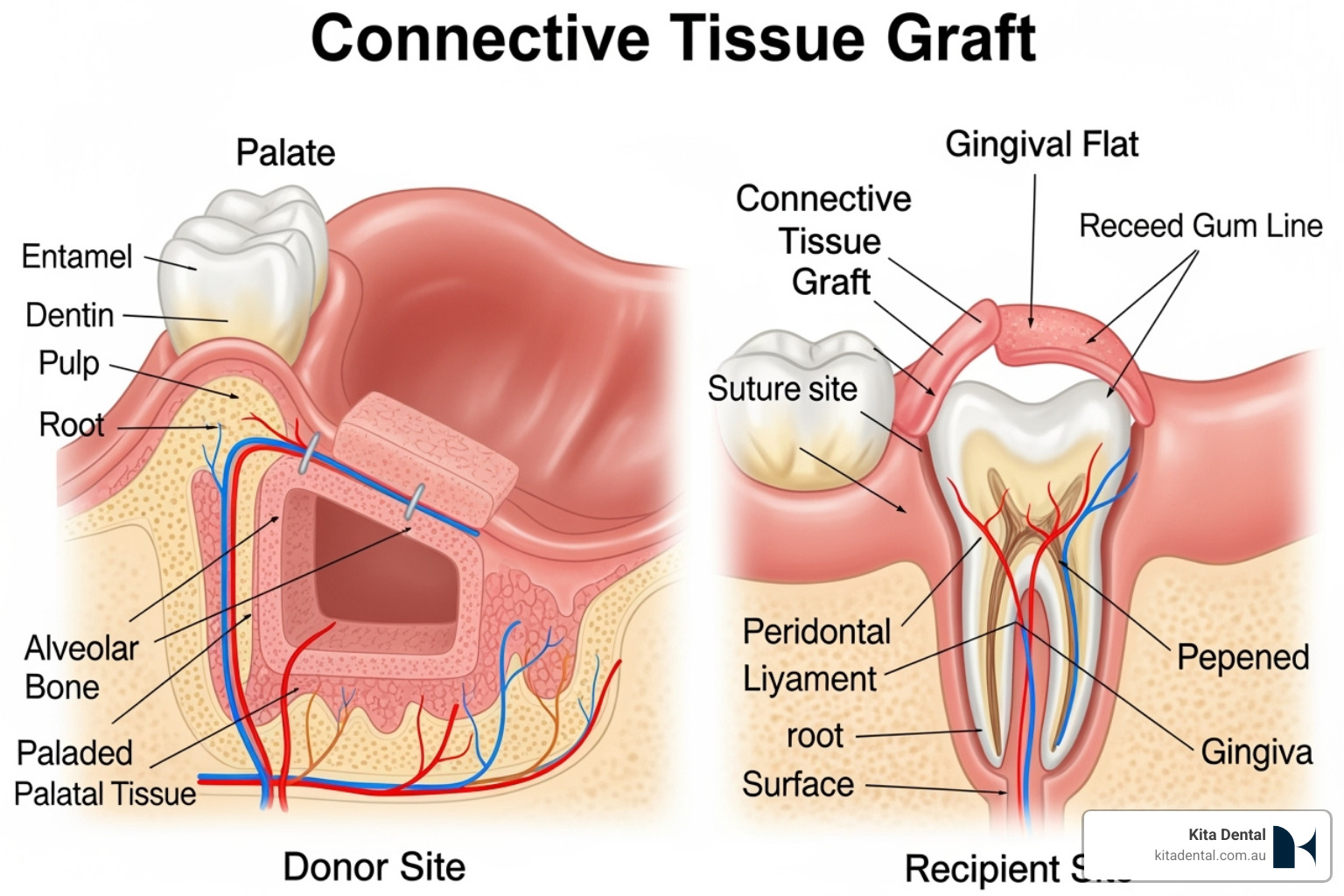
This is the most common technique for root coverage. A small piece of connective tissue is taken from under a flap on the roof of your mouth (palate) and stitched over the exposed root. It provides predictable, natural-looking results.
Free Gingival Graft
This graft involves taking a small piece of tissue directly from the surface of the palate. It’s primarily used to increase the amount of strong, keratinised gum tissue, which is crucial for protecting teeth and dental implants from brushing trauma and future recession.
Pedicle (or Lateral) Graft
In this procedure, a flap of gum tissue is partially cut from an area next to the recession, then stretched over to cover the exposed root. Because it keeps its original blood supply, healing is often faster and the aesthetic match is excellent. This technique is only possible when there is enough healthy gum tissue adjacent to the problem area. Learn more about gum grafts and other restorative options.
Your Gingival Graft Procedure: A Step-by-Step Guide
Undergoing a gingival graft procedure is a straightforward process. At Kita Dental, we ensure you are informed and comfortable every step of the way.
Your journey starts with a patient consultation and a thorough oral examination. We’ll assess your gum recession, discuss your concerns, and develop a personalised treatment plan. We will explain the recommended graft type and what to expect during the procedure. We also offer various sedation options to ensure your comfort, from local anaesthesia to deeper sedation for anxious patients.
How to Prepare for Your Gingival Graft Procedure
To ensure your gingival graft procedure is successful, some preparation is needed.
- Arrange transport home if you are having sedation.
- Eat a good meal before your appointment, as you’ll be on a soft food diet afterwards.
- Avoid certain medications like aspirin if advised, as they can increase bleeding. We will review your current medications with you.
- Follow all pre-operative instructions, including maintaining good oral hygiene and stopping smoking, as tobacco can impair healing.
- Ask questions! We want you to feel completely informed and confident before your procedure.
What to Expect During the Gingival Graft Procedure
The gingival graft procedure at our Mascot clinic typically takes 1-2 hours.
- Numbing the Area: We use local anaesthesia to completely numb both the recipient site (where the gum has receded) and the donor site (usually the palate). You will not feel any pain.
- Preparing the Recipient Site: We create a small pocket in the gum tissue and thoroughly clean the exposed root surface.
- Harvesting the Graft Tissue: A small piece of tissue is carefully taken from the donor site.
- Placing and Suturing the Graft: The harvested tissue is precisely positioned over the exposed root and secured with fine stitches.
- Protective Dressing: A periodontal dressing may be placed over the site to protect it during the initial healing phase.
The Road to Recovery: Healing and Aftercare
With success rates over 90%, recovery from a gingival graft procedure is typically straightforward. You can expect some mild soreness and swelling for a few days, which can be managed with ice packs and pain relief medication. The initial healing phase, where the graft integrates, takes about 2-4 weeks. We will provide you with detailed post-operative instructions to ensure a smooth recovery.
Your First Two Weeks of Healing
The first two weeks are critical for healing. Follow these key instructions:
- Eat a soft food diet: Avoid hard, crunchy, or hot foods that could irritate the graft.
- Protect the surgical site: Do not brush or floss the grafted area until your dentist advises it is safe.
- Use antimicrobial mouthwash: Use as prescribed to keep the area clean and prevent infection.
- Rest and recover: Avoid strenuous activity for the first week to allow your body to heal.
- Attend your follow-up appointment: We will check your healing progress and remove any stitches, usually about a week after your procedure.
- Take medications as directed: Use prescribed pain relievers and antibiotics to manage discomfort and prevent infection.

When to Contact Your Dentist
While complications are rare, contact our Mascot clinic immediately if you experience any of the following:
- Excessive bleeding that doesn’t stop with pressure.
- Signs of infection, such as pus, spreading redness, or persistent warmth.
- Severe or worsening pain not controlled by medication.
- A fever over 38.3°C (101°F).
- Graft displacement, where the new tissue appears to have moved.
We are here to support your recovery, so please call us with any concerns.
Exploring Advanced Techniques and Alternatives
At Kita Dental, we accept cutting-edge approaches to make your gingival graft procedure more comfortable and successful, focusing on minimally invasive options and techniques that improve healing outcomes.
Platelet-Rich Fibrin (PRF) Therapy
Platelet-Rich Fibrin (PRF) therapy is an innovative technique that uses your body’s own healing power. We take a small blood sample and concentrate its growth factors, white blood cells, and stem cells into a rich fibrin matrix. This natural concentrate is applied to the surgical site to accelerate tissue regeneration, reduce discomfort, and improve graft success. It’s a safe and effective way to boost your body’s natural healing process.
Alternatives to Traditional Grafting
While traditional gingival graft procedures are highly effective, some alternatives exist for specific cases. These include using tissue-stimulating proteins to encourage natural tissue growth or other minimally invasive, “graft-less” techniques.
However, the suitability of these alternatives depends entirely on your individual case. During your consultation at our Mascot clinic, we will evaluate all options and recommend the approach that offers you the best long-term success. Consult with our team about your options.
Frequently Asked Questions about the Gingival Graft Procedure
We understand you have questions about the gingival graft procedure. Here are answers to some of the most common ones we hear at our Mascot clinic.
Does a gum graft procedure hurt?
No. The procedure itself is painless thanks to local anaesthesia. Afterwards, you can expect some discomfort, often described as similar to a pizza burn on the roof of your mouth. This is manageable with pain relief medication and is usually less uncomfortable than patients anticipate.
How long does it take to fully recover?
Initial healing takes 2-4 weeks, but you can typically return to your normal routine within a week, though you’ll need to stick to a soft diet for a bit longer. Full tissue maturation can take a few months, as the new tissue continues to strengthen and blend in.
Will the graft look natural?
Yes. Modern techniques aim for excellent aesthetic results. A successful graft restores a natural, healthy-looking gum line that blends seamlessly with your surrounding gums, improving the overall harmony of your smile. Discussing your goals with your dentist is key to achieving the best cosmetic dentistry outcome.
Restore Your Gum Health in Mascot
A gingival graft procedure is a highly successful treatment for gum recession, with success rates over 90%. It protects your teeth from decay, sensitivity, and bone loss while restoring a healthy, confident smile. At Kita Dental, our patients are often surprised by how manageable the process is.
By following our aftercare instructions, you can ensure a smooth recovery and excellent long-term results. If you’re experiencing gum recession or sensitivity in the Mascot or greater Sydney area, don’t wait for the problem to worsen. Our experienced team is committed to providing personalised care in a comfortable environment. We will work with you to determine if a gingival graft or another treatment is the best solution for your needs.
The path to healthier gums starts with a conversation. Learn more about our restorative dentistry services and contact us today to find out how we can help you achieve the smile you deserve.