
Every person who comes to Kita Dental has their own story and reasons for exploring All on X dental implant treatment.
Below are personal accounts from patients who have completed their treatment with us. These are individual experiences, and results vary between patients.
If you’re considering All on X implants, these perspectives may help you understand what the journey can involve, but they’re not guarantees or predictions of what your experience will be.
Chris presented to Kita Dental with multiple long-standing dental concerns that had progressively affected his daily life, diet, and confidence in social situations.
He had been diagnosed with chronic gum disease by several dental professionals across both the Philippines and Australia. Despite undergoing multiple scaling and cleaning treatments over a number of years, the condition had continued to progress. His gums had receded over time, contributing to the appearance of elongated teeth, increasing tooth mobility, and persistent sensitivity when brushing and consuming cold foods or drinks.
Chris also had concerns about the structural integrity of his front teeth, which he described as feeling weak. Everyday activities such as biting into firm foods which he previously enjoyed; guava, chocolate, and pistachios, caused him anxiety about potential tooth fracture. As a result, he had progressively restricted his diet over an extended period.
In addition, Chris felt that his teeth appeared too large and were protruding, making it difficult for him to close his mouth comfortably over his teeth. This had affected his willingness to smile openly when talking, laughing, or interacting with others.
Prior to attending Kita Dental, Chris had sought treatment from multiple dental professionals. He had undergone repeated scaling and cleaning procedures, which provided temporary improvement but did not halt the progression of his periodontal disease. He had also been fitted with previous dental restorations, including a bridge and dentures, which he reported were not providing adequate function or stability for his needs.
Chris reported that over time his teeth had continued to shift and his gum recession had worsened, causing the appearance of his teeth to change and his confidence in their structural soundness to diminish further.
After careful consideration, Chris elected to proceed with All on 4 treatment, which uses four strategically placed dental implants to support a fixed prosthetic bridge, replacing a full set of teeth.
The All on 4 treatment was considered appropriate in this case due to:
Chronic periodontal disease is a long-term inflammatory condition affecting the gums and the bone that supports the teeth. It is typically caused by bacterial plaque and, if not controlled, can lead to gum recession, increasing tooth mobility, and eventual tooth loss. Scaling and cleaning can help manage the condition, but in advanced cases the supporting structures may already be significantly compromised. Treatment varies for individuals and an assessment is needed to understand each person’s options.
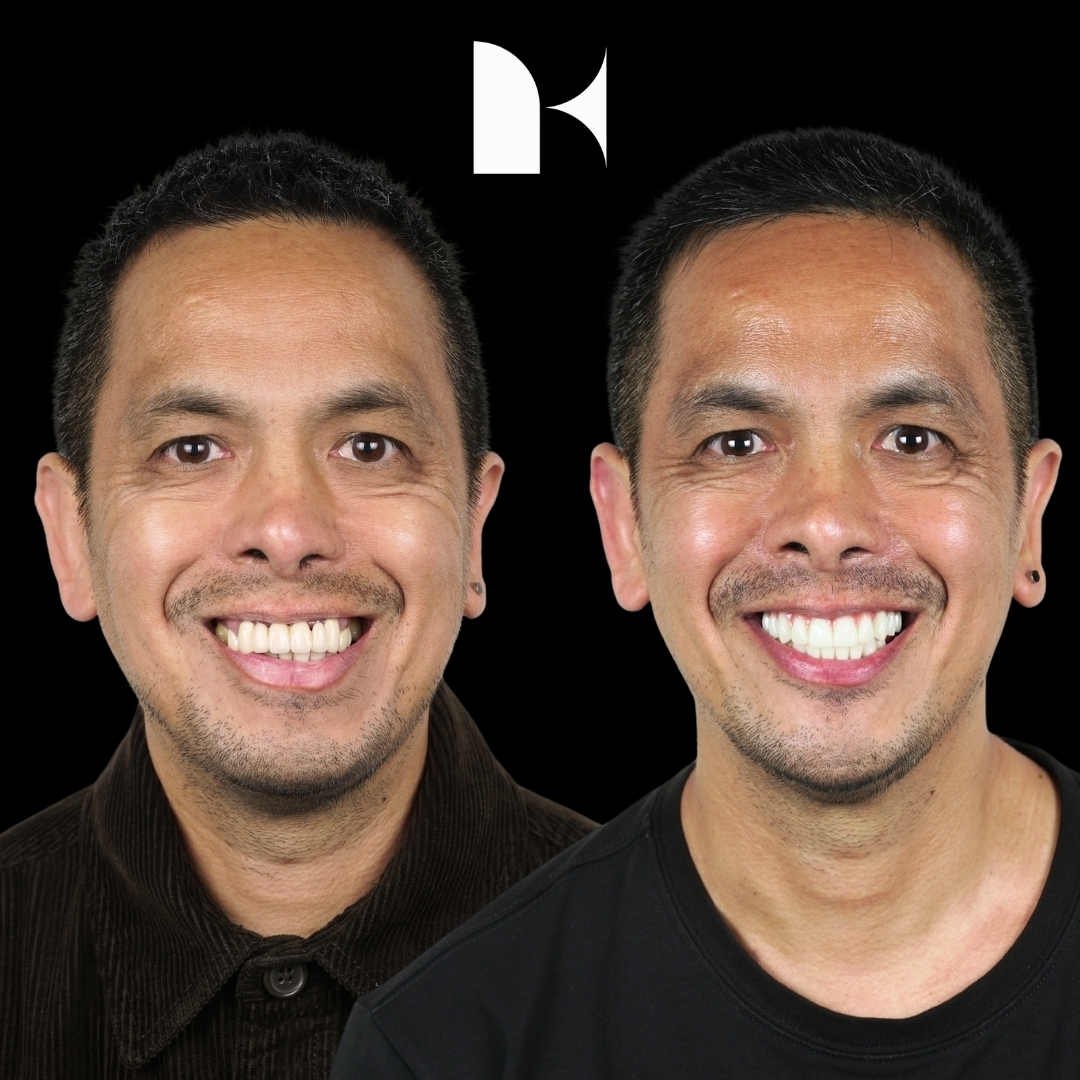
Mark suffered years of temporary fixes that never stopped the deterioration of his teeth.
Mark presented to Kita Dental with advanced periodontal disease affecting both his upper and lower teeth. His primary concerns were painful, swollen gums with pus discharge, multiple loose teeth, and a progressive inability to eat the foods he had previously enjoyed.
His front teeth were visibly worn, chipped, and structurally compromised. His gum tissue had receded significantly over the years, causing his remaining teeth to appear elongated. Mark reported persistent sensitivity and pain when consuming cold foods and drinks, which had led him to avoid them entirely.
Mark had lost his back teeth over a number of years, which meant he had been relying almost exclusively on his front teeth to bite and chew his food. With his remaining front teeth now becoming loose, he was concerned that his ability to eat would deteriorate further, particularly if those teeth were extracted without a replacement plan in place.
Mark reported that steak, one of his favourite foods, had become too painful to eat comfortably, and he had been avoiding it for an extended period. His diet had become increasingly restricted as his dental condition progressed.
Mark had an extensive history of dental treatment prior to attending Kita Dental. Over the years, he had undergone multiple interventions to manage his progressive dental condition, including:
Despite these interventions, Mark’s condition had continued to deteriorate.
After his twelve-month research period and multiple consultations, Mark elected to proceed with All on 4 treatment.
All on 4 was considered clinically appropriate in this case due to:
Smoking is one of the most significant modifiable risk factors in dental implant treatment. Research indicates that smokers experience higher rates of implant failure, delayed osseointegration, increased risk of peri-implantitis, and slower post-surgical recovery. Patients who smoke are advised to reduce or cease smoking before and after implant surgery to optimise healing and long-term outcomes.
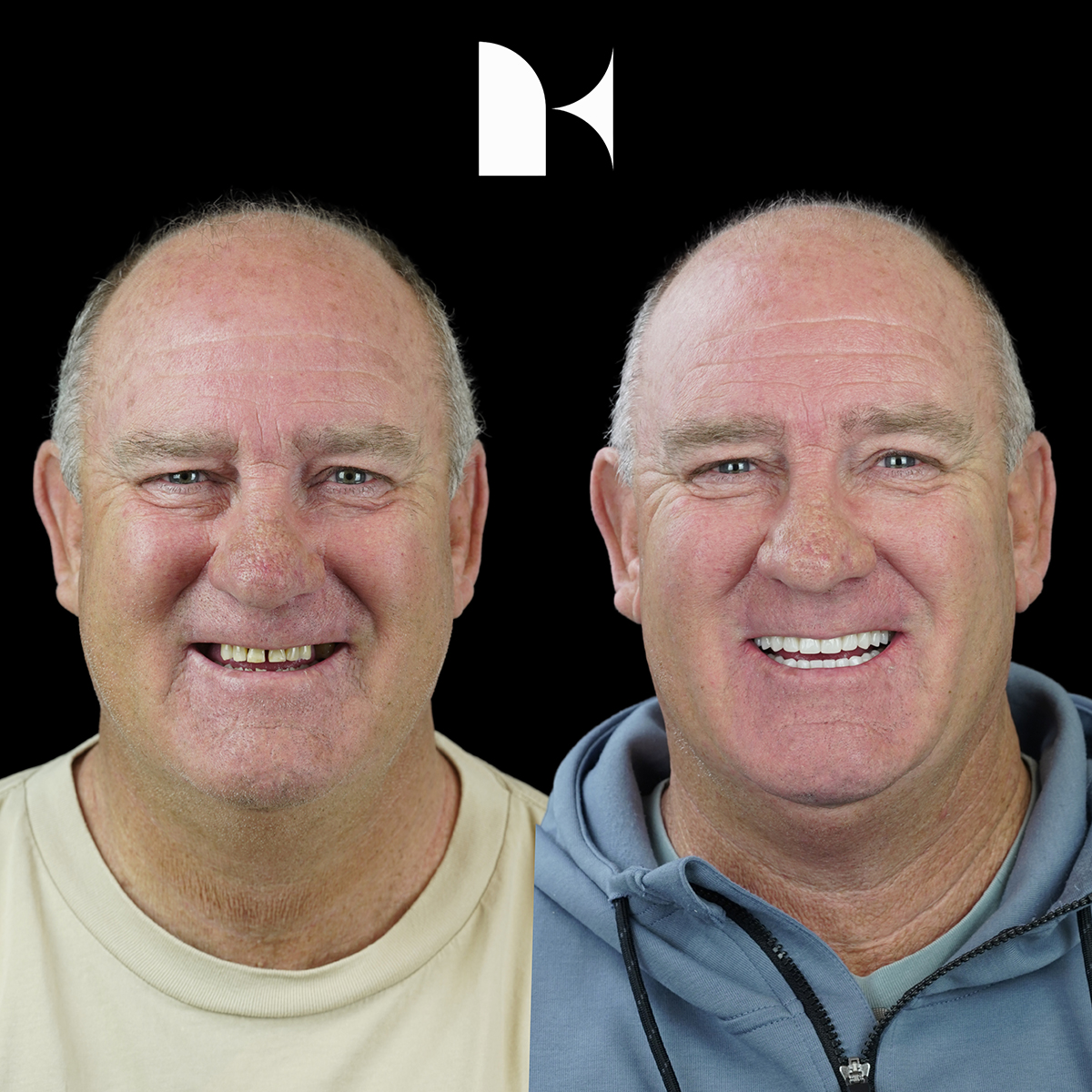
Elaine first attended Kita Dental in 2023, seeking a second opinion regarding her upper loose denture and existing orthodontic treatment on her lower teeth. She had been receiving orthodontic treatment at another clinic with the goal of improving the aesthetics of her lower teeth, specifically to close gaps and improve the alignment of her remaining teeth.
Her primary concerns centred on her upper denture, which had become loose and unstable. Elaine reported that she was unable to bite down on hard or even simple foods because the denture moved during function. She relied heavily on denture adhesive to keep the prosthesis in place, which she found inconvenient and insufficient.
The instability of her denture had progressively restricted her diet. Elaine reported avoiding a range of foods she had previously enjoyed including fruits and everyday items that required biting force due to the movement and discomfort caused by her denture.
Elaine also had aesthetic concerns about her upper teeth, noting that the visible teeth on her denture appeared uneven in length, which affected her willingness to smile openly.
On clinical examination, Elaine presented with denture stomatitis on her upper palate, a fungal infection commonly associated with prolonged denture wear. This condition had caused inflammation and discomfort across the tissue supporting her upper denture.
Prior to attending Kita Dental, Elaine had sought dental care from multiple providers. She had been fitted with an upper denture and had commenced orthodontic treatment on her lower teeth at a separate clinic.
Elaine reported that her upper denture had never provided the level of stability or comfort she needed for everyday function. Despite using denture adhesive regularly, the prosthesis continued to move during eating and speaking.
She also reported occasional toothache on the upper tooth that was supporting her denture, which had been causing intermittent discomfort over time.
After careful consideration over a period of approximately three years, during which Dr Kent continued to monitor her condition, manage acute concerns, and provide ongoing clinical information, Elaine elected to proceed with the All on 4 treatment.
All on 4 was considered clinically appropriate in this case due to:
The clinical goal of reconstructing her full dentition to restore function, comfort, and long-term stability in a predictable treatment pathway
Denture stomatitis is an inflammatory condition of the oral tissue beneath a denture, most commonly caused by Candida albicans fungus. It is frequently associated with prolonged or continuous denture wear, poor denture hygiene, or an ill-fitting prosthesis.
Symptoms can include redness, swelling, and discomfort across the palate. If left untreated, it can contribute to ongoing oral health complications. Management may include antifungal treatment, improved denture hygiene, and in some cases, replacement of the denture or transition to an alternative prosthetic solution.
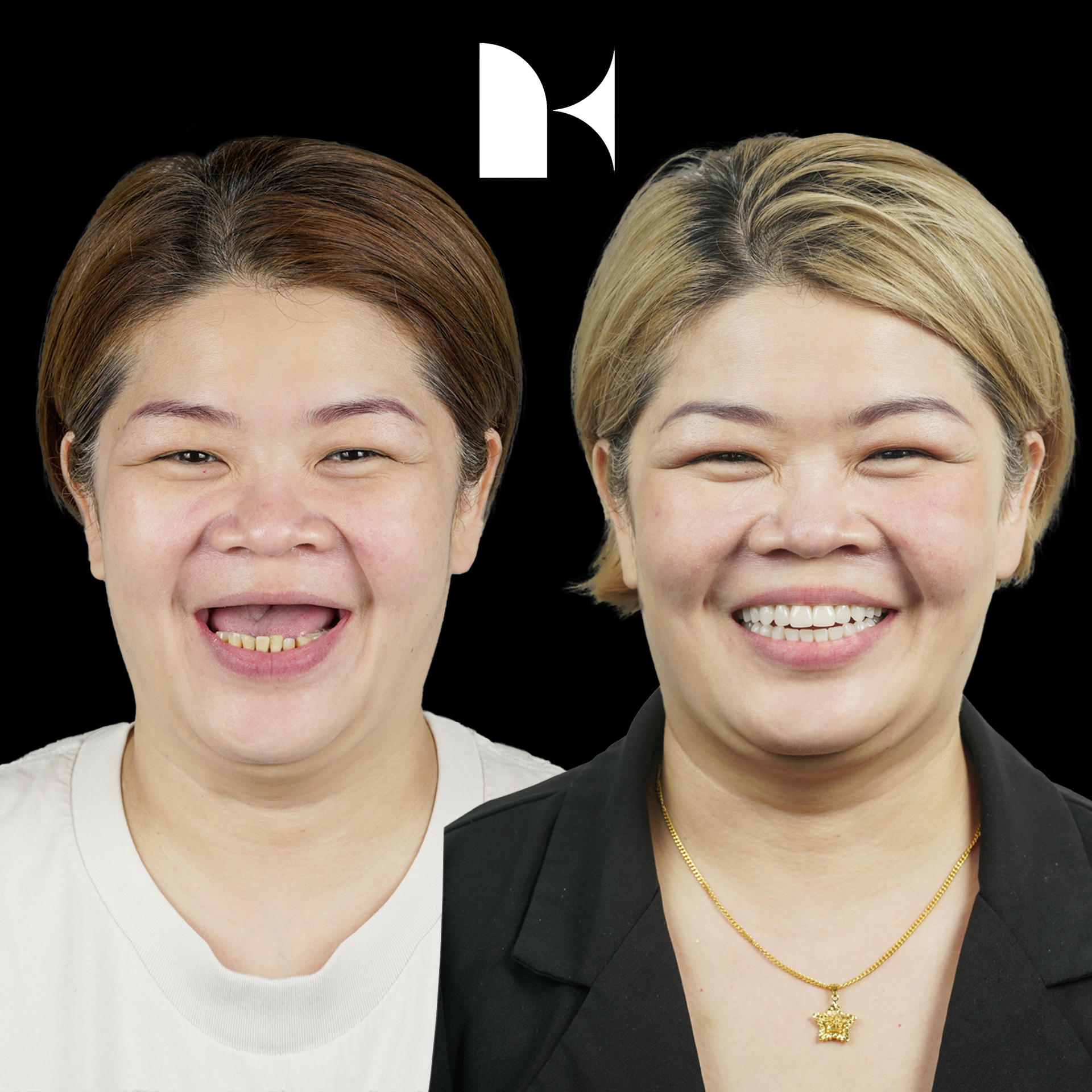
Result vary. These images depicts one patient’s outcome and may not represent typical results. Shared with the patient consent.
Disclaimer: Videos featured are of real people and have been published with their consent. Testimonials reflect individual experiences only and do not constitute a guarantee, promise, or prediction of outcomes for others. Results vary between individuals and are dependent on a number of factors. The experiences shared are not representative of all individuals and may not reflect your individual circumstances. All treatment carries potential risks and limitations. A personalised assessment of your suitability for treatment can only be made during a consultation with a registered dental practitioner.
Book a consultation and we’ll talk through your options together.
