
A fixed solution for replacing a full set of teeth.
All on 4 is a treatment used to replace a full set of missing or failing teeth in the upper jaw, lower jaw, or both.
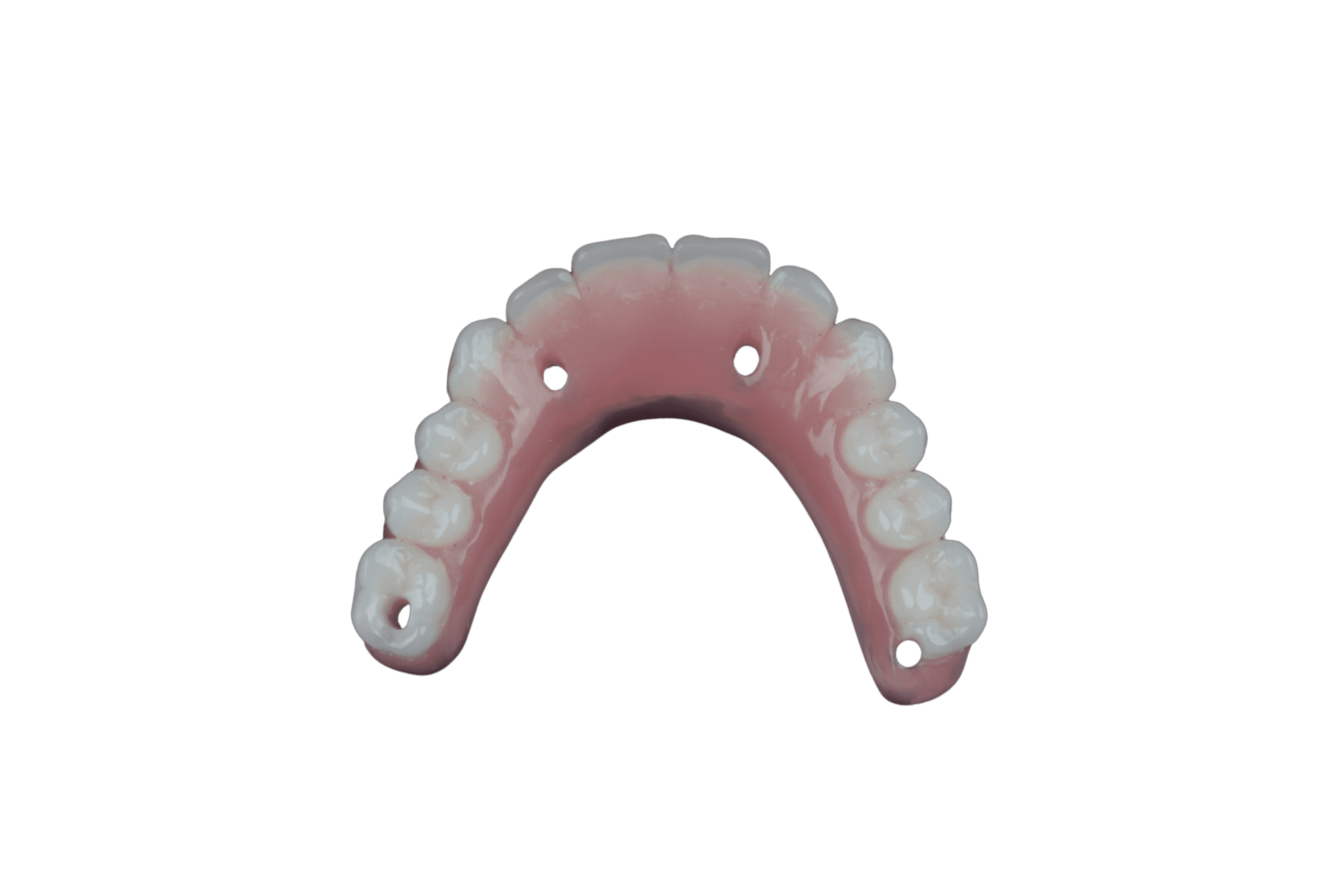
Rather than placing one implant for every missing tooth, four dental implants are used to support a fixed bridge of replacement teeth. The two front implants are generally placed upright, while the two implants toward the back are placed at an angle to make use of the available jawbone.
A full set of teeth is then secured to the implants. The teeth function together as one fixed bridge.
Unlike removable dentures, All on 4 teeth stay securely in place. There is nothing to take out or soak, and they are designed to remain stable while you eat, speak and smile.
The All on 4 treatment concept has been used in clinical practice since the late 1990s and has been documented in clinical research for more than 20 years.
Research shows high success rates, with around 95%–98% of implants still functioning after 10 years in many studies. A large long-term study of 245 patients reported a success rate of about 94.8% over 10 years.
These are not clinical findings, but they are worth acknowledging, because they are the reasons most people ultimately decide to seek treatment.

Steak, apples, crusty bread, corn on the cob, chocolates. Foods that used to be simple. If your teeth or dentures have quietly changed what you eat over the years, that’s a real quality-of-life issue.

Covering your mouth when you laugh. Smiling with your lips closed. Feeling self-conscious in photos or at work. Many people develop these habits gradually often without noticing how much it’s affected them until they stop.

If you’ve been through extractions, root canals, crowns, repairs, and adjustments and still don’t have teeth that feel stable and functional, that cycle is worth reflecting on.
Temporary teeth within 24 hours
Where clinically appropriate, temporary teeth may be attached on or shortly after the day of implant placement.
Fixed in place
The bridge is secured to the dental implants and does not rely on suction or adhesive to remain in position.
Greater stability when eating and speaking
Once healing is complete, fixed implant-supported teeth may feel more stable than removable dentures during everyday activities.
Helps support the jawbone
When teeth are missing, the jawbone can gradually shrink because it no longer receives stimulation from the tooth roots. Dental implants transfer chewing forces into the jawbone, which may help maintain bone around the implant sites.
Designed for ongoing use
With appropriate home care, professional maintenance and regular dental reviews, implant-supported teeth are designed to function over the long term.
People generally start looking into All on 4 for a few common reasons.
It may be appropriate if you have lost most or all of your teeth, are living with a denture that has become loose or uncomfortable, or have been through repeated dental treatment such as extractions, root canals, crowns, and repairs, without reaching a stable long-term result.
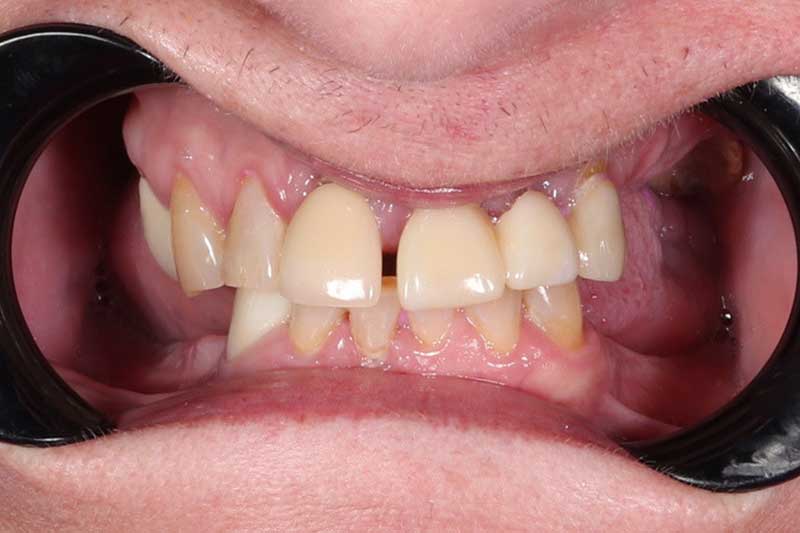
Gum Disease
Teeth that move when touched, particularly multiple teeth, indicate significant bone loss from gum disease. Teeth in this condition typically cannot be saved and will require extraction.
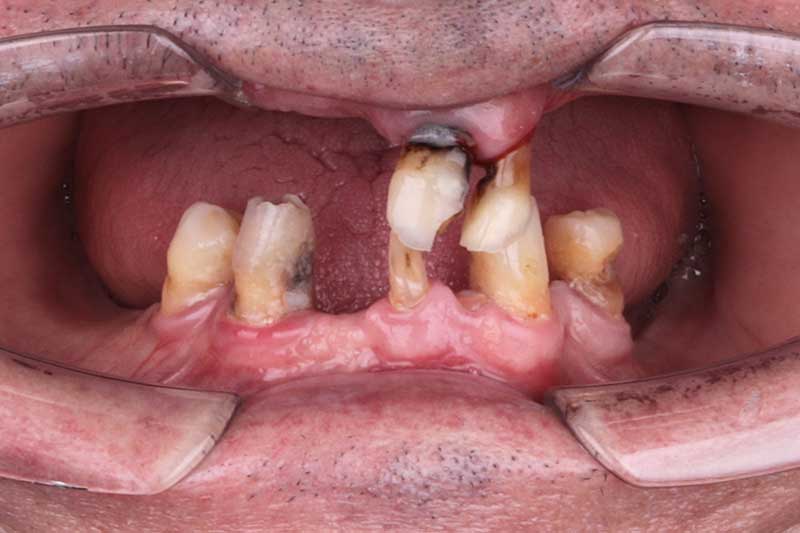
Periodontal Disease
When gum disease eats away the bone holding your teeth in place, your gums shrink back and roots become exposed. Teeth start to shift and spread apart. At this stage, the damage is too far advanced to repair reliably.
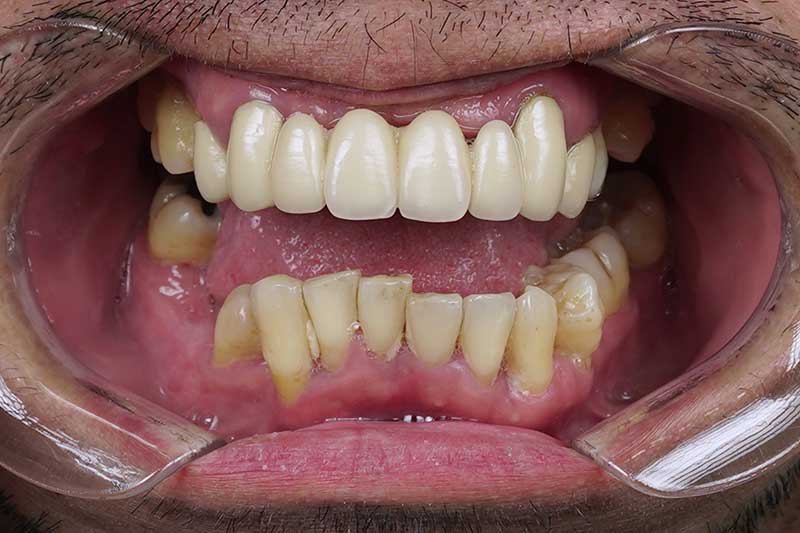
Chronic Infection
Repeated dental infections, toothache, or facial swelling are signs that teeth may be beyond saving with conventional treatment. If you find yourself managing repeated pain, a comprehensive assessment may be warranted.
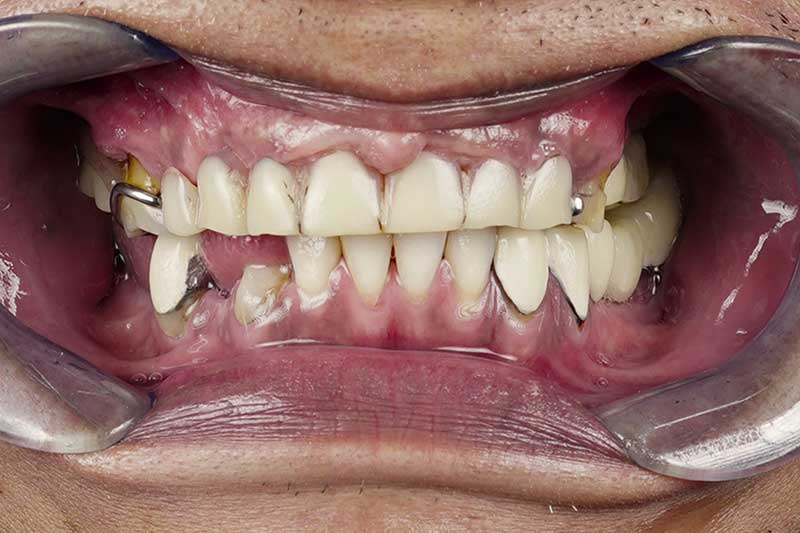
Structural Failure
Teeth without enough remaining structure can’t support a crown, bridge, or filling. Where multiple teeth are in this state, All on 4 is often more practical and more predictable than treating each tooth individually.
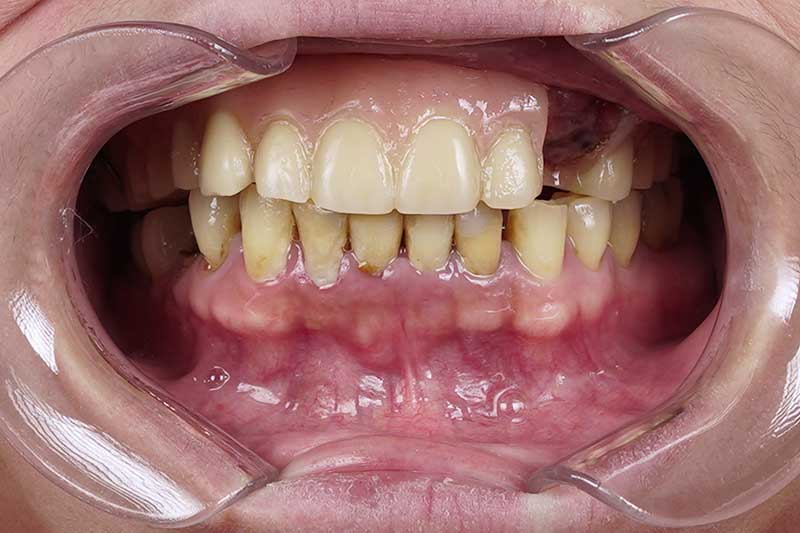
Denture Failure
A denture that has become loose, requires frequent adjustment, or feels different from when it was first made is responding to ongoing bone loss beneath it. A fixed alternative may be appropriate.
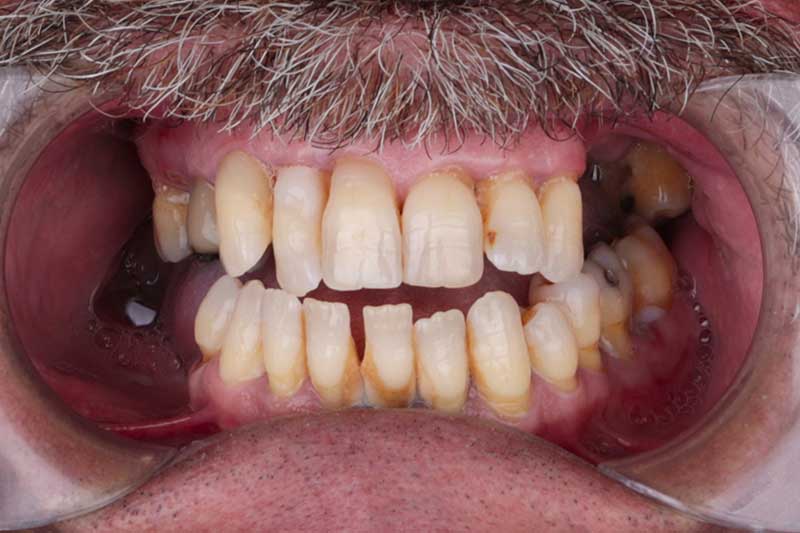
Long-Term Tooth Loss
When multiple teeth have been absent for years and the jawbone has shrunk significantly, All on 4 is designed to work with the bone you already have — implants angled to avoid areas of low volume, eliminating the need for grafting in most cases.
The process involves careful planning across assessment, surgery and laboratory design.
Your first appointment focuses on understanding your needs and assessing whether treatment may be suitable.
This includes:
Some may require more complex planning due to bone loss, infection, or previous dental treatment.
For those suitable, surgery is generally completed in a single day.
Treatment commonly involves:
Your treating team may include your dentist, surgical support staff, and an anaesthetist where sedation is used.
Procedure length varies depending on clinical complexity and the number of arches treated.
You will receive personalised post-operative instructions before leaving the clinic.
One of the distinguishing features of All on 4 treatment is the ability for many patients to receive a temporary fixed set of teeth shortly after implant placement.
Digital scans are taken following surgery and your temporary teeth are fabricated for fitting, typically within 24 hours.
These temporary teeth are designed to:
Temporary teeth are not your final set and have functional limitations during recovery.
A soft-food diet remains important during this phase.
Regular reviews are completed during healing to assess:
Generally you return approximately two weeks after surgery for review and adjustment of the temporary teeth, if required.
Feedback about tooth shape, speech, comfort, and appearance may also help guide refinement of the final prosthesis.
Appointment schedules vary depending on individual healing.
After healing has taken place, usually 3–6 months later, impressions and records are taken for your final teeth.
At this stage:
Healing timelines vary, and upper and lower arches may progress differently.
Post-treatment recovery varies widely among individuals. Factors such as smoking history, pre-existing bone density, systemic conditions, and the number of arches treated concurrently all heavily influence individual healing timelines.
Day 1
Temporary teeth fitted before you leave, with full post-op instructions. Numbness as anaesthetic wears off.
Swelling begins, mild-moderate discomfort.
Rest, ice packs, hydration, medication as prescribed.
Week 1
Swelling/bruising peak days 2–3.
Bruising (cheeks, jaw, neck) settles over.
1–2 weeks
Soft-food diet required.
Many return to desk work in ~5–7 days.
Weeks 2–4
Visible healing largely settles.
Swelling reduced, energy returning.
Discomfort minimal.
Still avoid hard, crunchy, or chewy foods
Months 2–3
Implants fuse with the jawbone beneath the surface.
Little visible change, but healing is active.
Temporary teeth remain in place.
Oral hygiene and diet care still essential.
Months 3–6
Once healing is confirmed, we begin planning your final teeth.
Scans, impressions, bite assessment.
Smile refinements where needed.
Final teeth are fitted.
[1] Malo P, Rangbert B, Nobre M. “All-on-Four” immediate-function concept with Branemark System implants for completely edentulous mandibles: a retrospective clinical study. Clinical Implant Dentistry and Related Research. 2003;5(Suppl 1):2-9. doi:10.1111/j.1708-8208.2003.tb00010.x.
[2] Malo P, de Araújo Nobre M, Lopes A, Moss SM, Molina GJ. A longitudinal study of the survival of All-on-4 implants in the mandible with up to 10 years of follow-up. The Journal of the American Dental Association. 2011 Mar 1;142(3):310-20.
Clear guidance, ongoing support, and someone to turn to at every stage.
Before treatment begins, detailed planning is carried out using digital scans, photographs, and a 3D CBCT scan.
This process allows the treating dentist to assess:
bone volume and anatomy
implant positioning
smile design considerations
bite relationships
prosthesis planning
You will also have the opportunity to discuss the appearance of your teeth before treatment proceeds.
Final outcomes vary based on anatomy, healing, material selection, and clinical factors unique to each patient.
Unlike removable dentures, All on 4 teeth are fixed onto implants that are anchored into the jawbone.
They are not removed overnight and do not rely on suction or adhesives to remain stable.
The prosthesis is professionally maintained and removed by your treating dentist when required for servicing or review. While fixed in everyday function, ongoing maintenance remains important.
All on 4 is designed to function as a fixed tooth replacement option rather than a removable appliance.
The implant procedure is usually completed in one day, and temporary fixed teeth may be fitted on the day or shortly afterwards, where clinically appropriate.
The final teeth are generally fitted after the implants have healed and integrated with the jawbone, which usually takes several months. Your dentist will provide a more accurate timeline after assessing your individual needs.
Some discomfort after All on 4 Implant surgery is normal and expected. For most people, peak swelling and bruising occurs in the first three days and settles over the following week. This is generally well managed with the medications prescribed at your appointment.
Each person’s experience is a little different, but significant unmanageable pain is not typical and our team is contactable if anything concerns you during recovery.
Book a consultation and we’ll talk through your options together.
