

Supporting fixed teeth when a jaw bone is limited.
Dental implants need enough healthy jawbone to stay securely in place. However, bone can gradually shrink after tooth loss or be lost due to gum disease, infection, injury, or long-term denture wear. Some people also naturally have less bone in certain areas of their jaw.
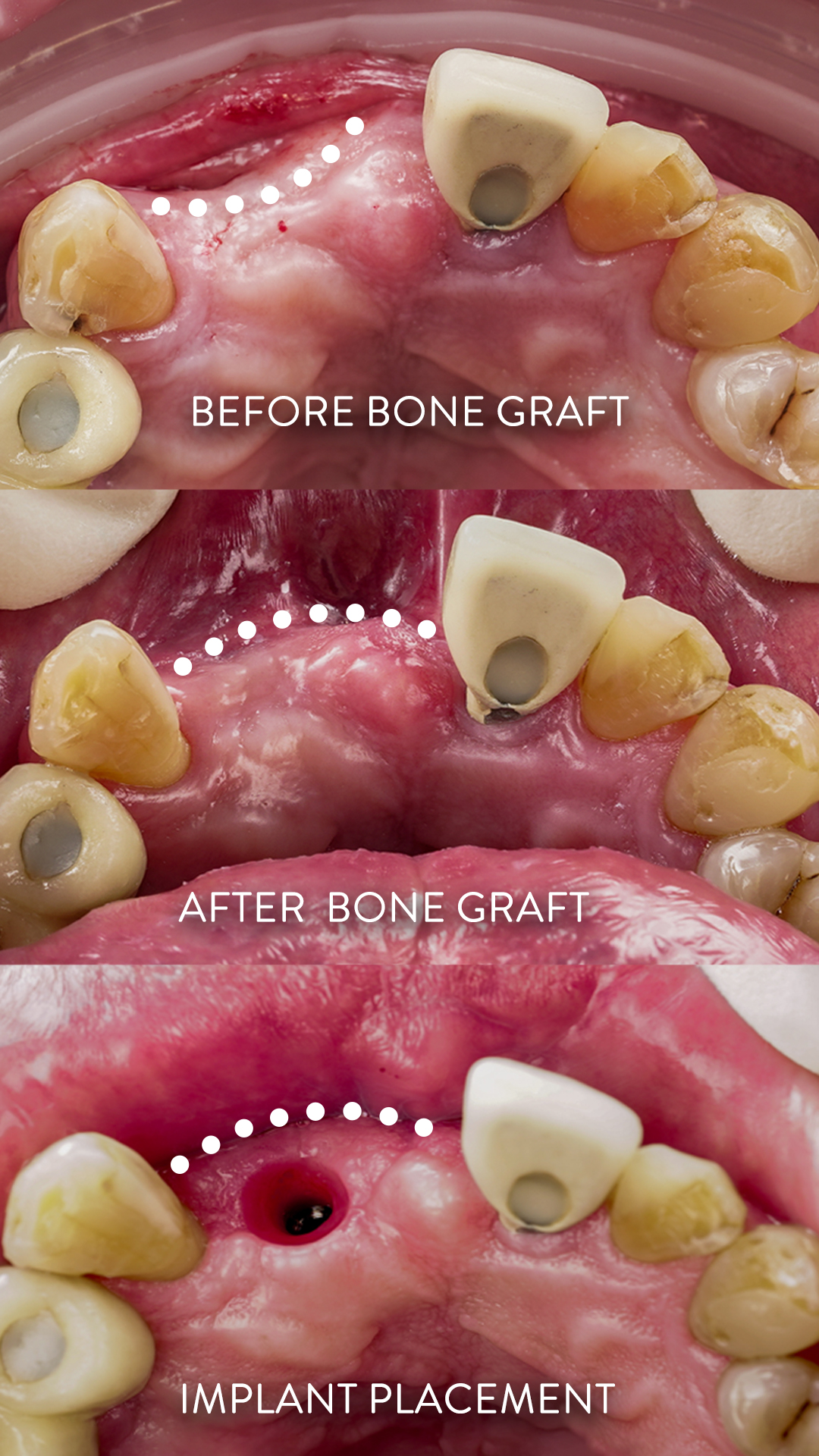
If there isn’t enough suitable bone for an implant, bone grafting may be recommended to rebuild the area and make implant treatment possible.
Bone grafting involves adding bone or a bone-like material to an area of the jaw where more bone is needed. Depending on your individual situation, the material may come from:
As the area heals, your natural bone grows around and through the graft.
The type of bone graft used depends on where the bone has been lost and how much needs to be rebuilt. Common approaches include:
Healing time varies depending on the type and size of the graft and your individual healing response. In some cases, the implant can be placed at the same time as the graft. In others, the graft needs time to heal before implant placement.
Pterygoid implants are a type of dental implant used when there isn’t enough bone in the upper jaw to support standard implants. Instead of relying on areas where bone has been lost, they are anchored into stronger bone towards the back of the upper jaw.
They may be an option for people who have:
Pterygoid implants can sometimes make fixed implant treatment possible without extensive bone grafting. Depending on your individual anatomy and treatment needs, they may also be used alongside standard implants or other advanced implant techniques.
Treatment begins with a detailed assessment and 3D scan of your upper jaw. This allows your clinician to assess the available bone, the position of your sinuses, and where the implants can be safely placed.
Unlike standard implants, pterygoid implants are positioned at an angle towards the back of the upper jaw, where they can anchor into stronger bone. Because of their location and angle, careful planning and advanced surgical experience are required.
Once the implants are placed, they provide additional support for your replacement teeth. A healing period is usually required while the implants become stable within the bone before the final teeth are fitted.
Having a dental implant fail in the past doesn’t necessarily mean you can’t have another implant. In some cases, the area can heal and a new implant can be placed. In others, bone grafting or a different treatment approach may be needed. Your dentist will assess the area to determine what options are suitable for you.
Not everyone is a candidate for implant treatment, and if All on 4 isn’t appropriate for your situation, your treating dentist will explain why and discuss alternatives where relevant. Depending on your circumstances, these may include alternative implant approaches, staged treatment, removable dentures, or other treatment options.
The aim is to recommend treatment that is clinically appropriate for you, not simply what is possible.
Book a consultation and we’ll talk through your options together.