Getting your Dental Implants Overseas vs Australia: Pros and Cons
Getting dental implants overseas is often cheaper upfront than having them done in Australia, sometimes considerably so. The trade-offs are mainly around how easily you can verify standards and materials, and the practicalities of follow-up care and managing any complications once you return home. Many overseas dentists are highly skilled and many patients have good experiences; equally, implant treatment usually unfolds over several months and may need ongoing attention, which is harder to manage from another country. The right choice depends on weighing the cost saving against continuity of care, materials documentation and your own circumstances. This guide compares both options in detail so you can decide what suits you.
Why people consider going overseas
The main driver is cost. Dental implant treatment and full-arch treatment such as All on 4 in particular represents a significant investment, and prices advertised in destinations like Thailand, Bali, Vietnam, Turkey, and parts of Eastern Europe can be a fraction of Australian prices. For some people, the savings are large enough to fund flights, accommodation and a holiday around the treatment and still come out ahead on the headline figure.
This is a real and understandable consideration. Lower overseas prices often reflect lower local costs — wages, rent, and the cost of running a practice, rather than being a reliable signal of lower quality on their own. The questions worth asking are less “is it cheaper?” (often, yes) and more “what am I getting, and what happens afterwards?”
At a glance: overseas vs Australia
| Factor | Overseas | Australia |
| Upfront cost | Often lower | Generally higher |
| Regulation | Varies by country; standards may be harder to verify | Dentists registered with the Dental Board of Australia (AHPRA); national standards apply |
| Materials / implant system | May not always be specified or locally supported | Recognised systems, documented in your records; parts available locally |
| Continuity of care | Follow-up difficult once you return home | Ongoing local reviews throughout healing |
| Managing complications | Returning to the original clinic is costly or impractical | Handled locally by your own dentist |
| Warranty / recourse | May not apply or be enforceable across borders | Australian professional and consumer frameworks apply |
| Time and travel | Flights, accommodation, time off; sometimes more than one trip | Local appointments |
| Communication and records | Possible language differences; records held overseas | English; full records held locally |
Cost: what drives the difference
Australian dental fees reflect Australian costs; practitioner training and registration, staff wages, rent, infection-control requirements, regulated materials and equipment. In lower-cost countries, many of these inputs are cheaper, which is the main reason treatment can be priced lower.
When comparing costs, it helps to look at the total rather than the headline figure. A full overseas comparison should account for:
- Flights and accommodation, potentially for more than one trip
- Time off work
- Any pre-treatment or follow-up appointments you still have in Australia
- The cost of managing or revising treatment later if a problem arises
Implant treatment is not usually a single appointment. The implant needs months to fuse with the bone before final teeth are fitted so the timeline and number of visits matter as much as the price.
Standards and regulation
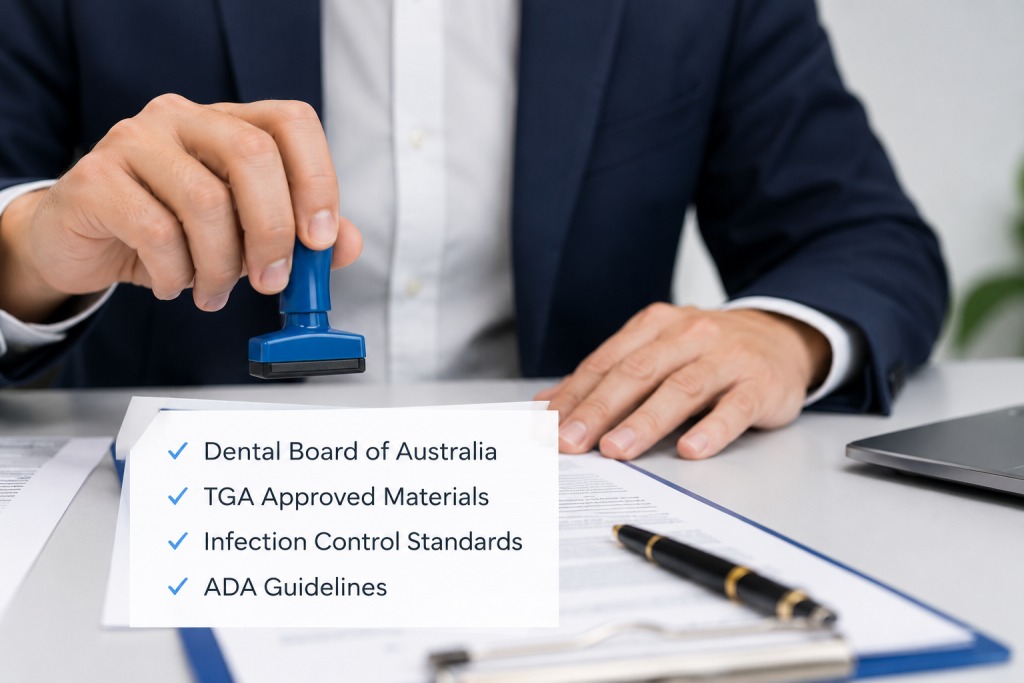
In Australia, dentists must be registered with the Dental Board of Australia, which operates under the Australian Health Practitioner Regulation Agency (AHPRA). Dental materials and devices are regulated by the Therapeutic Goods Administration (TGA), and practices follow national infection-control and professional standards, with guidance from bodies such as the Australian Dental Association (ADA).
Overseas, regulatory frameworks, training requirements and infection-control standards vary widely from country to country and clinic to clinic. Some overseas clinics meet very high standards; others may be harder to assess, and it can be difficult to verify a clinic’s credentials, sterilisation practices or a practitioner’s qualifications from Australia before you travel. The Australian Dental Association has published guidance for patients considering elective overseas dental treatment [1], it’s worth reading before making a decision.
Materials and implant systems
Not all implants are the same, and the implant system used matters for the long term. Well-established systems are widely documented and supported, which means that if a component ever needs adjustment, repair or replacement, a dentist can identify the system and obtain the right parts.
When treatment is done overseas, you may not always be told exactly which implant brand and components were used, or the system used may not be readily supported in Australia. If a part later needs replacing and it can’t be matched locally, repairs become more complicated. Asking for and keeping written records of the exact implant system and components is important wherever you have treatment.
At Kita Dental, treatment uses recognised implant systems (Straumann BLX and Neodent) and the details are documented in your records, so future maintenance can be managed locally.
Continuity of care: the biggest practical difference
Dental implants are not a one-and-done procedure. After the implants are placed, they take several months to integrate with the bone, during which you wear temporary teeth and attend review appointments. The final teeth are fitted only once healing is confirmed.
This is where distance matters most. If your treating clinic is overseas, attending those reviews or returning if something needs adjusting means more flights and time away, or finding a local dentist willing to take over care they didn’t start. Having your treatment, healing reviews and final restoration managed by one local team keeps the process joined up and makes it easier to deal with anything unexpected.
What happens if something goes wrong?
Most implant treatment goes smoothly, but complications such as infection, an implant not integrating, or a problem with the bridge can occur with any provider, anywhere. The question is how easily they can be managed.
If treatment was done overseas, returning to the original clinic for a revision is often impractical and costly, and any warranty offered may be difficult to enforce from Australia. Some local dentists are also cautious about taking on the revision of work they didn’t perform, particularly when the implant system or treatment records aren’t available. Having treatment locally means problems can be assessed and managed by the dentist who placed the implants, with your full records on hand.
Pros and cons summary
Going overseas — potential advantages: lower upfront cost; the option to combine treatment with travel; some clinics offer compressed timelines.
Going overseas — considerations: harder to verify standards and credentials beforehand; implant system may not be documented or locally supported; follow-up and reviews are difficult from Australia; revisions and warranties may be impractical to enforce; total cost can be higher than the headline once travel and follow-up are included.
Staying in Australia — potential advantages: nationally regulated standards; documented, locally supported materials; continuity of care through healing; complications handled locally by your own dentist; records and communication close to home.
Staying in Australia — considerations: higher upfront cost.

Questions to ask before having implants overseas
If you are considering treatment abroad, these questions can help you make an informed decision:
- What are the dentist’s qualifications, and how can I verify them?
- Which implant brand and system will be used, and is it supported in Australia?
- Will I receive full written records, including the implant system and components?
- How many trips will I need, and over what timeframe?
- What follow-up is included, and who manages my care once I return home?
- What happens — and what does it cost — if there is a complication or the work needs revising?
- Is any warranty offered, and is it enforceable from Australia?
Making implants more affordable in Australia
If cost is the main reason you’re looking overseas, it’s worth exploring the options for managing the cost locally first:
- Private health funds. Treatments with a functional or restorative benefit may attract a rebate under “major dental” cover. Limits and waiting periods vary, so check with your fund.
- Payment options. Some clinics offer staged payments or payment plans for larger treatments.
- Early release of superannuation. In limited eligible circumstances, some superannuation may be accessed early on compassionate grounds for certain dental treatment. This is assessed by the Australian Taxation Office (ATO) against strict criteria — check the current rules on the ATO website.
References
- Australian Dental Association Policy Statement 2.2.6 – Elective Overseas Dental Treatment https://ada.org.au/resources?_Production_Resources%5Bquery%5D=dental%20treatment%20overs
- Dental Board of Australia / AHPRA — Guidelines for advertising a regulated health service and registration standards. ahpra.gov.au
- Therapeutic Goods Administration (TGA) — regulation of medical devices, including dental devices. tga.gov.au
- healthdirect (Australian Government) — Dental implants. healthdirect.gov.au
- Australian Taxation Office — Early access to superannuation on compassionate grounds. ato.gov.au
Written by Dr Chin Kent Boon
March 17 2026
All on X treatments at Kita Dental are led by Dr Kent, Principal Dentist and Implantologist, who holds a Master of Oral Implantology. Kita Dental is a dental clinic located in Mascot, NSW, with a strong focus on dental implants.
This article is general information only and is not a substitute for personalised advice from a registered dental practitioner. Outcomes vary from patient to patient.