Full Mouth Dental Implants: What They Are and What to Expect
If you’ve been researching ways to replace a full row of missing or failing teeth, you’ve probably come across a bunch of different names for what sounds like the same treatment — Full Mouth Dental Implants, Full Arch Implants, All on 4, All on 6, All on X, Dental Implants. The overlap in terminology can make it hard to know whether you’re comparing the same thing or something different. This page walks through what full mouth dental implants actually involve, so you can bring the right questions to your consultation.What Are Full Mouth Dental Implants?
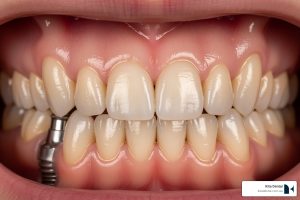
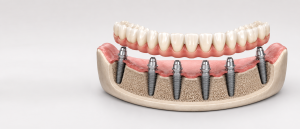
Full mouth dental implants is the general term for replacing all, or nearly all, of the teeth in one or both jaws using dental implants. A number of implants are placed into the jawbone, creating a stable foundation for a full set of new teeth unlike dentures, which sit on top of the gums.
The number of implants used depends on your bone density and structure. That’s why you’ll see the same treatment called All on 4, All on 6, or All on X. These aren’t different treatments, they’re the same approach named by implant count.
Key aspects of full mouth implant treatment:- What it is: A complete arch restoration using 4-6 strategically placed titanium implants to support a fixed bridge.
- Treatment time: 5-8 months total, with temporary teeth often placed on the same day as surgery.
- Success rate: Up to 98% with proper care.
- Longevity: Implants can last 25+ years or a lifetime; the prosthetic bridge lasts 15-20 years.
- Benefits: Permanent, natural function, bone preservation, and improved quality of life.
The Anatomy of a Full Mouth Implant System
Understanding full mouth implant treatment is easier when you know its three core components, which work together to mimic natural teeth.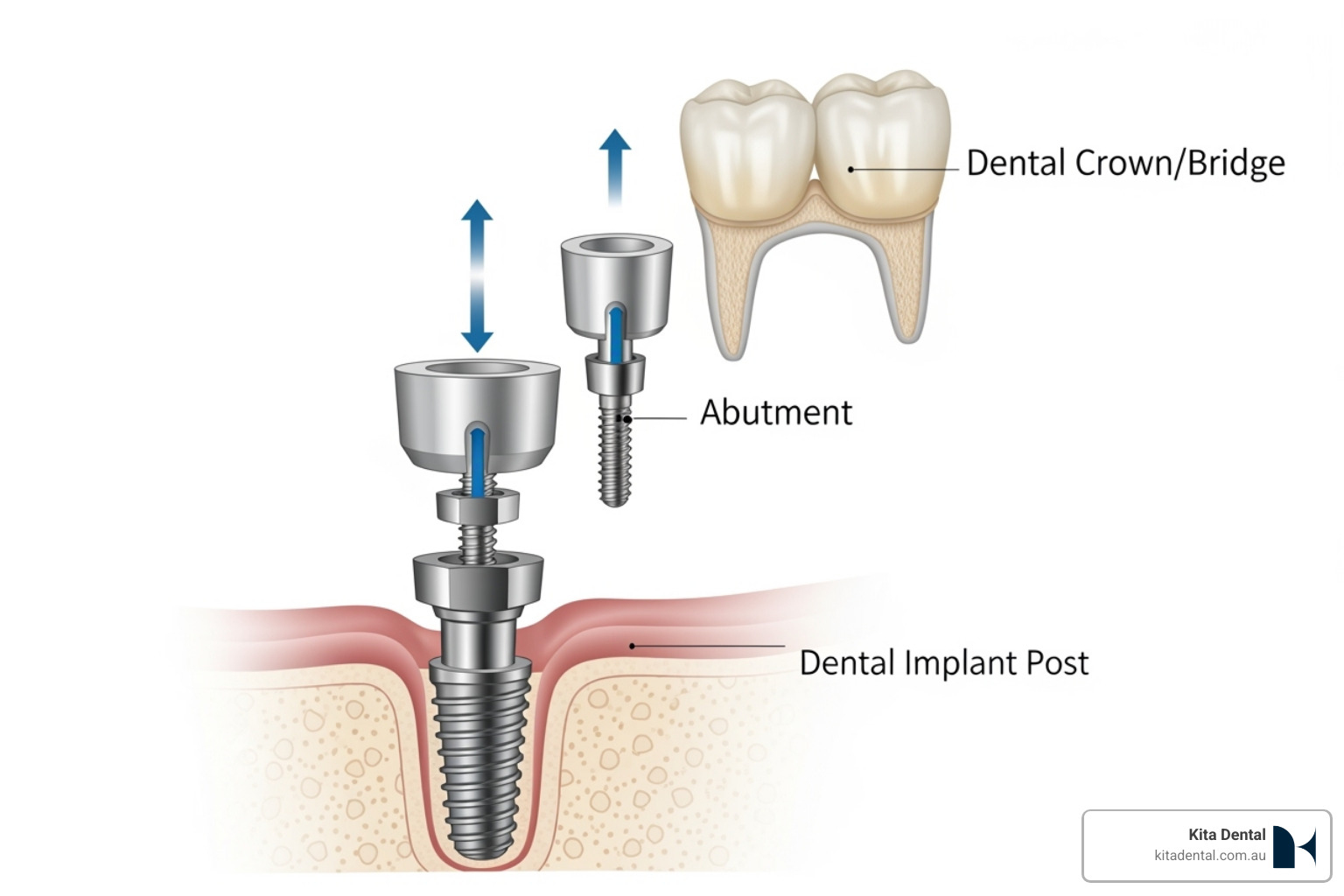
- Dental Implant: These are small titanium posts placed into your jawbone during a surgical procedure. They act as your new tooth roots, integrating with your bone.
- Abutment: Once the implants have integrated, these connector pieces are attached. They sit just above the gum line, linking the implant to your final bridge.
- Bridge/ Crown: This is the visible set of teeth. We use durable, natural-looking materials like zirconia or porcelain to create a beautiful smile that can withstand everyday chewing function for decades.
Full Mouth Implants vs Dentures
The clearest way to understand full mouth dental implants is to compare them with traditional dentures, since both are designed to replace a full set of teeth.
Dentures sit on top of the gums and are removed for cleaning. Because they aren’t anchored into the jawbone, they don’t provide any stimulation to the bone underneath, and that bone can gradually lose density over time.
Full mouth dental implants are fixed in place. They’re anchored directly into the jawbone, which helps maintain bone density, and they aren’t taken out for daily cleaning. Many patients find this gives a more secure, natural feel for eating and speaking, without the movement that can come with removable dentures.
| Feature | Full Mouth Implant Treatment | Traditional Dentures |
|---|---|---|
| Stability | Completely fixed and secure | Can slip and require adhesives |
| Bone Health | Preserves and stimulates jawbone | Accelerates bone loss |
| Maintenance | Brush and floss like natural teeth | Remove daily for cleaning and soaking |
| Diet | No food restrictions | Many foods must be avoided |
| Speech | Natural and clear | Can cause speech difficulties |
| Longevity | Implants last decades, prosthetics 15-20+ years | Typically need replacement every 5-7 years |
Full Mouth Implants, All on 4, and All on 6 — Which Page Do I Need?
This page covers the general treatment and how it compares to dentures. For the procedure itself, timeline, and what’s involved in treatment with four implants, visit our All on 4 page.