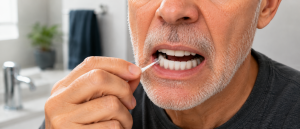
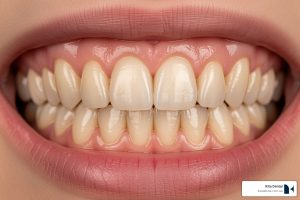
What is an arch in dental implants?
An arch is just the dental term for one full row of teeth (either your top row or bottom row).
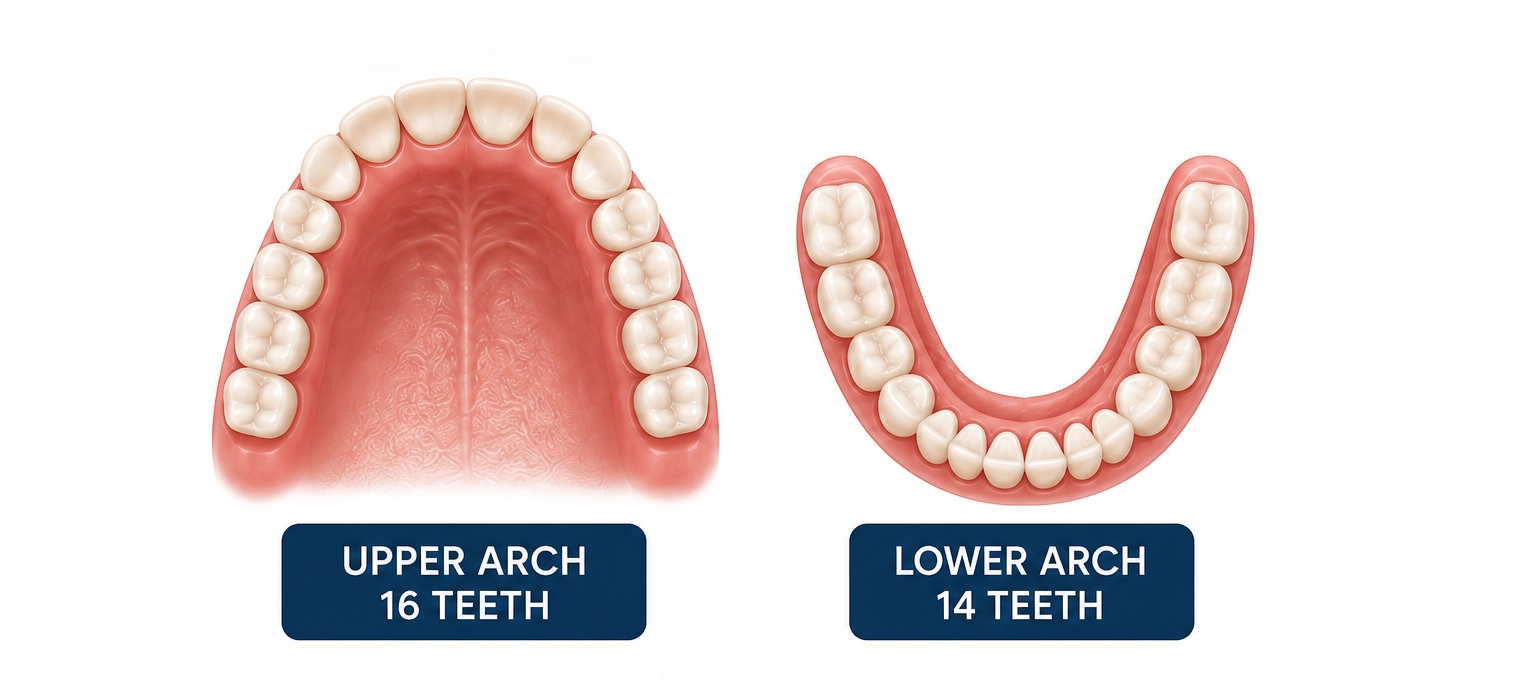
Your teeth do a lot of work from chewing, speaking, to smiling, and they rely on a healthy, complete row (or “arch”) to do it well. Your top row (upper arch) typically has 16 teeth, your bottom row (lower arch) consists of 14 teeth. When several teeth in a row are missing or badly damaged, full arch implants restore the whole row at once, rather than replacing teeth one at a time, giving you back both function and confidence.
Unlike dentures, which just sit on top of your gums, full arch implants are anchored directly into your jawbone. That keeps them firmly in place, and also helps protect your jawbone from the shrinking that naturally happens after tooth loss, so you can eat, speak, and smile without thinking twice about it.
The Blueprint of Your Bite
Your dental arch isn’t just about how your teeth look, it’s how they work together. Front teeth (incisors) are shaped for precise biting, canines next to them provide the strength for tearing, and the premolars and molars further back do the heavy work of grinding your food. When everything’s aligned properly, your bite comes together evenly and comfortably. Dentists call this “occlusion.”
Tooth loss disrupts this balance. Remaining teeth can shift into the empty space, throwing off your bite, and the jawbone that once supported the lost tooth’s root gradually loses density without that stimulation. Over time, this can affect your facial structure, as well as make chewing and speaking more difficult.
This is where full arch dental implants come in. Rather than trying to manage ongoing tooth loss and bone loss individually, a full arch restoration rebuilds the row as a whole, so your bite can work properly again
The Difference Between Full arch vs Partial arch Implants
Whether full arch or partial arch treatment suits you depends on how many teeth are missing, the condition of any remaining teeth, and your jawbone density.
Full arch replacement is generally suited to those missing most or all of their teeth in a jaw. The entire row is replaced with a custom-made prosthetic bridge, anchored by a number of implants.
Partial arch replacement is for those who still have some healthy natural teeth but are missing a section. An implant-supported bridge fills the gap without relying on the surrounding natural teeth for support, unlike a traditional bridge. This helps preserve those healthy teeth while restoring function to the missing section.
A consultation and 3D scan is the best way to determine which option is right for you.
Benefits of Full arch Dental Implants
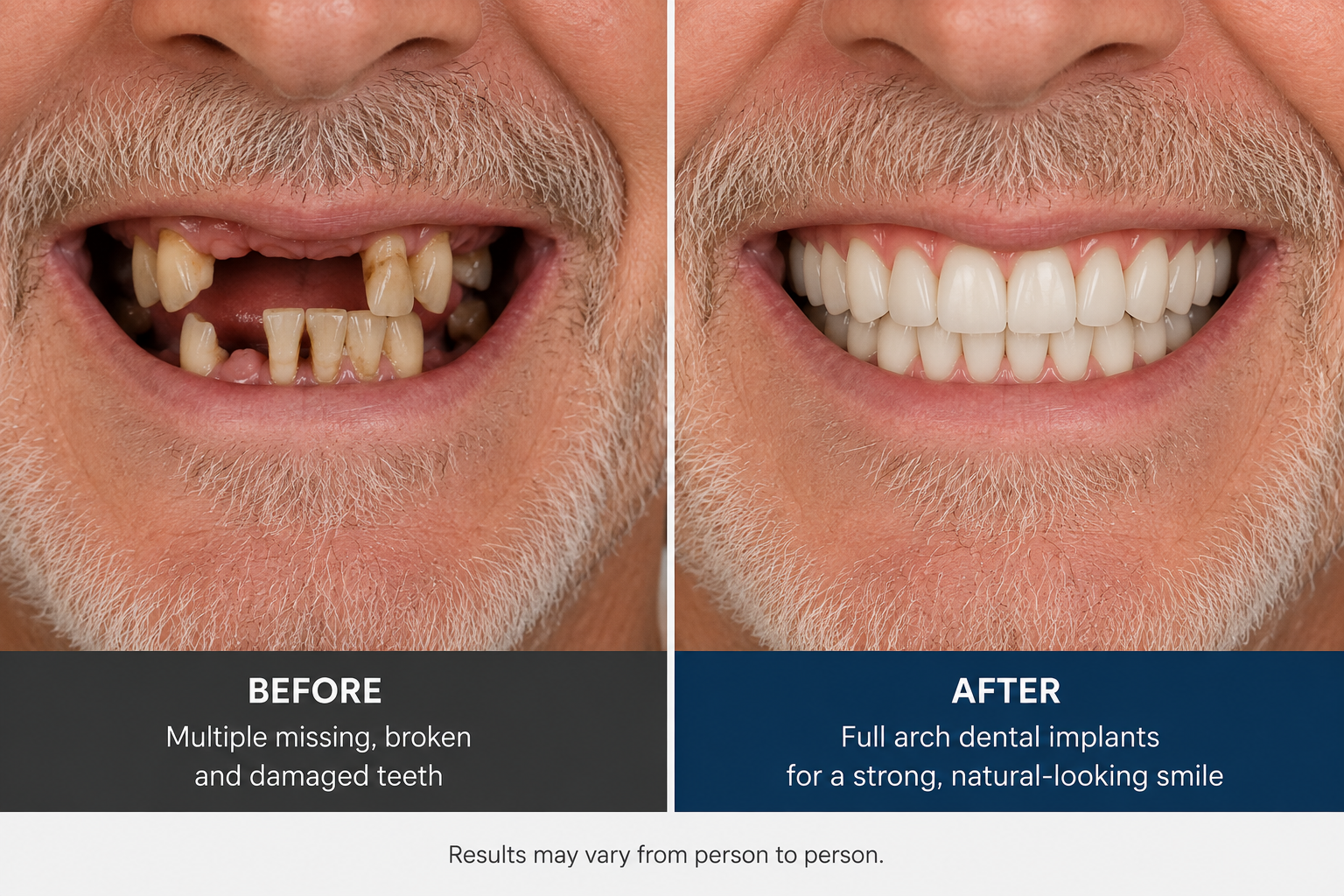
Full arch implants are designed to restore both function and appearance.
Because they’re anchored in the jawbone rather than resting on the gums, they provide the stimulation your jawbone needs to maintain its density, unlike dentures, which don’t stimulate the bone underneath and can contribute to bone loss over time.
They also offer stability for everyday eating, speaking, and general comfort, without the slipping or movement that can come with removable dentures.
Each prosthesis is custom-designed to suit your facial features and desired smile, using durable materials intended to closely resemble natural teeth.
With proper care and maintenance, full arch implants are designed to be a long-term option and your dentist can advise on realistic expectations for your specific case at your consultation.
The Full Arch Implant Procedure and Aftercare
Treatment begins with a comprehensive consultation at our Mascot clinic. A full review of your oral health and medical history, along with 3D imaging to assess your jawbone density and structure. This informs a treatment plan tailored to your situation.
If significant bone loss is present, a bone graft may be recommended to strengthen the jaw before implant placement.
During surgery, titanium implants are placed into the jawbone under local anaesthesia, with sedation options available for anxious patients. The healing period that follows allows osseointegration to take place. This is the process by which the implant fuses with the bone.
While healing, we provide a temporary prosthesis so you’re not without teeth during this time, allowing you to continue normal daily activities. Once healing is complete, your final prosthesis is fitted and custom-designed to suit your facial features and smile goals.
Aftercare is straightforward: brush twice daily, floss using implant-specific tools, and keep up with regular check-ups so we can monitor your implants and address any concerns early. A soft-bristled toothbrush, fluoride toothpaste, and mouthwash are generally recommended, and avoiding smoking supports the long-term health of your implants and surrounding tissue.
With proper care, full arch implants are designed to provide reliable, long-term function.
Frequently Asked Questions about Full Arch Dental Implants
How long do full arch dental implants last?
Full arch implants are designed as a long-term option, unlike dentures, which typically need adjustment or replacement over time.
The titanium implants integrate with your jawbone through osseointegration, creating a stable, secure bond. The prosthetic bridge attached to the implants is made from durable materials designed for daily use, though like natural teeth, it may show some wear over the years.
Looking after your implants matters for their lifespan: brush and clean around them daily, keep up with regular check-ups at our Mascot clinic, and avoid habits like chewing ice or using your teeth as tools. With proper care, full arch implants are designed to support reliable function for many years.
Is the procedure painful?
During the implant placement itself, local anaesthesia numbs the treatment area, and sedation options are available — from oral medication through to IV sedation.
After surgery, some mild discomfort, swelling, and tenderness is normal for a few days, similar to any minor surgical procedure. We’ll provide post-operative care instructions and recommend pain relief, usually over-the-counter medication. Soreness generally settles within one to two weeks.
Written by Dr Kent Boon
August 28 2026
All on X treatments at Kita Dental are led by Dr Kent, Principal Dentist and Implantologist, who holds a Master of Oral Implantology. Kita Dental is a dental clinic located in Mascot, NSW, with a strong focus on dental implants.
This article is general information only and is not a substitute for personalised advice from a registered dental practitioner. Outcomes vary from patient to patient.