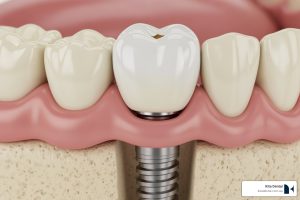
Choosing an Implant Dentist: Who Is Qualified?
In Australia, any registered dentist is legally permitted to place dental implants, there is no separate qualification or specialty registration required to do so. Because of this, the level of implant training a dentist has can vary widely. That’s why it’s worth seeking out a dentist who has gone the extra step and undertaken dedicated further study in implant dentistry, on top of their dental degree. This guide explains the rules, what they mean for you, and how to choose with confidence.
Who can place dental implants in Australia?
This surprises many people: in Australia, any registered dentist can legally place dental implants. Implant placement falls within the general scope of dentistry, so there is no mandatory course, certification or specialty registration a dentist must hold before placing implants. The skills can be developed through formal postgraduate study, hands-on courses, mentoring, or experience gained on the job.
Dentists are, however, expected to work within the limits of their own competence and training under the Dental Board of Australia’s code of conduct. So while no extra qualification is required, the amount and depth of implant training a dentist has actually done can differ enormously from one practitioner to the next.
Some registered dental specialists also work in areas related to implants, for example prosthodontists (who focus on restoring and replacing teeth, including implant prosthetics), oral and maxillofacial surgeons (who handle surgery of the mouth and jaws, and are often involved in complex cases), and periodontists (who focus on the gums and supporting structures). Some of these specialists are involved in implant treatment and some are not, it depends on the individual practitioner and the case.
Why dedicated further study matters
Because the law sets no minimum implant-specific training, the responsibility effectively falls to you to choose well. A dentist who has voluntarily invested in dedicated further study in implant dentistry beyond what’s required has chosen to deepen their knowledge of planning, surgery, materials and managing complications. That commitment is a meaningful signal when you’re deciding who to trust with treatment that’s surgical, significant and long-term.
Formal qualifications such as a Master degree in implant placement, is one example of this kind of further study. So are structured implant programs, recognised continuing education, and demonstrable experience with cases like yours. None of these is legally mandated, which is exactly why a dentist choosing to pursue them is worth noting.
Understanding “specialist” vs “general dentist”
In Australia, “specialist” is a protected title. A dentist can only call themselves a specialist (such as a specialist periodontist or prosthodontist) if they are registered in that specialty with the Dental Board of Australia, which requires additional accredited training. A general dentist who has done extensive implant training is still, in registration terms, a general dentist, even if they place implants regularly.
This is worth understanding so you can interpret what you read. What counts is not just the label but the actual training, qualifications and experience behind it.
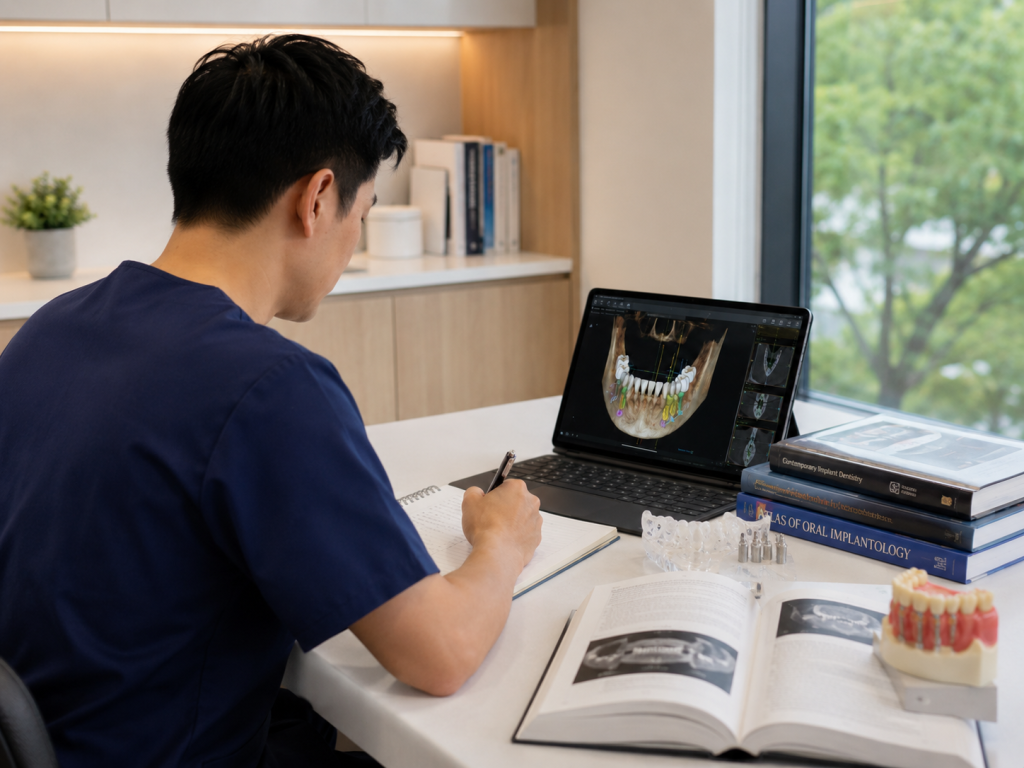
What qualifications and training to look for
When choosing a clinician for implants, it’s reasonable to consider:
- AHPRA registration. Every dentist in Australia must be registered with the Dental Board of Australia. You can check registration on the AHPRA public register.
- Postgraduate implant qualifications. Formal qualifications in implant dentistry for example, a Master degree in Implantology, indicate dedicated further study in the field.
- Continuing professional development. Implant techniques evolve, so ongoing education matters.
- Experience with your type of case. A single missing tooth, a full arch such as All on 4, or a complex case with severe bone loss each call for relevant experience.
- Membership of professional bodies. Involvement in recognised dental or implant organisations can reflect engagement with the field.
Questions to ask before choosing
A good clinician will welcome these questions:
- What are your qualifications and training in implant dentistry?
- How much experience do you have with cases like mine?
- Which implant systems do you use, and why?
- Will you carry out the whole treatment, or is part of it shared with another clinician?
- What does your planning involve?
- What follow-up and aftercare do you provide?
- Can I see examples of your work and understand the risks involved?
What to be cautious of
A few signs are worth weighing up:
- Reluctance to explain qualifications, the implant system, or the risks
- Pressure to decide quickly, or offers framed around urgency
- A quote that seems unusually low without a clear explanation of what’s included
- No clear plan for follow-up or for managing complications
Taking the time to ask questions and compare is reasonable — implants are a significant decision.
Why the whole team and the plan matter
Implant treatment isn’t only about the moment of surgery. Planning, the imaging used, the quality of the restoration, and the aftercare over the following months all influence the result. A clinician supported by a capable team and a clear treatment plan,, with continuity of care from assessment through to your final teeth is well placed to manage the process and anything unexpected.
References
- Dental Board of Australia / AHPRA — Guidelines for advertising a regulated health service, registration standards, and the public register of practitioners. ahpra.gov.au
- Australian Dental Association — patient information on dental implants and on dental specialties. ada.org.au
- healthdirect (Australian Government) — Dental implants. healthdirect.gov.au
Written by Dr Chin Kent Boon
17 May 2026
All on X treatments at Kita Dental are led by Dr Kent, Principal Dentist and Implantologist, who holds a Master of Oral Implantology. Kita Dental is a dental clinic located in Mascot, NSW, with a strong focus on dental implants.
This article is general information only and is not a substitute for personalised advice from a registered dental practitioner. Outcomes vary from patient to patient.