How to Clean Dental Implants: A Simple Guide
Why Implants Need a Slightly Different Approach
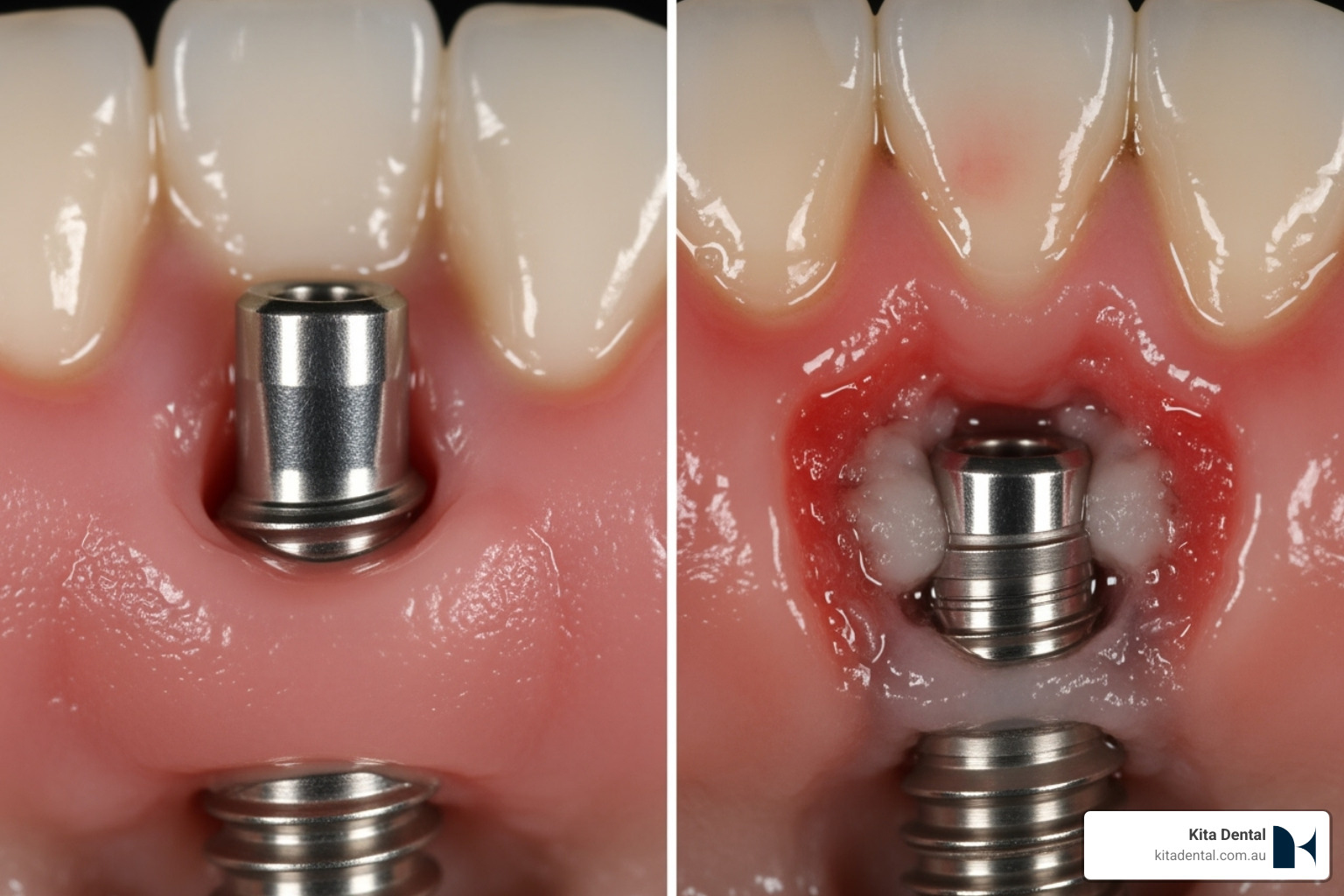
Implants can’t get cavities, but they can develop a condition called peri-implantitis, which is inflammation of the gum and bone around an implant, caused by a build-up of plaque and bacteria. Left untreated, it can lead to bone loss and, eventually, implant failure. So while you don’t need to worry about decay, gum health around your implant is just as important as it is around a natural tooth, arguably more so.
If you have a single implant, cleaning is fairly similar to a natural tooth, just with a bit more attention to the gumline. If you have a full bridge of several teeth joined together and supported by a number of implants (All on 4), you can’t floss between the teeth in the usual way, so the goal shifts to cleaning underneath and around the bridge, where plaque and food tend to collect.
Your Daily Cleaning Routine
Morning: Rinse with water to clear away overnight bacteria, then brush gently for two minutes with your soft toothbrush, angling the bristles towards the gumline where plaque likes to collect.
After meals: A quick rinse with water helps stop food particles from settling in. An interdental brush or travel water flosser is handy if you’re out and about.
Evening: Arguably the most important clean of the day. Saliva flow drops overnight, which gives bacteria more chance to build up, so this is the routine worth taking your time over.
- Rinse first to loosen any loose debris.
- Brush all surfaces of the teeth for 2 minutes, using gentle pressure.
- Clean along the gumline where the implant or bridge meets your gum.
- If you have a bridge, thread super floss or a floss threader underneath it and move it gently back and forth along the whole arch.
- Use an interdental brush around the implant connection points and any gaps floss can’t reach.
- Run a water flosser along and under the bridge (or around a single implant) on a low pressure setting to flush out anything left behind.
- Finish with a rinse, and an alcohol-free antimicrobial mouthwash if your dentist has recommended one.
Does Food Get Stuck Under Dental Implants?
It can, and it’s one of the most common things people ask about. A few reasons why:
- With a bridge, the replacement teeth sit slightly above the gum as one fixed piece, which creates a small gap underneath. This is a natural spot for food to work its way into during the day.
- With a single implant, food is more likely to get caught between the implant crown and the neighbouring natural teeth, much like it can with natural teeth.
This is normal, not a sign that anything’s wrong, but it does mean the “clean underneath and between” step matters more than it might with natural teeth alone. A water flosser or floss threader used daily generally keeps this well under control. If food keeps getting trapped in the same spot despite a good routine, it’s worth mentioning to your dentist. Occasionally it points to a small gap or fit issue that’s easy to address.
Habits That Affect How Well Your Implants Hold Up
- Diet: soft, nutritious foods are gentler on a new restoration; hard, sticky or very chewy foods (ice, hard nuts, sticky lollies) can strain a prosthesis over time. Staining foods and drinks like coffee, tea and red wine can also discolour prosthetic teeth. A straw helps reduce contact.
- Hydration: drinking enough water supports healthy saliva flow, which naturally helps rinse away bacteria.
- Smoking: tobacco restricts blood flow, slows healing, and is a well-established risk factor for peri-implantitis and implant complications. Quitting is one of the best things you can do for your implants and your overall health.
- Grinding or clenching: this puts extra force through implants and the prosthesis. A custom-fitted night guard, made specifically for your bite, helps protect against this and it’s a better option than an over-the-counter guard.
- Avoid chewing on hard objects like ice, pen caps, or fingernails, which can chip or wear the prosthetic surface over time.
Don’t Skip Professional Maintenance
Daily care at home does most of the work, but it can’t replace a professional clean. Your dental team can reach areas that are hard to access yourself, remove hardened deposits, and check for early signs of trouble before they become bigger problems. How often you need to come in varies by case. For All on 4 implants, professional cleans are often recommended more frequently than for natural teeth, since implants need specialised attention. Your dentist will advise what’s right for you.
At a professional visit, you can generally expect:
- A review of your gum tissue and a check for redness, swelling, or bleeding
- Cleaning with implant-safe tools (titanium scalers or plastic-tipped instruments, since regular metal scalers can scratch implant surfaces)
- A check of the fit and tightness of a bridge, and how evenly your bite is distributed
- Periodic X-rays, typically every one to two years, to monitor the bone and implants beneath the surface
Common Mistakes to Avoid
- Skipping underneath a bridge — brushing the top surfaces alone isn’t enough; the underside is where most plaque collects.
- Using hard-bristled brushes or abrasive toothpaste, which can scratch a prosthesis.
- Scrubbing too hard — gentle, thorough cleaning works better than force.
- Skipping professional cleans — home care and professional maintenance work together, not as substitutes for each other.
- Ignoring early warning signs like bleeding, swelling, or a persistent bad taste.
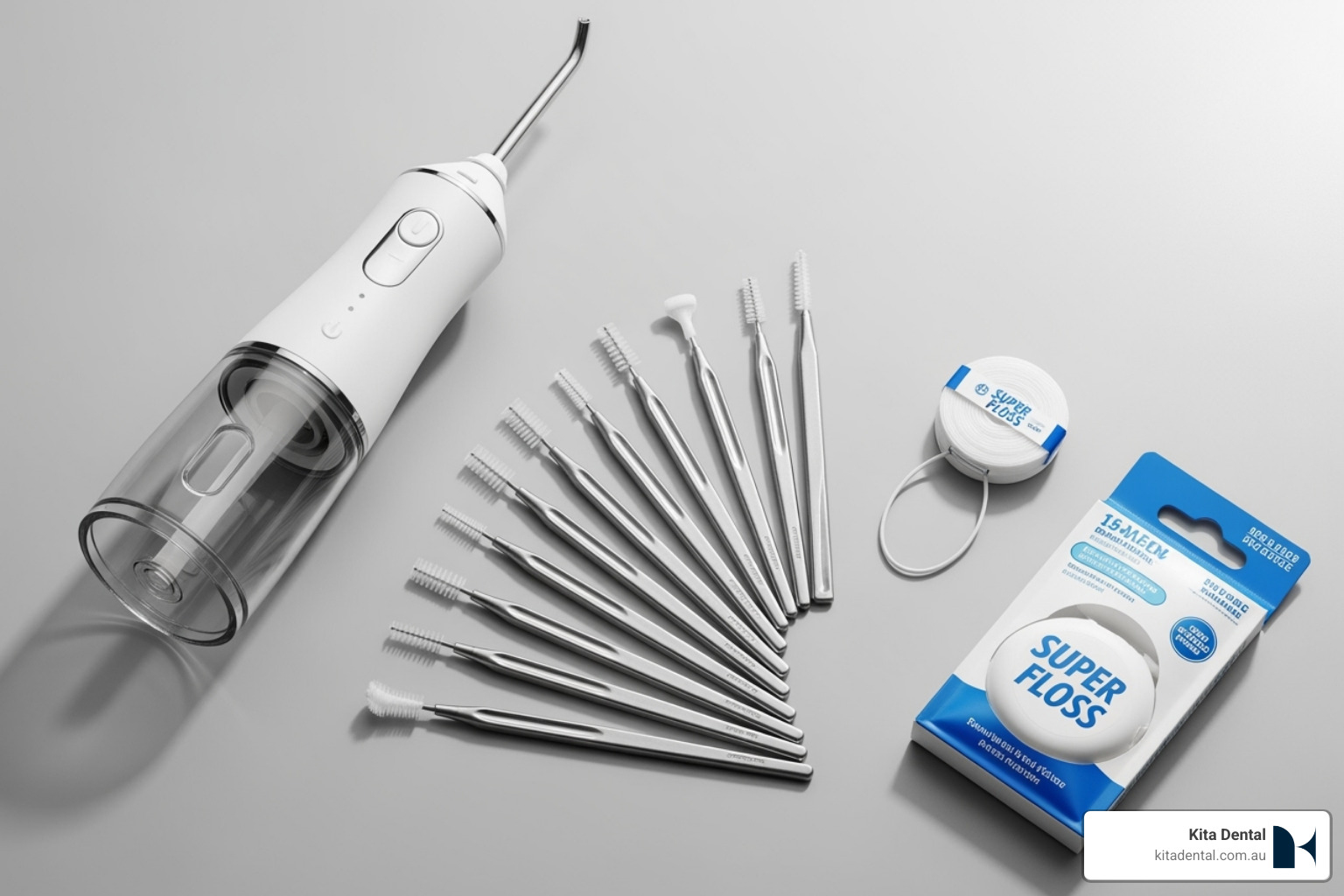
So Here’s What You’ll Need To Maintain Your New Implants
- A soft-bristled toothbrush (manual or electric)
- Low-abrasive toothpaste
- A water flosser — especially useful for bridges and hard-to-reach spots
- Super floss or floss threaders
- Interdental brushes, in the size your dentist recommends
- An alcohol-free antimicrobial mouthwash, if your dentist has advised one